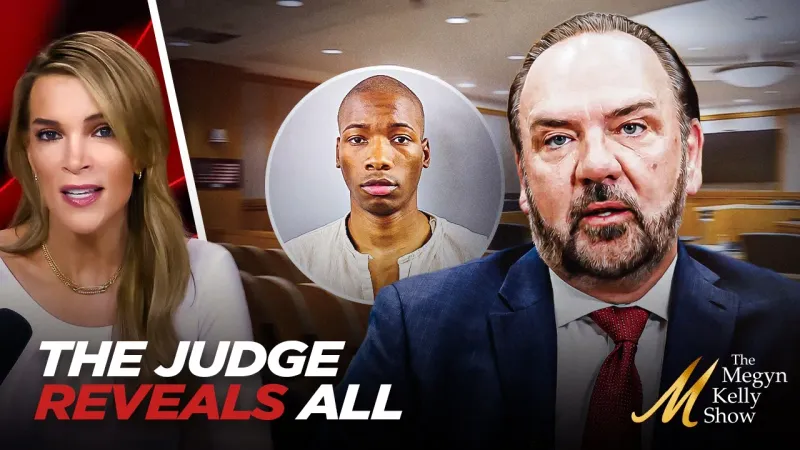
Karmelo Anthony Trial Judge SPEAKS OUT and Reveals Inside Details, with Eiglarsh, Aronberg, Branca
Megyn Kelly@MegynKellyKarmelo Anthony Trial Judge SPEAKS OUT and Reveals Inside Details, with Eiglarsh, Aronberg, Branca
Megyn Kelly and guests discuss a rare interview with the judge in the Karmelo Anthony trial, including his reasons for not allowing courtroom cameras and whether audio or video access might have helped public understanding. The opening also touches on media coverage, jury selection, and Anthony's reported request for a court-appointed appellate lawyer.
- Views
- 286.1K
- Likes
- 6.3K
- Comments
- 1.2K
- Karmelo anthony trialCourtroom camerasJury selection processTrial media coverage
Analysis
Megyn Kelly and guests discuss a rare interview with the judge in the Karmelo Anthony trial, including his reasons for not allowing courtroom cameras and whether audio or video access might have helped public understanding. The opening also touches on media coverage, jury selection, and Anthony's reported request for a court-appointed appellate lawyer.
- RoundtableNews analysis
- Title
- Karmelo Anthony Trial Judge SPEAKS OUT and Reveals Inside Details, with Eiglarsh, Aronberg, Branca
Carmelo Anthony, the 19 now 19-year-old man in Texas who was just convicted of murdering Austin Metcalfe for no reason in a tent at a track meet is now well, saying that he's penniless and he needs a court-appointed lawyer to represent him on appeal. And at the same time, Mark I glarsh the judge is speaking out. The judge gave an interview. You never see this. It's so rare, but the judge gave an interview and among the things that he spoke out about was why he did not allow cameras in the courtroom. It's kind of interesting. Set 35. >> I'll tell you I got some reports of some things that were coming out of this courtroom and I wondered to myself, were they even in the same courtroom that I was? It's that bad and I think that's tragic. Because I think really if you just listen to the case based upon the facts, you'd understand it so much better. >> Do you think it reinforced your your decision to not have cameras or or streaming inside this >> Sort of. I'll tell you this, I sometimes I think maybe I should have at least the audio streamed or something so people could hear it. But at the end of the day, I don't think no matter what, people are going to distort whatever happens or whatever they hear into their own agenda and so what's the point? >> That was Collin County District Judge John Roach interviewing with WFAA, the Dallas ABC affiliate. So I don't know, Mark. I I agree. At least audio would have been quite helpful. >> Absolutely. He asks, "What's the point?" The point is at least there's people [clears throat] like me and the two other guests who would have said, "No, that's not accurate what you're saying. We saw the testimony and we could say there's no way that occurred." We were in the dark. And so now we're reliant upon I'll use air quotes media entities who who are telling us what's going on inside the courtroom. So no, I think that he is actually reconsidering his decision. I think if he stayed on the bench, and I I think he's gone soon, he would probably allow cameras, and likely, um, you know, that would change the energy of this whole thing. There were such distortions during this case. People claiming he knew the Metcalfs when it when he didn't. Like, you've got to have more disclosure for the public. >>
- 01Case and immediate context
Establishes the case and its current context before turning to the judge's interview.
The host introduces the central person, what happened, and a related claim about the next stage.
“Carmelo Anthony, the 19 now 19-year-old man in Texas who was just convicted of murdering Austin Metcalfe for no reason in a tent at a track meet is now well, saying that he's penniless and he needs a court-appointed lawyer to represent him on appeal.”
- 02Rare interview and unresolved explanation
Introduces the central interview and leaves its explanation of the camera decision pending.
The host notes that the judge has spoken in an interview, emphasizes how unusual that is, and names his explanation for excluding cameras as a topic.
“And at the same time, Mark I glarsh the judge is speaking out. The judge gave an interview. You never see this. It's so rare, but the judge gave an interview and among the things that he spoke out about was why he did not allow cameras in the courtroom. It's kind of interesting.”
- 03Interview excerpt: the judge's rationale
Supplies the judge's stated rationale and sets up the panel's disagreement about whether access could improve public understanding.
An excerpt recounts the judge receiving reports from the courtroom, questioning their accuracy, and arguing that people would distort any account to suit their agenda.
“Set 35. >> I'll tell you I got some reports of some things that were coming out of this courtroom and I wondered to myself, were they even in the same courtroom that I was? It's that bad and I think that's tragic. Because I think really if you just listen to the case based upon the facts, you'd understand it so much better. >> Do you think it reinforced your your decision to not have cameras or or streaming inside this >>”
- 04The judge's qualification and panel response
Qualifies the judge's position and introduces the panel's counterpoint about access to the record.
The judge says audio might have helped, but questions its value if people still distort what they hear. A panelist identifies the judge and broadcaster, then agrees that audio would have been useful.
“Sort of. I'll tell you this, I sometimes I think maybe I should have at least the audio streamed or something so people could hear it. But at the end of the day, I don't think no matter what, people are going to distort whatever happens or whatever they hear into their own agenda and so what's the point? >> That was Collin County District Judge John Roach interviewing with WFAA, the Dallas ABC affiliate. So I don't know, Mark. I I agree. At least audio would have been quite helpful. >> Absolutely.”
- 05Access as a corrective
Develops the opposing case for access and connects it to the public's reliance on reporting; the excerpt ends while the broader discussion is still underway.
A panelist argues that observers could have challenged inaccurate claims if they had seen the testimony, then says the public is now reliant on media accounts and suggests the judge might reconsider camera access.
He asks, "What's the point?" The point is at least there's people [clears throat] like me and the two other guests who would have said, "No, that's not accurate what you're saying. We saw the testimony and we could say there's no way that occurred." We were in the dark. And so now we're reliant upon I'll use air quotes media entities who who are telling us what's going on inside the courtroom. So no, I think that he is actually reconsidering his decision. I think if he stayed on the bench, and I I think he's gone soon, he would probably allow cameras, and likely, um, you know, that would change the energy of this whole thing. There were such distortions during this case. People claiming he knew the Metcalfs when it when he didn't. Like, you've got to have more disclosure for the public. >>