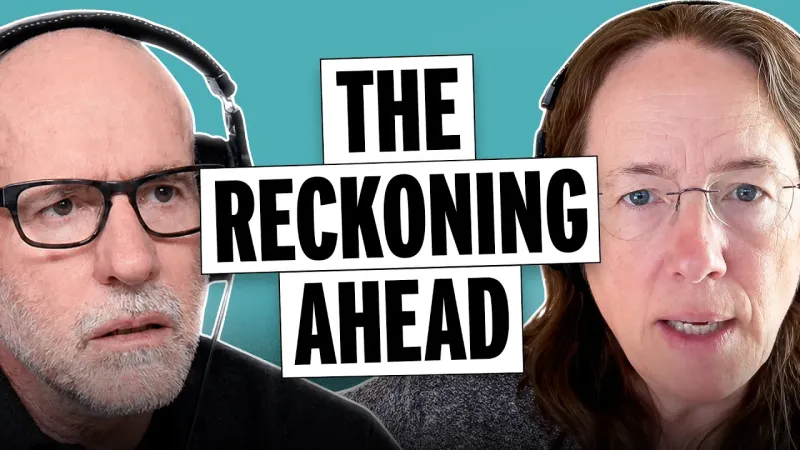
Heather Cox Richardson: What History Predicts Happens Next
The Prof G Pod – Scott Galloway@TheProfGPodHeather Cox Richardson: What History Predicts Happens Next
Scott Galloway speaks with historian Heather Cox Richardson about American democracy as the United States approaches its 250th birthday. They discuss Trump’s politics of spectacle, Iran and U.S. diplomacy, political parties, voting, and what historical patterns may suggest about the country’s future.
- Views
- 822.8K
- Likes
- 26.4K
- Comments
- 2.8K
- American democracyTrump and Political SpectacleHistorical political patternsU.S. Elections and Parties
Analysis
Scott Galloway speaks with historian Heather Cox Richardson about American democracy as the United States approaches its 250th birthday. They discuss Trump’s politics of spectacle, Iran and U.S. diplomacy, political parties, voting, and what historical patterns may suggest about the country’s future.
- InterviewPodcast episode
- Title
- Heather Cox Richardson: What History Predicts Happens Next
“People ask me every day, how can I convince my deeply mega uncle to to vote for a Democrat? And the answer is you can't. The trick to changing society is to mobilize those people who are either soft voters or who didn't get involved previously. That's the way you change American politics is you talk to your neighbors and not say you're an idiot, you say, hey, are you aware that there is a private prison going in next to our elementary school? And that's what makes people show up and it does work. >> Heather, thanks so much for being with us today. >> It's always a pleasure, Professor Galloway. How are you doing? >> Uh, you know, I'm doing all right. Um, I guess there's I'm in a constant state of anxiety. Um, low I would call it low-level anxiety. How are you feeling? >> Same. You know, and and one of the things that really jumps out to me is how many different stories are coming at us from so many different places where you not only have to read what is in front of you, but also guess what is really happening and that's just a lot of mental work. And you know, you and I devote our lives to it, but for people who are trying to pay half attention, I just don't know how they're getting through their days. >> Yeah, it's sort of which story to focus on and where to allocate your attention and your not your outrage for your concern if you will. So, let's start with something you wrote in the past week and it's it's been sort of a master class in two of Trump's defining moves, cheating the system and spectacle. The reflecting pool renovation cost 16 million, 10x what he claimed and is now fouled with green algae. The Kennedy Center tarp is still up. The UFC fight sponsored by his own family's crypto company. In in your view, talk a little bit, is the cheating getting more brazen or are we just more aware and sensitive to it?”
- 01Family persuasion problem and advice
This cold open gives the audience a specific political challenge and a counterintuitive shift from changing one person’s mind to mobilizing others. The local example grounds the advice in a recognizable situation.
The speaker describes being asked how to persuade a strongly partisan relative, rejects persuasion as the answer, and recommends mobilizing people who are less committed or previously uninvolved. The example is to talk with neighbors about a concrete local issue rather than insult them; the speaker says this gets people to show up and works.
“People ask me every day, how can I convince my deeply mega uncle to to vote for a Democrat? And the answer is you can't. The trick to changing society is to mobilize those people who are either soft voters or who didn't get involved previously. That's the way you change American politics is you talk to your neighbors and not say you're an idiot, you say, hey, are you aware that there is a private prison going in next to our elementary school? And that's what makes people show up and it does work.”
- 02Interview greeting and anxiety
The exchange establishes the interview relationship and makes the coming discussion’s unsettled political context personal, without yet resolving what is driving that anxiety.
The host thanks Heather for joining; she returns the courtesy and addresses Professor Galloway. After a brief greeting, the host says he is in a constant state of low-level anxiety and asks how she is feeling. She replies, “Same.”
“>> Heather, thanks so much for being with us today. >> It's always a pleasure, Professor Galloway. How are you doing? >> Uh, you know, I'm doing all right. Um, I guess there's I'm in a constant state of anxiety. Um, low I would call it low-level anxiety. How are you feeling? >> Same.”
- 03News overload and attention
This identifies the audience-facing problem that connects the personal anxiety to the episode’s current-events discussion: too much to follow and a difficult choice about where to focus.
The host says many stories arrive from many places, requiring readers to assess what is happening and making attention a lot of mental work. He observes that people who follow only half as closely may struggle to get through their days. The guest agrees and frames the issue as deciding which story deserves attention, outrage or concern.
“You know, and and one of the things that really jumps out to me is how many different stories are coming at us from so many different places where you not only have to read what is in front of you, but also guess what is really happening and that's just a lot of mental work. And you know, you and I devote our lives to it, but for people who are trying to pay half attention, I just don't know how they're getting through their days. >> Yeah, it's sort of which story to focus on and where to allocate your attention and your not your outrage for your concern if you will.”
- 04Transition to recent political examples
This is the first concrete current-events case and a focused question for the guest. It starts the conversation promised by the opening, but the excerpt ends before the broader history-based forecast or a sustained answer.
The host turns to something the guest wrote in the past week, characterizing it as a master class in two of Trump's defining moves: cheating the system and spectacle. He cites the reflecting-pool renovation cost, the Kennedy Center tarp and a UFC fight sponsored by the family's crypto company, then asks whether the cheating is becoming more brazen or whether people are simply more aware of it.
“So, let's start with something you wrote in the past week and it's it's been sort of a master class in two of Trump's defining moves, cheating the system and spectacle. The reflecting pool renovation cost 16 million, 10x what he claimed and is now fouled with green algae. The Kennedy Center tarp is still up. The UFC fight sponsored by his own family's crypto company. In in your view, talk a little bit, is the cheating getting more brazen or are we just more aware and sensitive to it?”