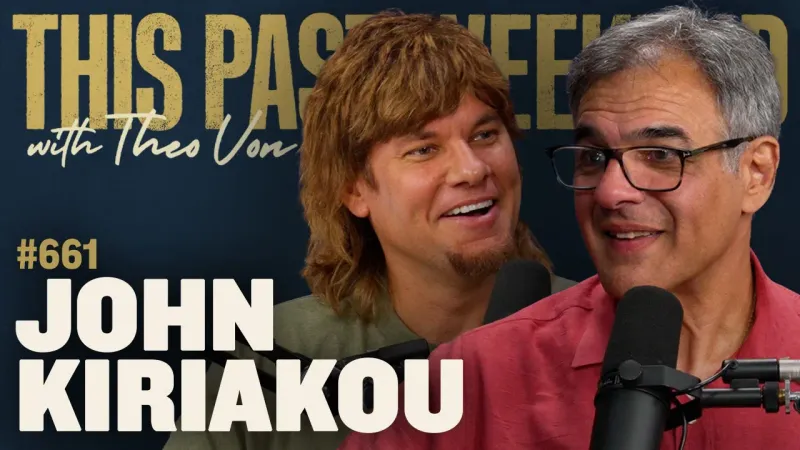
John Kiriakou | This Past Weekend w/ Theo Von #661
Theo Von@TheoVonJohn Kiriakou | This Past Weekend w/ Theo Von #661
Theo Von talks with former CIA officer and whistleblower John Kiriakou about his recruitment, speaking out about the agency's torture programs, and his new book on CIA skills and tactics. In the opening, they also discuss Tulsi Gabbard, Bernie Sanders, and changes to Democratic presidential primaries.

- Views
- 3.3M
- Likes
- 73.4K
- Comments
- 9.1K
- CIA whistleblowingCIA recruitmentPolitical party primariesJohn Kiriakou's New Book
Analysis
Theo Von talks with former CIA officer and whistleblower John Kiriakou about his recruitment, speaking out about the agency's torture programs, and his new book on CIA skills and tactics. In the opening, they also discuss Tulsi Gabbard, Bernie Sanders, and changes to Democratic presidential primaries.
- InterviewPodcast episode
- Title
- John Kiriakou | This Past Weekend w/ Theo Von #661
“Today's guest is an author. He's a speaker. He's a former CIA officer who's also known for being a whistleblower in the CIA's use of torture. He has a new book coming out called The Ultimate Guide to CIA skills, tactics, and techniques. Today's guest is Mr. John Kiriakou. >> Yeah, I applied for a presidential pardon. >> You have You applied for a a presidential pardon? >> Yeah. Yeah, in fact I I brought a couple of letters. I I hope you don't >> Long as you don't meet me. If I sign them, it's not going to help anything. I'm just telling you that. [laughter] >> Oh, okay. I was going to ask if I was going to ask if you thought it would be helpful. I got uh >> Did you really? >> Oh, yeah. >> Oh, okay. Dang, I was joking. >> Oh, no, no, no. I'm talking to Tulsi Gabbard on Friday. Did I tell you that? >> Oh, nice. Her husband is winning a surgery today, I saw. I was messaging with her yesterday. >> She's great. >> Yeah, Tulsi Gabbard, she seems um she's There's just something about her that seems genuine to me. >> And and that's why they tried to destroy her. >> Is that Is that what you think is going on with her right now? >> why the Democrats tried to destroy her. I really do. >> But even right now, I mean, she's just taken a leave. I know it's for her husband's health. >> Yeah. >> Um >> Oh, yeah, headed into surgery this morning. >> Oh, is that what it says? >> Yeah, she tweeted or she uh Instagrammed it. >> Yeah. Yeah, do you think cuz she's kind of like and she just took a break. She took a complete break from politics. >> Yeah. You remember when she was running as a Democrat, mhm, every time she would inch up in the polls, the DNC would change the rules for participating in the next debate. So, they would do it just one or two percentage points out of her reach every single time. Because they were threatened by her message. She just wouldn't get with their program. >> She's always seemed very um like she has her own >> Oh, she was definitely independent. >> Independent, that's what it is. She's always seemed very independent. Um well, they did the same thing with Bernie Sanders. It was >> They did exactly the same thing with Bernie Sanders. >> So, I guess what my my question would be like, you know, and I probably I I don't I can't remember if I asked Bernie this or not, but why would you stay in a party that you know at a certain point is not that's cheating you. >> Yes. And you know, the Democrats did something in um after the 1972 election, which I think people don't pay anywhere near enough attention to. Nobody at the DNC wanted George McGovern to be the 1972 nominee. He was the most popular at the time, especially among young people, but he was um he was the weakest nationwide. And he ended up losing 49 states. But you know, it's a party of the people, right? If the people want George McGovern as the nominee, then George McGovern should be the nominee. >> And they didn't let him become the nominee? >> No, they let him become the nominee, and then as soon as he lost the race, they instituted this this thing called superdelegates. So, if you are a member of the House, a member of the Senate, a governor, uh a lieutenant governor, a state party director, state committee chairman, you're automatically made a delegate to the convention.”
- 01Guest introduction
Establishes who the guest is and offers credentials and a current project as context for the conversation.
The host identifies the guest, lists his roles and credentials, mentions his forthcoming book, and names him again.
“Today's guest is an author. He's a speaker. He's a former CIA officer who's also known for being a whistleblower in the CIA's use of torture. He has a new book coming out called The Ultimate Guide to CIA skills, tactics, and techniques. Today's guest is Mr. John Kiriakou.”
- 02Pardon exchange
Moves from formal introduction into a revealing personal detail, then a joke deflates the apparent offer of help.
The guest says he applied for a presidential pardon; the host reacts with surprise, and the guest says he brought letters.
“>> Yeah, I applied for a presidential pardon. >> You have You applied for a a presidential pardon? >> Yeah. Yeah, in fact I I brought a couple of letters. I I hope you don't >> Long as you don't meet me. If I sign them, it's not going to help anything. I'm just telling you that. [laughter]”
- 03Clarifying the joke
Resolves the misunderstanding and redirects the exchange to another political connection.
The host says he was going to ask whether a pardon would help, then clarifies that he was joking; the guest shifts to an upcoming conversation with Tulsi Gabbard.
“>> Oh, okay. I was going to ask if I was going to ask if you thought it would be helpful. I got uh >> Did you really? >> Oh, yeah. >> Oh, okay. Dang, I was joking. >> Oh, no, no, no. I'm talking to Tulsi Gabbard on Friday. Did I tell you that?”
- 04Political aside
Extends the casual exchange through a current personal update before turning to the guest's view of her political situation.
The host comments on the political figure and her husband's surgery; the guest and host exchange brief remarks about her.
“>> Oh, nice. Her husband is winning a surgery today, I saw. I was messaging with her yesterday. >> She's great. >> Yeah, Tulsi Gabbard, she seems um she's There's just something about her that seems genuine to me. >> And and that's why they tried to destroy her. >> Is that Is that what you think is going on with her right now?”
- 05Guest's political interpretation
Develops the guest's interpretation and adds a stated personal reason for her leave, before the conversation broadens to her political history.
The guest says Democrats tried to destroy her, while the host notes that she is on leave for her husband's health and the guest confirms the surgery.
“>> why the Democrats tried to destroy her. I really do. >> But even right now, I mean, she's just taken a leave. I know it's for her husband's health. >> Yeah. >> Um >> Oh, yeah, headed into surgery this morning. >> Oh, is that what it says? >> Yeah, she tweeted or she uh Instagrammed it. >> Yeah.”
- 06Political history and comparison
Builds the guest's explanation through a specific political example and comparison, leading into the host's question about remaining in the party.
The host asks whether she took a break from politics; the guest recalls her Democratic presidential run and says debate rules changed as she gained support. He characterizes her as independent and compares the treatment with Bernie Sanders.
“Yeah, do you think cuz she's kind of like and she just took a break. She took a complete break from politics. >> Yeah. You remember when she was running as a Democrat, mhm, every time she would inch up in the polls, the DNC would change the rules for participating in the next debate. So, they would do it just one or two percentage points out of her reach every single time. Because they were threatened by her message. She just wouldn't get with their program. >> She's always seemed very um like she has her own >> Oh, she was definitely independent. >> Independent, that's what it is. She's always seemed very independent. Um well, they did the same thing with Bernie Sanders. It was >> They did exactly the same thing with Bernie Sanders.”
- 07Central question and historical answer
The question crystallizes the political tension, and the guest's historical account starts to answer it. The transcript ends during an explanation of delegate eligibility, so the introduction's transition to the main discussion cannot be confirmed from this excerpt.
The host frames the question of why a person would remain in such a party. The guest describes the 1972 Democratic nomination, McGovern's victory and loss, and the creation of superdelegates afterward, then explains who qualifies as an automatic convention delegate.
“>> So, I guess what my my question would be like, you know, and I probably I I don't I can't remember if I asked Bernie this or not, but why would you stay in a party that you know at a certain point is not that's cheating you. >> Yes. And you know, the Democrats did something in um after the 1972 election, which I think people don't pay anywhere near enough attention to. Nobody at the DNC wanted George McGovern to be the 1972 nominee. He was the most popular at the time, especially among young people, but he was um he was the weakest nationwide. And he ended up losing 49 states. But you know, it's a party of the people, right? If the people want George McGovern as the nominee, then George McGovern should be the nominee. >> And they didn't let him become the nominee? >> No, they let him become the nominee, and then as soon as he lost the race, they instituted this this thing called superdelegates. So, if you are a member of the House, a member of the Senate, a governor, uh a lieutenant governor, a state party director, state committee chairman, you're automatically made a delegate to the convention.”