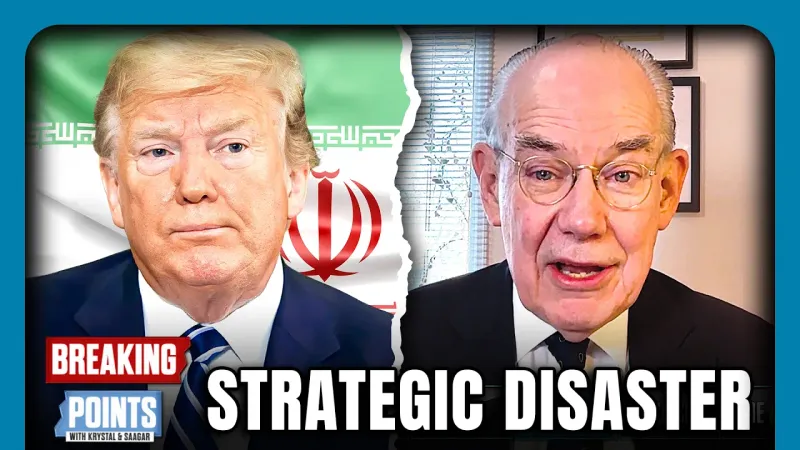
John Mearsheimer: Trump's War Is STRATEGIC DISASTER W/ No End In Sight
Breaking Points@breakingpointsJohn Mearsheimer: Trump's War Is STRATEGIC DISASTER W/ No End In Sight
Krystal and Saagar interview Professor John Mearsheimer about the Iran conflict and its escalation. He argues that starting the war was a major mistake, says Iran has significant leverage, and discusses attacks on energy infrastructure, oil prices, and the difficulty of finding an exit from the conflict.

- Views
- 1.8M
- Likes
- 30.7K
- Comments
- 3.9K
- Iran war escalationUS foreign policyOil Prices and MarketsWar exit prospects
Analysis
Krystal and Saagar interview Professor John Mearsheimer about the Iran conflict and its escalation. He argues that starting the war was a major mistake, says Iran has significant leverage, and discusses attacks on energy infrastructure, oil prices, and the difficulty of finding an exit from the conflict.
- InterviewNews analysis

- Title
- John Mearsheimer: Trump's War Is STRATEGIC DISASTER W/ No End In Sight
Joining us now is Professor John Mearsheimer of the University of Chicago, great friend of the show. We're honored to always to speak to him. Thank you very much for joining us, sir. >> My pleasure to be here. >> So, Professor, we haven't been able to speak with you since the outbreak of the conflict. We have been reading quite a bit and looking at some realist scholars. First, we've seen this piece from Foreign Affairs. Let's put this up here on the screen. Curious for your reaction. He says, "How America's war on Iran backfired and Tehran will now set the terms for peace." Your general reaction not only to the war as where we are standing now, but how if any way that this actual conflict could come to a close? >> I think that starting this war was a colossal mistake and it's hard to believe that President Trump did this. Not simply because he had promised that he would not start any more wars and certainly not get us into a forever war, but if you're going to go to war, this is the last war that you want to start and the reason is that the Iranians hold most of the cards. If you think about where we are today and you think more importantly about further marching up the escalation ladder, Iran can do enormous damage to the international economy and there's nothing much we can do to prevent that. So, we're in a precarious situation right now and I would argue we don't have an exit ramp, but as we move forward, things only get worse. >>
- 01Introduce the guest
Establish who will give the coming account and set up the host's first substantive question.
The host identifies the guest, their relevant affiliation, and familiarity with the show, then welcomes them.
“Joining us now is Professor John Mearsheimer of the University of Chicago, great friend of the show. We're honored to always to speak to him. Thank you very much for joining us, sir. >> My pleasure to be here. >>”
- 02Frame the issue and ask how it may end
Give the guest a specific proposition to address and establish the opening's central question: where the situation stands and whether there is a way to bring it to a close.
The host notes the gap since the last conversation, describes preparation, presents a claim about the conflict, and asks for the guest's assessment and view of how it could conclude.
So, Professor, we haven't been able to speak with you since the outbreak of the conflict. We have been reading quite a bit and looking at some realist scholars. First, we've seen this piece from Foreign Affairs. Let's put this up here on the screen. Curious for your reaction. He says, "How America's war on Iran backfired and Tehran will now set the terms for peace." Your general reaction not only to the war as where we are standing now, but how if any way that this actual conflict could come to a close? >>
- 03Give the judgment and describe the risks
Answer the host's request with a forceful assessment, then make the unresolved question consequential by outlining the guest's stated risks and grim outlook.
The guest calls starting the war a colossal mistake, explains why the opposing side holds leverage, and warns of potential economic damage and a precarious, worsening situation.
“I think that starting this war was a colossal mistake and it's hard to believe that President Trump did this. Not simply because he had promised that he would not start any more wars and certainly not get us into a forever war, but if you're going to go to war, this is the last war that you want to start and the reason is that the Iranians hold most of the cards. If you think about where we are today and you think more importantly about further marching up the escalation ladder, Iran can do enormous damage to the international economy and there's nothing much we can do to prevent that. So, we're in a precarious situation right now and I would argue we don't have an exit ramp, but as we move forward, things only get worse. >>”