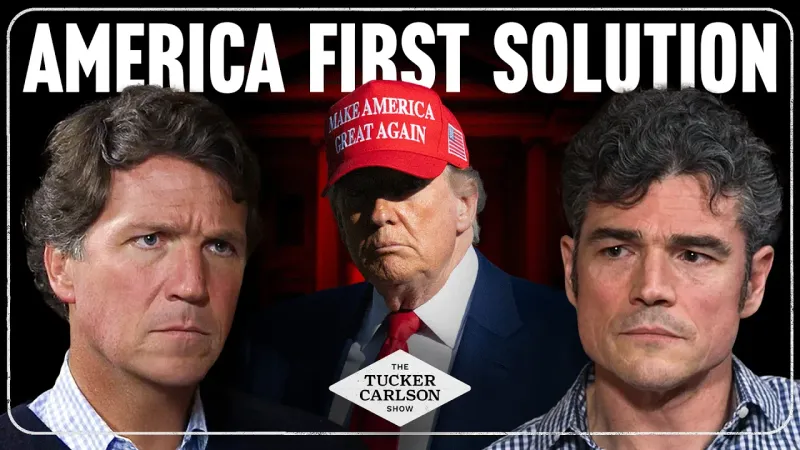
Joe Kent Reveals All in First Interview Since Resigning as Trump’s Counterterrorism Director
Tucker Carlson@TuckerCarlsonJoe Kent Reveals All in First Interview Since Resigning as Trump’s Counterterrorism Director
Tucker Carlson opens by revisiting Joe Kent’s earlier warning about the costs and strategic risks of a war with Iran, including the possible benefit to China. The interview is framed around Kent’s resignation and, according to the listed chapters, goes on to discuss Iran’s nuclear threat, Israel’s role, and U.S. decisions in the Middle East.
- Views
- 3.5M
- Likes
- 141.8K
- Comments
- 30K
- U.S. War With IranJoe Kent’s ResignationU.S. Foreign PolicyIsrael and U.S. Intelligence
Analysis
Tucker Carlson opens by revisiting Joe Kent’s earlier warning about the costs and strategic risks of a war with Iran, including the possible benefit to China. The interview is framed around Kent’s resignation and, according to the listed chapters, goes on to discuss Iran’s nuclear threat, Israel’s role, and U.S. decisions in the Middle East.
- InterviewCommentary

- Title
- Joe Kent Reveals All in First Interview Since Resigning as Trump’s Counterterrorism Director
“We want to start tonight with a clip from January of 2024. This is from this show and this is Joe Kent who later went on to become until yesterday the director of the National Counterterrorism Center. Here it is. What do you think the immediate and then longer term effects of a war with Iran would be on the United States? Immediately it would be very bloody. I I have no doubt that we could probably defeat some of their air defense and go in there and have another shock and awe campaign. But again, like we saw how the shock and awe campaign in Iraq really didn't actually work in the long run. Uh so I have no doubt that we'd have some immediate results that people would cheer about here in the United States, but Iran, Persia has always been an empire. It's been around longer than any of the other players in the modern Middle East right now, and they are not going anywhere. If we get deeply involved and deeply entangled with Iran, we are do we are playing right into China's hands because China would like nothing more than for us to be uh committing our military industrial base to a war in Eastern Europe in Ukraine and then to be committing our conventional military power, our blood and our treasure back in the Middle East. That will make the Pacific, our actual border, extremely vulnerable to Chinese aggression. or China will simply just watch us bleed out economically as we bleed out on the battlefield on these couple different theaters. It's absolute insanity. It's opening up Pandora's box and again for what gain to the American people. So the very first thing you notice about that clip which was shot almost exactly a year before the current president was inaugurated is that it was right. It was preient. He called it he called the the general outline. Not that it was hard to call, but Joe Kent knows what he's talking about. He spent a lot of his life in that region. And he said a year before this current presidency began, this is a big serious country. It's the oldest civilization in the region. And if we went to war with Iran, there would be a momentary sugar high. Americans would support it because they support their own country and they certainly support their military and people would approve of it. But very quickly you could see a process by which we got caught there, trapped there, bear trap. Hard to extricate yourself from that. And sitting on the sidelines would be our chief global competitor, China, who would be silently nodding along with a slowly spreading grin, knowing that they were the main beneficiary of what they were seeing of our waste of American lives and treasure, as Joe Kent said. So, we haven't reached that stage. Thankfully, we're moving toward it. And everyone who's watching carefully knows that. And if you're honest, you know that. So, this is a very serious moment we're in and we're watching not just a war in Iran, but potentially a total realignment of the world and the loss in some sense of what the United States has globally. This could be the beginning of the end of our influence in a lot of the world. And that's just the beginning. So again, that's a big deal. It's starting to dawn on people and that leaves Joe Kent as one of the relatively few people connected to this administration who said it in public. Is that good or bad? Well, it may seem good.”
- 01Introduce and play the excerpt
The clip supplies the opening’s central question and an initial answer, while immediately introducing the gap between early military success and longer-term consequences.
The host says the program will start with a clip from January 2024, identifies the show and Joe Kent’s later role as director of the National Counterterrorism Center, then introduces the excerpt. Kent is asked about the short- and long-term effects of war with Iran. He predicts immediate bloodshed, describes possible military success, and warns that an initial success may not hold over time.
“We want to start tonight with a clip from January of 2024. This is from this show and this is Joe Kent who later went on to become until yesterday the director of the National Counterterrorism Center. Here it is. What do you think the immediate and then longer term effects of a war with Iran would be on the United States? Immediately it would be very bloody. I I have no doubt that we could probably defeat some of their air defense and go in there and have another shock and awe campaign. But again, like we saw how the shock and awe campaign in Iraq really didn't actually work in the long run.”
- 02Explain the wider strategic risks
This extends the clip’s warning from immediate costs to a wider strategic consequence, making the issue matter beyond the original conflict.
Kent says there may be immediate results that people at home applaud, but argues that the opposing country will endure. He warns that involvement could play into another power’s interests, divert resources across multiple theaters, and leave the country’s actual border vulnerable or its forces economically and militarily depleted.
“Uh so I have no doubt that we'd have some immediate results that people would cheer about here in the United States, but Iran, Persia has always been an empire. It's been around longer than any of the other players in the modern Middle East right now, and they are not going anywhere. If we get deeply involved and deeply entangled with Iran, we are do we are playing right into China's hands because China would like nothing more than for us to be uh committing our military industrial base to a war in Eastern Europe in Ukraine and then to be committing our conventional military power, our blood and our treasure back in the Middle East. That will make the Pacific, our actual border, extremely vulnerable to Chinese aggression. or China will simply just watch us bleed out economically as we bleed out on the battlefield on these couple different theaters. It's absolute insanity. It's opening up Pandora's box and again for what gain to the American people. ”
- 03Host evaluates the clip
The host explicitly evaluates the clip and supplies the timing and experience context that support this assessment before continuing the argument.
The host says the clip, recorded almost exactly a year before the current president’s inauguration, was right and credits Kent with knowing the subject. The host cites Kent’s experience in the region and repeats Kent’s description of Iran as an old, serious country.
“So the very first thing you notice about that clip which was shot almost exactly a year before the current president was inaugurated is that it was right. It was preient. He called it he called the the general outline. Not that it was hard to call, but Joe Kent knows what he's talking about. He spent a lot of his life in that region. And he said a year before this current presidency began, this is a big serious country. It's the oldest civilization in the region.”
- 04Trace the possible escalation and its stakes
This develops the consequences from the clip into a host-framed, unresolved question about the wider outcome and why Kent’s public position matters.
The host relays Kent’s view that a war could first produce a temporary surge in public support, then become a trap that is difficult to leave. The host describes China as benefiting from U.S. losses and says the consequences could include a realignment of global power and the beginning of the end of U.S. influence in many places. The host notes that Kent was among relatively few people connected to the administration who said this publicly.
“And if we went to war with Iran, there would be a momentary sugar high. Americans would support it because they support their own country and they certainly support their military and people would approve of it. But very quickly you could see a process by which we got caught there, trapped there, bear trap. Hard to extricate yourself from that. And sitting on the sidelines would be our chief global competitor, China, who would be silently nodding along with a slowly spreading grin, knowing that they were the main beneficiary of what they were seeing of our waste of American lives and treasure, as Joe Kent said. So, we haven't reached that stage. Thankfully, we're moving toward it. And everyone who's watching carefully knows that. And if you're honest, you know that. So, this is a very serious moment we're in and we're watching not just a war in Iran, but potentially a total realignment of the world and the loss in some sense of what the United States has globally. This could be the beginning of the end of our influence in a lot of the world. And that's just the beginning. So again, that's a big deal. It's starting to dawn on people and that leaves Joe Kent as one of the relatively few people connected to this administration who said it in public. Is that good or bad? Well, it may seem good.”