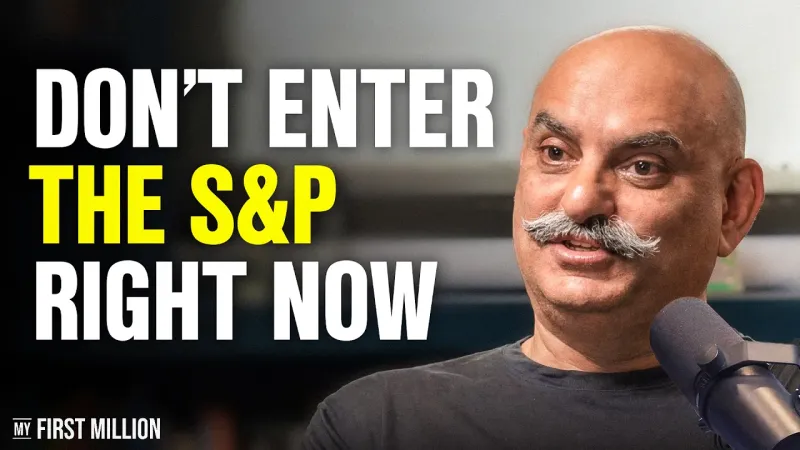
Don't Invest Another Dollar Before Watching This In 2026
My First Million@MyFirstMillionPodDon't Invest Another Dollar Before Watching This In 2026
This special episode collects replayed advice from value investors Mohnish Pabrai, Howard Marks and Guy Spier. The opening excerpt features Pabrai discussing a hypothetical path from $10,000 to $1 million, including saving regularly, Berkshire Hathaway and the risks of investing in an overheated S&P 500.

- Views
- 269.5K
- Likes
- 2.9K
- Comments
- 333
- Value investing strategiesBerkshire Hathaway investingLong-term investment returnsInvestor decision-making
Analysis
This special episode collects replayed advice from value investors Mohnish Pabrai, Howard Marks and Guy Spier. The opening excerpt features Pabrai discussing a hypothetical path from $10,000 to $1 million, including saving regularly, Berkshire Hathaway and the risks of investing in an overheated S&P 500.
- Podcast episodeCompilationInterview

- Title
- Don't Invest Another Dollar Before Watching This In 2026
How would I take 10K and turn it into a million? Circa 2025, you cannot go into the S&P. The S&P is overheated. So, what I would do is I would treat Berkshire Hathaway as the index. If you bought the S&P when the PE ratio is 23, your annualized return over the next 10 years was between two and minus two. So, all you have to know. Buffett's made at least 400 investment decisions. He's saying 12 are the ones that mattered. The god of investing has a 4% hit rate. Investing is an infinite game. You don't really win or lose, but the players just decide to drop out. Don't be such a freaking idiot. >> The riskiest thing in the world is the belief that there's no risk. When the time comes to buy, you won't want to. If I said, "What's the number one trait that makes a great investor?" What comes to mind? Um So, let let's play a game. You're my coach. You're my investing coach, let's say. And I have $10,000. And I want to turn it into a million, right? Podcast called My First Million. I want to go from 10K to a million. So, that's a 100X. How would I take 10K and turn it into a million? The thing about investing is that opportunities are not going to show up just because you have the cash. So, I would make some tweaks to your thinking first about the 10K. So, I would say, "Okay, the 10K is a good starting point. But I what what I also want you to do separately from that is have a day job. Yeah. Okay. And I want you to spend less than you're earning. And I want you to take the 10K, and I also want you to take your annual savings. Maybe that's 5, 10,000 a year, whatever it is. And normally I would say put it into an index, right? The index, like the S&P, is overheated.
- 01Ambitious goal and initial recommendation
The opening question sets the central goal. The immediate warning and alternative make the premise actionable and create interest in the rationale for that choice.
The speaker asks how to turn $10,000 into a million, warns against entering the S&P circa 2025, and proposes treating Berkshire Hathaway as the index instead.
“How would I take 10K and turn it into a million? Circa 2025, you cannot go into the S&P. The S&P is overheated. So, what I would do is I would treat Berkshire Hathaway as the index.”
- 02Historical return claim
This historical claim supplies a reason for the opening caution and gives the viewer a concrete basis to assess the recommendation, while remaining an unverified claim in this transcript.
The speaker cites a PE ratio of 23 and claims the S&P’s annualized return over the following ten years was between two and minus two.
“If you bought the S&P when the PE ratio is 23, your annualized return over the next 10 years was between two and minus two.”
- 03Investor success reframed
These claims complicate the idea that success requires frequent wins and broaden the opening’s premise from a single investment choice to how investors approach the long game.
The speaker says Buffett made at least 400 investment decisions but identifies 12 as the ones that mattered, then calls investing an infinite game in which players can drop out.
“So, all you have to know. Buffett's made at least 400 investment decisions. He's saying 12 are the ones that mattered. The god of investing has a 4% hit rate. Investing is an infinite game. You don't really win or lose, but the players just decide to drop out.”
- 04Confrontational transition and warning
The admonition heightens the caution, and the following statement sharpens the premise by naming overconfidence about risk as a danger to consider.
A sharp admonition is followed by a marked speaker transition and a general warning that believing there is no risk is itself risky.
“Don't be such a freaking idiot. >> The riskiest thing in the world is the belief that there's no risk.”
- 05Question posed to the viewer
The question shifts from a market warning to the qualities behind investment decisions, inviting the viewer to consider the answer before the exchange continues.
The speaker says a person may not want to buy when the time comes, then asks what trait makes a great investor and what comes to mind.
When the time comes to buy, you won't want to. If I said, "What's the number one trait that makes a great investor?" What comes to mind?
- 06Coach scenario and goal restated
The hypothetical coach setup turns the broad question into a direct advice scenario and repeats the target that the opening set out to address.
After a brief filler, the speaker proposes a game in which the other person is their investing coach, then restates the $10,000-to-a-million goal and names the podcast.
“Um So, let let's play a game. You're my coach. You're my investing coach, let's say. And I have $10,000. And I want to turn it into a million, right? Podcast called My First Million. I want to go from 10K to a million. So, that's a 100X.”
- 07Advice premise and transition into practical guidance
The answer begins to qualify the premise: simply having money is not enough. The advice then starts to become specific, marking the introduction’s transition into the main discussion.
The core question is repeated; the speaker says cash alone will not produce opportunities and begins recommending changes to the listener’s thinking and finances.
How would I take 10K and turn it into a million? The thing about investing is that opportunities are not going to show up just because you have the cash. So, I would make some tweaks to your thinking first about the 10K. So, I would say, "Okay, the 10K is a good starting point. But I what what I also want you to do separately from that is have a day job. Yeah. Okay. And I want you to spend less than you're earning. And I want you to take the 10K, and I also want you to take your annual savings. Maybe that's 5, 10,000 a year, whatever it is. And normally I would say put it into an index, right? The index, like the S&P, is overheated.