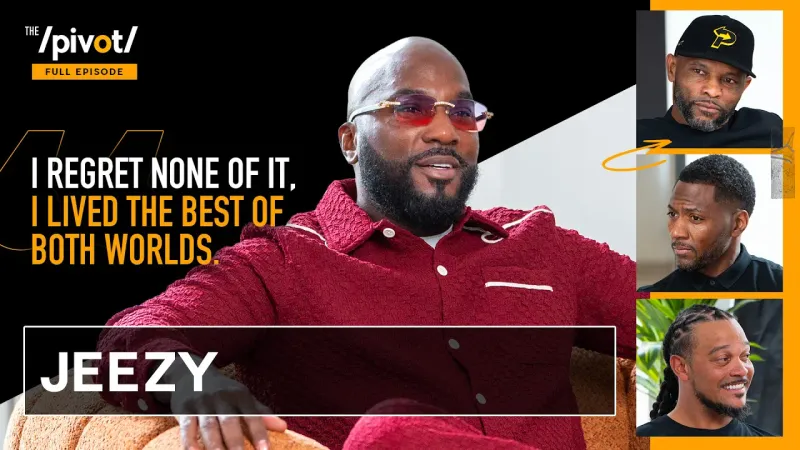
Jeezy evolution of his music, pain, pressure and why he never folded in the darkest times| The Pivot
The Pivot Podcast@thepivotpodcastJeezy evolution of his music, pain, pressure and why he never folded in the darkest times| The Pivot
Jeezy reflects on how his music and mindset changed, the pressures of his rise in Atlanta hip-hop, and the choices that helped him leave the streets. The conversation also touches on depression, fatherhood, healing, and memorable moments from his early performances; the episode description says he discusses a Las Vegas residency.

- Views
- 1.4M
- Likes
- 11K
- Comments
- 943
- Jeezy's Music EvolutionAtlanta Hip-Hop CulturePersonal Growth and ResilienceDepression and HealingFamily and Fatherhood
Analysis
Jeezy reflects on how his music and mindset changed, the pressures of his rise in Atlanta hip-hop, and the choices that helped him leave the streets. The conversation also touches on depression, fatherhood, healing, and memorable moments from his early performances; the episode description says he discusses a Las Vegas residency.
- InterviewPodcast episode

- Title
- Jeezy evolution of his music, pain, pressure and why he never folded in the darkest times| The Pivot
We get a praise as lonely at the top. You know, that's your real. You got to get comfortable with your own company. It's messy in the beginning. It's tricky in the middle, but it's beautiful in the end. So, they lock us up and I go to jail and they don't let me finish the last show. I'm looking at my stage set as they putting handcuffs on me. >> What was the transition of growth even to record my president is black four months before he won? >> I made a decision to leave the streets and what I knew. I made a decision and I stuck with it even when it got hard, even when I was lonely, even when I was confused. You know, I come from a culture where in the era where you couldn't really plan for Christmas cuz you didn't know if you was going to make it. >> What's one thing healing taught you that streets could never? >> I've lived nine lives. My only defense mechanism was just to be able to become numb. That's the beauty of it all because I was really depressed. >> Three songs in and I just see [ __ ] flying on the stage and I'm like, "Yo, man." I'm telling my my security, I'm like, "Yo, they throwing stuff at me." He said, "Sir, those are panties and bras." I was like, "Oh my god." >> Do you have any idea how much money you you have thrown in a strip club? >> none of >> it. >> My family, my kids are my joy. They're like my life. Just like anything else in life, the minute that you start wanting to be accepted is the minute you lose yourself. >> I >> brought Jeezy to Gainesville with you. >> My boy. Man, pleasure, legend. >> Pleasure, brother. >> I'm ready. >> Chance said he brought you to Gainesville with him, though. >> Man, that's what I >> Man, I got 05. Man, I got to college in 02 with that chopper die. >> Oh, yeah. Yeah. Yeah. >> And the Mitsubishi Delmonte, they said, "Bro, what's that?" Don't worry, I'll burn you one. I ain't buy it. >> Yeah, no. >> They weren't for sale. >> Hey. >> Yeah. >> You said you brought him to Gainesville. This is real life story. I don't know if you remember. 2004 Super Bowl in Jacksonville. >> Okay. >> You came down and did a show. >> Yep. >> Bam, promoted. That was my homeboy. I actually gave him the bread to bring you to Jacksonville. >> Oh, wow. >> Yeah, I was in a wheelchair on crutches. I was a little banged up, but you did your thing, left, so >> He was good or he straight where? >> He just passed away, heart attack. >> Okay. >> But, you legendary, for sure. >> You know what's crazy about that story is that's where I lost my voice at. >> Mhm. >> That show. >> Wow. >> That's when it actually happened. Nobody taught me how to perform, you know, cuz I'm coming straight from the streets, you know, and and it started to work over the years and now I got to do these performances and that was like the biggest show I ever done. >> Right. >> Cuz before then all the shows I was doing was like in these hole-in-the-wall clubs, didn't even have stages. You had to stand on the speakers. >> Right. >> And I was so excited about coming to Jacksonville for the Super Bowl, showed up about 100 deep, three tour buses.
- 01Reflective opening
This excerpt introduces a reflective perspective on achievement and solitude, giving the following personal stories a lens of struggle and growth.
A speaker offers a compact reflection on the difficulty of being at the top, learning to be comfortable alone, and how a hard beginning and middle can lead to a beautiful end.
“We get a praise as lonely at the top. You know, that's your real. You got to get comfortable with your own company. It's messy in the beginning. It's tricky in the middle, but it's beautiful in the end.”
- 02Interruption and decision
The abrupt personal account puts the reflection into a specific context; his stated decision and perseverance connect the interruption to the larger story of persistence.
Jeezy recalls being jailed before finishing a show, then answers a question about growth with his decision to leave the streets and persist through difficulty and uncertainty.
“So, they lock us up and I go to jail and they don't let me finish the last show. I'm looking at my stage set as they putting handcuffs on me. >> What was the transition of growth even to record my president is black four months before he won? >> I made a decision to leave the streets and what I knew. I made a decision and I stuck with it even when it got hard, even when I was lonely, even when I was confused.”
- 03Background and healing question
The background gives context for the uncertainty he describes, and the interviewer’s question opens the next excerpt around healing and personal change.
Jeezy describes a culture shaped by uncertainty about surviving to Christmas, followed by a question about what healing taught him that the streets could not.
“You know, I come from a culture where in the era where you couldn't really plan for Christmas cuz you didn't know if you was going to make it. >> What's one thing healing taught you that streets could never?”
- 04Healing and emotional defense
This candid account adds the emotional cost behind his experience and develops the interview’s focus on pain and survival.
Jeezy says he has lived many lives, describes becoming numb as his defense, and says he was depressed.
“>> I've lived nine lives. My only defense mechanism was just to be able to become numb. That's the beauty of it all because I was really depressed. >>”
- 05Unexpected concert moment
The anecdote shifts to a vivid, surprising episode from performing and supplies a lighter moment within the interview montage.
Jeezy recounts seeing objects fly onstage and initially thinking they were being thrown at him, before security clarifies what they are.
Three songs in and I just see [ __ ] flying on the stage and I'm like, "Yo, man." I'm telling my my security, I'm like, "Yo, they throwing stuff at me." He said, "Sir, those are panties and bras." I was like, "Oh my god."
- 06Brief money exchange
This brief interview excerpt adds another personal-life question, but the answer is incomplete in the supplied transcript.
A question about how much money Jeezy spent at a strip club is followed by a broken-off answer across several speaker cues.
“>> Do you have any idea how much money you you have thrown in a strip club? >> none of >> it.”
- 07Family and identity
The exchange turns from a personal anecdote to family and a broader reflection on identity, adding another dimension to the selected interview excerpts.
Jeezy identifies his children as his joy and life, then reflects that the desire for acceptance can mean losing yourself.
“>> My family, my kids are my joy. They're like my life. Just like anything else in life, the minute that you start wanting to be accepted is the minute you lose yourself. >>”
- 08Gainesville reunion
The exchange introduces a personal connection that leads into a story about an earlier show, though the transcript’s unfinished dialogue does not fully explain the setup.
The conversation shifts to a reunion, with speakers greeting one another and clarifying who brought Jeezy to Gainesville.
I >> brought Jeezy to Gainesville with you. >> My boy. Man, pleasure, legend. >> Pleasure, brother. >> I'm ready. >> Chance said he brought you to Gainesville with him, though. >> Man, that's what I >> Man, I got 05. Man, I got to college in 02 with that chopper die. >> Oh, yeah. Yeah. Yeah. >> And the Mitsubishi Delmonte, they said, "Bro, what's that?" Don't worry, I'll burn you one. I ain't buy it. >> Yeah, no. >> They weren't for sale. >> Hey. >> Yeah. >> You said you brought him to Gainesville.
- 09Jacksonville show story begins
The earlier event gives the montage a concrete career-history thread. The account continues into Jeezy’s condition at the time and the performance’s significance, but the supplied opening cuts off during that conversation.
A speaker identifies the exchange as a true story about a 2004 Super Bowl in Jacksonville, recalls the show and its promotion, and Jeezy reacts to learning who financed the trip.
“This is real life story. I don't know if you remember. 2004 Super Bowl in Jacksonville. >> Okay. >> You came down and did a show. >> Yep. >> Bam, promoted. That was my homeboy. I actually gave him the bread to bring you to Jacksonville. >> Oh, wow. >> Yeah, I was in a wheelchair on crutches. I was a little banged up, but you did your thing, left, so >> He was good or he straight where? >> He just passed away, heart attack. >> Okay. >> But, you legendary, for sure. >> You know what's crazy about that story is that's where I lost my voice at. >> Mhm. >> That show. >> Wow. >> That's when it actually happened. Nobody taught me how to perform, you know, cuz I'm coming straight from the streets, you know, and and it started to work over the years and now I got to do these performances and that was like the biggest show I ever done. >> Right. >> Cuz before then all the shows I was doing was like in these hole-in-the-wall clubs, didn't even have stages. You had to stand on the speakers. >> Right. >> And I was so excited about coming to Jacksonville for the Super Bowl, showed up about 100 deep, three tour buses.”