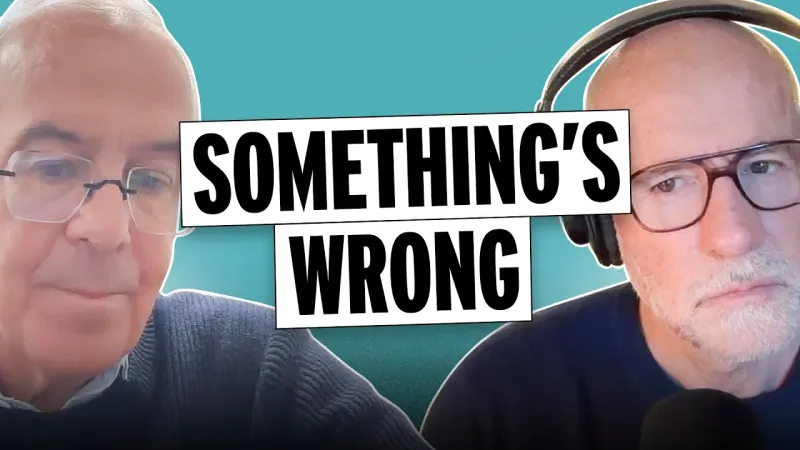
David Brooks: America Has a Moral Problem, Not a Political One | Prof G Conversations
The Prof G Pod – Scott Galloway@TheProfGPodDavid Brooks: America Has a Moral Problem, Not a Political One | Prof G Conversations
David Brooks joins Scott Galloway to discuss his view that America's deeper problems are moral and social, including resentment, declining purpose, and institutions' role in shaping character. They also touch on young people's sense of meaning, social media, AI, and the pressures facing public life.

- Views
- 400.4K
- Likes
- 11.6K
- Comments
- 2.4K
- America's Moral CrisisPurpose and MeaningSocial Media and AIPolitics and Trump
Analysis
David Brooks joins Scott Galloway to discuss his view that America's deeper problems are moral and social, including resentment, declining purpose, and institutions' role in shaping character. They also touch on young people's sense of meaning, social media, AI, and the pressures facing public life.
- Interview
- Title
- David Brooks: America Has a Moral Problem, Not a Political One | Prof G Conversations
And so, when I think about what's about to happen in the 2028 election, I think America's going to say, "Enough." I don't care if you like Trump or don't like Trump, but this walk through carnage and contention and bitterness and corruption, enough. We want the exact opposite. And I think what America's going to hunger for is not only a policy opposite Trump, but the moral opposite of Trump, and the social opposite of Trump, and the emotional opposite of Trump. >> David, where does this podcast find you? >> I am at the University of Michigan. I'm at an office they stuck me in a few steps away from the president's office. So, if you need me to get any student into the University of Michigan, I can just pop over and talk to them. >> So, I need that in writing as I have a 15-year-old David who who is good, but I'm not sure he's Michigan material. So, I need well-connected people. Um >> Does he happen to play basketball by any chance? >> Have you seen me? Yeah, no, that's uh I and I don't weird thing, I just had a physical. I used to be 6'3", now I'm 6'2". I'm shrinking, uh which happens when you get older, which is really exciting. Anyways, uh let's let's bust right into it. Earlier this year, you announced your departure from the New York Times after 22 years. You've sort of you you've kind of to a certain extent, you kind of identify or mark the times on a lot of levels. Um you said leaving felt like St. Peter leave leaving the Vatican that you were uh raised to think working there was the pinnacle, and you never contemplated leaving. What [snorts] finally convinced you to leave and join The Atlantic? >> Well, first of all, I'd been there 22 years, and I'm 64. I figure I've got about 10 or 11 years of work full-time work left in me. And I thought I'd be disappointed in myself if I didn't change. I I do think changing environments, changing situations is a good way to change your thinking. So, even though I was perfectly happy there, I thought I would change. Uh second, uh I think America's problems are less political and more sub-political these days. That we've sort of lost our humanistic core. Uh a sense of a sense of purpose, a sense of meaning. People are filled with resentment, spiritual crisis. 58% of college students don't have a sense they their life has purpose. >> [snorts] >> And so I thought to really address the issues at the level that I think they really exist at, A, I I would like to write longer. So at The Atlantic I can write 5,000 words, even 10,000 words. And in reality, any great university dealing with reviving the humanistic core is supposed to be what the project is all about. And so I thought I'd put myself more on a college campus where I could begin to think about, you know, what makes our souls sing? How do we find things to fall in love with? Uh how do we uh send have a sense of resilience? How do we How do we just fall in love? I I gave a talk at Yale recently called how to be ambitious without being a jerk. And I think those subjects have become central to my concerns. Uh more so than following Donald Trump every day, though I still do that, too. >> So talk about some of the subjects that require 5,000 words versus, you know, 1,000 or 1,500.
- 01Forecast
A specific future forecast establishes the conversation’s wider concern and leaves open whether the proposed alternatives will meet that desire.
The speaker predicts what a country will want in a future election, contrasting the current political climate with alternatives.
And so, when I think about what's about to happen in the 2028 election, I think America's going to say, "Enough." I don't care if you like Trump or don't like Trump, but this walk through carnage and contention and bitterness and corruption, enough. We want the exact opposite. And I think what America's going to hunger for is not only a policy opposite Trump, but the moral opposite of Trump, and the social opposite of Trump, and the emotional opposite of Trump.
- 02Rapport and transition
The brief exchange establishes a conversational setting and light rapport before the host moves into the main interview question.
The host asks where the guest is, and the guest describes being at a university near the president’s office, joking that he could speak with a student.
“>> David, where does this podcast find you? >> I am at the University of Michigan. I'm at an office they stuck me in a few steps away from the president's office. So, if you need me to get any student into the University of Michigan, I can just pop over and talk to them.”
- 03Personal banter
This exchange extends the informal rapport before the host explicitly turns to the interview.
The host jokes about needing a connection for a teenager’s admission; the guest asks whether the teenager plays basketball, then makes a self-deprecating remark about aging and shrinking.
>> So, I need that in writing as I have a 15-year-old David who who is good, but I'm not sure he's Michigan material. So, I need well-connected people. Um >> Does he happen to play basketball by any chance? >> Have you seen me? Yeah, no, that's uh I and I don't weird thing, I just had a physical. I used to be 6'3", now I'm 6'2". I'm shrinking, uh which happens when you get older, which is really exciting. Anyways, uh let's let's bust right into it.
- 04Career-change question
The question shifts from banter to the interview’s substantive discussion, inviting the guest to explain a consequential career choice.
The host brings up the guest’s departure from a long-held newspaper position, frames the old job as a pinnacle, and asks what persuaded him to leave for a new publication.
“Earlier this year, you announced your departure from the New York Times after 22 years. You've sort of you you've kind of to a certain extent, you kind of identify or mark the times on a lot of levels. Um you said leaving felt like St. Peter leave leaving the Vatican that you were uh raised to think working there was the pinnacle, and you never contemplated leaving. What [snorts] finally convinced you to leave and join The Atlantic? >>”
- 05Decision and broader diagnosis
The answer connects a personal career decision to the larger moral and social problem at the center of the packaging. The specific statistic supports his stated diagnosis, while the excerpt’s later continuation is unavailable.
The guest explains that he wanted to change environments before the end of his working life, then says America’s problems are increasingly rooted in lost humanistic purpose and meaning, citing a figure about college students.
“Well, first of all, I'd been there 22 years, and I'm 64. I figure I've got about 10 or 11 years of work full-time work left in me. And I thought I'd be disappointed in myself if I didn't change. I I do think changing environments, changing situations is a good way to change your thinking. So, even though I was perfectly happy there, I thought I would change. Uh second, uh I think America's problems are less political and more sub-political these days. That we've sort of lost our humanistic core. Uh a sense of a sense of purpose, a sense of meaning. People are filled with resentment, spiritual crisis. 58% of college students don't have a sense they their life has purpose. >> [snorts] >> And so I thought to really address the issues at the level that I think they really exist at, A, I I would like to write longer. So at The Atlantic I can write 5,000 words, even 10,000 words. And in reality, any great university dealing with reviving the humanistic core is supposed to be what the project is all about. And so I thought I'd put myself more on a college campus where I could begin to think about, you know, what makes our souls sing? How do we find things to fall in love with? Uh how do we uh send have a sense of resilience? How do we How do we just fall in love? I I gave a talk at Yale recently called how to be ambitious without being a jerk. And I think those subjects have become central to my concerns. Uh more so than following Donald Trump every day, though I still do that, too. >> So talk about some of the subjects that require 5,000 words versus, you know, 1,000 or 1,500.”