AI Bubble Will Burst Eventually Says Bridgewater's Ray Dalio
Bloomberg Podcasts@BloombergPodcastsAI Bubble Will Burst Eventually Says Bridgewater's Ray Dalio
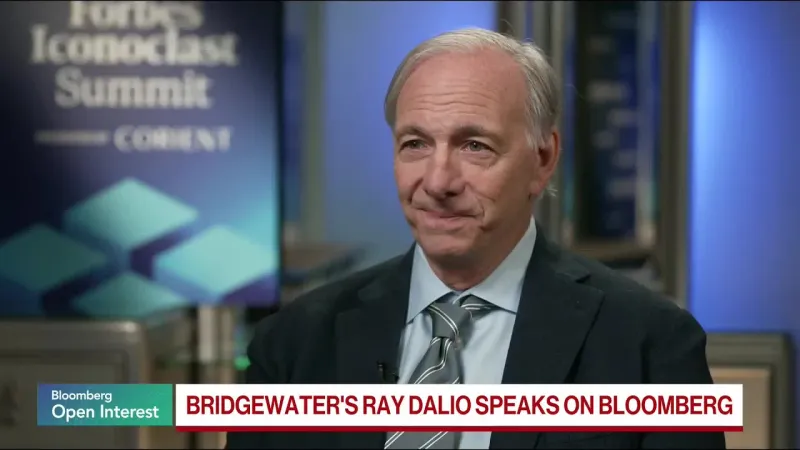
Ray Dalio discusses US debt and deficits, bond-market pressure, the dollar, gold demand, and concerns about an AI bubble in a conversation with Bloomberg's Dani Burger. In the opening exchange, he says the debt burden has passed a point of no return and outlines market signals he believes could accompany a crisis.

- Views
- 422.9K
- Likes
- 5.1K
- Comments
- 714
- US Debt and DeficitsBond market risksDollar and GoldArtificial intelligence bubble
Analysis
Ray Dalio discusses US debt and deficits, bond-market pressure, the dollar, gold demand, and concerns about an AI bubble in a conversation with Bloomberg's Dani Burger. In the opening exchange, he says the debt burden has passed a point of no return and outlines market signals he believes could accompany a crisis.
- Interview
- Title
- AI Bubble Will Burst Eventually Says Bridgewater's Ray Dalio
“Frae, thank you so much for joining. It's a treat. And, look, you've been doing a lot of work. You've been busy with these five forces that have been shaping the global economy. Just to quickly go through them, money and debt, internal order and disow order, power conflict, acts of nature, and technology. I wanna start on that first one, though, because it's a point that you've made globally but here in The US. $7,000,000,000,000 in spending, but only $5,000,000,000,000 in revenue. Ray, are we already past the point of no return that the fact we have this dynamic means that some sort of crisis is inevitable? Yes. We're we're past the point of no return, meaning, when debt service payments squeeze out spending, like plaque in the circulatory squeezes out the flow of, money, the flow of blood. It's the same kind of thing. It could be measured. So we're seeing that happen. And then there's a supply and a demand issue. The supply of, one budget deficit means that debt has to be sold, and you have a supply demand issue. And we could see it happening in the bond market, and we could see that bonds have been a bad investment and that there's pressure in interest rates and there's borrowing. And that's one of the five factors as you're saying, But that dynamic is happening. People are treating it, like, if it had hasn't happened before. They don't understand that like plaque in the arteries that it builds up and they have that exposure. So I think when you're looking I think of a particularly vulnerable period is, after the midterm elections and before the presidential election, because as we connect these forces, we have, that issue Right. The debt issue. And we also are going to have a great deal of political conflict that has implications for for taxes. It has implications for all sorts of things. So what does history tell us that this looks like when we get closer to that point? Is it yields breaching a certain level? Is it failed auctions? What would you look for to say, the time is here. The bond temper tantrum is is finally occurring. Well, it could be seen, excuse me, in either the bond market the the market action.”
- 01Guest and framework
This establishes the interview subject and gives the discussion a broad organizing framework before narrowing to one area.
The interviewer welcomes the guest, notes their work on a framework for forces shaping the global economy, lists the forces, and selects the first for discussion.
“Frae, thank you so much for joining. It's a treat. And, look, you've been doing a lot of work. You've been busy with these five forces that have been shaping the global economy. Just to quickly go through them, money and debt, internal order and disow order, power conflict, acts of nature, and technology. I wanna start on that first one, though, because it's a point that you've made globally but here in The US.”
- 02Imbalance and crisis question
The figures make the selected issue concrete, and the question raises the central consequence to be addressed.
The interviewer gives spending and revenue figures and asks whether the gap means a crisis is inevitable.
“$7,000,000,000,000 in spending, but only $5,000,000,000,000 in revenue. Ray, are we already past the point of no return that the fact we have this dynamic means that some sort of crisis is inevitable?”
- 03Answer and economic explanation
The answer raises the stakes, while the analogy and supporting explanation provide the guest's initial account rather than leaving the question wholly unanswered.
The guest answers yes, explains the debt-service squeeze with a circulation analogy, and connects borrowing and bond-market pressure to the broader dynamic.
“Yes. We're we're past the point of no return, meaning, when debt service payments squeeze out spending, like plaque in the circulatory squeezes out the flow of, money, the flow of blood. It's the same kind of thing. It could be measured. So we're seeing that happen. And then there's a supply and a demand issue. The supply of, one budget deficit means that debt has to be sold, and you have a supply demand issue. And we could see it happening in the bond market, and we could see that bonds have been a bad investment and that there's pressure in interest rates and there's borrowing. And that's one of the five factors as you're saying, But that dynamic is happening. People are treating it, like, if it had hasn't happened before. They don't understand that like plaque in the arteries that it builds up and they have that exposure. So I think when you're looking I think of a particularly vulnerable period is, after the midterm elections and before the presidential election, because as we connect these forces, we have, that issue Right. The debt issue. And we also are going to have a great deal of political conflict that has implications for for taxes. It has implications for all sorts of things.”
- 04Historical warning signs
This follow-up turns the broad risk into a question about recognizable indicators. The excerpt then shifts into sustained market explanation, so the introduction ends at the start of that answer.
The interviewer asks what history suggests the situation looks like near the critical point, naming possible signals and asking what to watch for. The guest begins an answer about market action.
“So what does history tell us that this looks like when we get closer to that point? Is it yields breaching a certain level? Is it failed auctions? What would you look for to say, the time is here. The bond temper tantrum is is finally occurring. Well, it could be seen, excuse me, in either the bond market the the market action.”