Hacker Shocks Tucker With the Most Dangerous Technology You Didn’t Know Existed
Tucker Carlson Network@TCNetworkHacker Shocks Tucker With the Most Dangerous Technology You Didn’t Know Existed
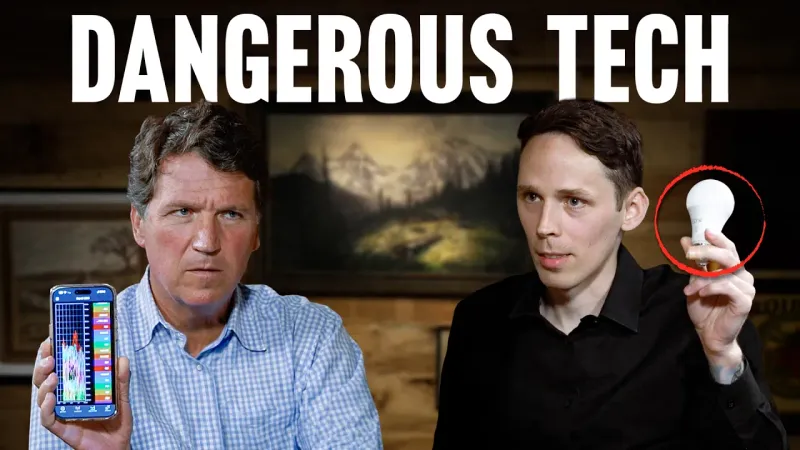
A conversation between Tucker Carlson and hacker Ryan Montgomery explores how modified smart bulbs and other small devices could be used to attack Wi-Fi networks. Montgomery describes techniques including disconnecting devices, capturing a network handshake, and redirecting traffic, while noting that the bulb example requires Wi-Fi range.

- Views
- 1.4M
- Likes
- 22K
- Comments
- 1.9K
- Wi-Fi Security RisksModified smart bulbsNetwork intrusion methods
Analysis
A conversation between Tucker Carlson and hacker Ryan Montgomery explores how modified smart bulbs and other small devices could be used to attack Wi-Fi networks. Montgomery describes techniques including disconnecting devices, capturing a network handshake, and redirecting traffic, while noting that the bulb example requires Wi-Fi range.
- Interview
- Title
- Hacker Shocks Tucker With the Most Dangerous Technology You Didn’t Know Existed
“What is that box of gadgets right there? >> I got a lot of gadgets for you and I think that you're going to like them. So, we let's see. Let's get to some better better happy >> No, I don't know if that's happy or not. I'm afraid of gadgets, too. >> Well, there no, there it's a different type of fear. The other ones are more of a yeah, I'll show you. I almost messed with you and I don't want to give away where we're at right now, but downstairs is a very unique place, right? And there's a lamp that happened to be sitting there. I don't know, you know, you probably don't even know it's there, but to the left of the couch is a lamp sitting there. And then this right here, my friend, his name is Peaks. He took a regular bulb off of Amazon. It's called Wyze, like and then he made a bunch of different ones. So, like you could buy this smart bulb on Amazon and make it change colors. Essentially, is all that it does. He he put modified software or firmware onto this bulb and I can match the colors of your other bulbs. Let's say I was in your bathroom going to, you know, using it, swapped out a bulb, and left your office. Now I have a an implant that I can monitor your your Wi-Fi or or try to pivot from this device to your other devices and take over your computers you know, in your house or your office. And you know, I could show you if you had a lamp, I could show you, but you know, >> Well, tell me what it does. So, I leave that in your house and then I get to do what? >> So, leave this in in a house, for example, the goal would be to access your your your network. So, I would knock your devices offline with it. It has the ability to do that, which you know, I it's got a deauthentication attack and then from there you capture what's called a handshake. And then I can try to crack your Wi-Fi password from that handshake. Once I have that, now this light bulb is on your network with the rest of your computers and um you know, from from there I could try to pivot from the bulb onto your computers with your sensitive information and and files and you know, anything or I could start to reroute your traffic with it's called DNS to phishing pages and try to steal credentials. I mean this light bulb could could be you know how a router is connected to the internet? >> Yes. >> I could trick your computer into believing that this light bulb is the router. So I have the way I'm routing the internet through the bulb. It can do a lot more than that. I'm just trying to simplify it a little bit. >> And like you can communicate with that light bulb from afar. >> Um in in this this bulb no, I have to you have to be within Wi-Fi range. >> Yeah. >> There are other devices that are implants that you could at a distance with SIM cards or or other means or if they're plugged directly into the back of a computer. You know, like I do have one of those in my bag that you would never know. You would never unplug it cuz it looks like it's it's supposed to be there. That one connects you know, I could be in Guatemala and I could have complete control over that device from Guatemala.”
- 01Introduce the gadgets
This establishes the objects and conversational setting, while the mixed reaction invites curiosity about what makes these gadgets appealing or unsettling.
One speaker asks about a box of gadgets; the other says they brought several and thinks the first speaker will like them. The exchange turns briefly to fear of gadgets.
“What is that box of gadgets right there? >> I got a lot of gadgets for you and I think that you're going to like them. So, we let's see. Let's get to some better better happy >> No, I don't know if that's happy or not. I'm afraid of gadgets, too.”
- 02Set up the unusual example
The reserved location and the contrast between an ordinary bulb and its modification make the example feel worth hearing about, without yet explaining its full capability.
The speaker says the gadgets inspire different kinds of fear, hints at a downstairs location without revealing it, and introduces a lamp and a regular bulb modified by a friend.
“>> Well, there no, there it's a different type of fear. The other ones are more of a yeah, I'll show you. I almost messed with you and I don't want to give away where we're at right now, but downstairs is a very unique place, right? And there's a lamp that happened to be sitting there. I don't know, you know, you probably don't even know it's there, but to the left of the couch is a lamp sitting there. And then this right here, my friend, his name is Peaks. He took a regular bulb off of Amazon. It's called Wyze, like and then he made a bunch of different ones.”
- 03Explain the bulb and propose a threat
This is the central danger claim: a familiar device is presented as a possible entry point to a network and its sensitive information. The increasingly consequential examples make the premise concrete, while the speaker frames them as possible uses rather than confirmed events.
The speaker contrasts ordinary color-changing behavior with modified software or firmware that could match other bulbs' colors. A hypothetical scenario then escalates into a proposed network intrusion, including knocking devices offline, capturing a handshake, attempting to crack a Wi-Fi password, and potentially reaching computers or redirecting traffic to phishing pages.
“So, like you could buy this smart bulb on Amazon and make it change colors. Essentially, is all that it does. He he put modified software or firmware onto this bulb and I can match the colors of your other bulbs. Let's say I was in your bathroom going to, you know, using it, swapped out a bulb, and left your office. Now I have a an implant that I can monitor your your Wi-Fi or or try to pivot from this device to your other devices and take over your computers you know, in your house or your office. And you know, I could show you if you had a lamp, I could show you, but you know, >> Well, tell me what it does. So, I leave that in your house and then I get to do what? >> So, leave this in in a house, for example, the goal would be to access your your your network. So, I would knock your devices offline with it. It has the ability to do that, which you know, I it's got a deauthentication attack and then from there you capture what's called a handshake. And then I can try to crack your Wi-Fi password from that handshake. Once I have that, now this light bulb is on your network with the rest of your computers and um you know, from from there I could try to pivot from the bulb onto your computers with your sensitive information and and files and you know, anything or I could start to reroute your traffic with it's called DNS to phishing pages and try to steal credentials. I mean this light bulb could could be you know how a router is connected to the internet? >> Yes. >> I could trick your computer into believing that this light bulb is the router. So I have the way I'm routing the internet through the bulb. It can do a lot more than that. I'm just trying to simplify it a little bit.”
- 04Qualify the claimed range
The exchange qualifies the earlier remote-access suggestion and broadens the discussion to other devices. The supplied opening ends mid-discussion, before a clear transition to the main content, so the introduction boundary is limited by the excerpt.
After a question about communicating with the bulb from afar, the speaker clarifies that this particular bulb requires Wi-Fi range, then describes other devices that may use a SIM card or connect directly to a computer. The excerpt ends with an example of a concealed device that could be controlled from Guatemala.
“>> And like you can communicate with that light bulb from afar. >> Um in in this this bulb no, I have to you have to be within Wi-Fi range. >> Yeah. >> There are other devices that are implants that you could at a distance with SIM cards or or other means or if they're plugged directly into the back of a computer. You know, like I do have one of those in my bag that you would never know. You would never unplug it cuz it looks like it's it's supposed to be there. That one connects you know, I could be in Guatemala and I could have complete control over that device from Guatemala.”