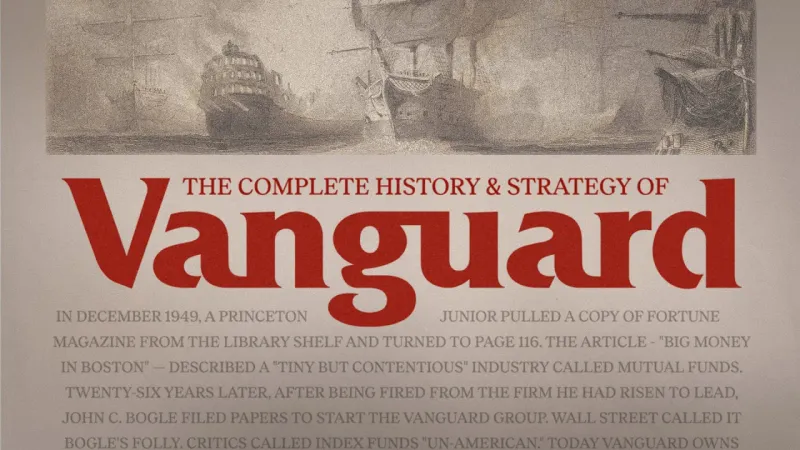
Vanguard: The communist capitalist who saved investors a trillion dollars (Audio)
Acquired@AcquiredFMVanguard: The communist capitalist who saved investors a trillion dollars (Audio)
Acquired hosts trace Vanguard’s history and the ideas behind its investor-owned structure, from Jack Bogle’s career and the firm’s founding to the rise of index funds. The episode describes how Vanguard’s low-fee approach affected investors and the wider fund industry; the hosts cite an estimate of more than $500 billion in fees and trading costs saved since 1975.
- Views
- 101.7K
- Likes
- 815
- Comments
- 52
- Vanguard company historyJack bogleIndex fund investingMutual ownership model
Analysis
Acquired hosts trace Vanguard’s history and the ideas behind its investor-owned structure, from Jack Bogle’s career and the firm’s founding to the rise of index funds. The episode describes how Vanguard’s low-fee approach affected investors and the wider fund industry; the hosts cite an estimate of more than $500 billion in fees and trading costs saved since 1975.
- Podcast episodeDocumentary
- Title
- Vanguard: The communist capitalist who saved investors a trillion dollars (Audio)
“I was telling my wife, you know, I think I'll be able to do bedtime tonight, maybe. Maybe even dinner. And she was like, whoa, whoa, whoa, don't get ahead of yourself. Let's not go crazy here. How complicated could it be? It's index funds and active funds and money market and brokerage and advisory. Yeah, yeah, yeah. But really, it's mostly index funds. All right, let's do it. Let's do it. Vanguard. Who got the truth? Is it you? Is it you? Is it you? Who got the truth now? Is it you? Is it you? Is it you? Sit me down. Say it straight. Another story on the way. Who got the truth? Welcome to the spring 2026 season of acquired, the podcast about great companies and the stories and playbooks behind them. I'm Ben Gilbert. I'm David Rosenthal, and we are your hosts. Today's episode is more relevant for you than any other company we have ever covered. For most of you, you have most of your net worth Tied up in this company or the copycats who followed the company is Vanguard, who effectively created the first index fund for individual investors in 1975 and today is the largest provider of index funds in the United States. They manage over $10 trillion in passive index funds. That means they own an average of almost 10% of every company in the S&P 500. General Motors, Nike, Starbucks, Lockheed Martin, Visa, Apple, you name it. Vanguard is the largest shareholder of most U.S. corporations, and together with the other big index funds like BlackRock, State street and Fidelity, they own 24% of the entire US stock market. It's absolutely incredible. And none of those other firms would be in this market are doing it in the same way if it weren't for Vanguard. No, I mean, the impact is just wild. I mean, millions and millions and millions of people have sent their kids to college, bought homes, retired comfortably because of Vanguard and Jack Bogle. So Vanguard has an incredibly unique corporate structure. If you are an investor in a Vanguard fund, you own a piece of the firm. Vanguard is owned exclusively by its customers, and it's not publicly traded. It doesn't have outside shareholders of any other kind. Even the CEO doesn't have any equity, except, of course, then what he has from investing in the funds, just like me and David and all of you. In many ways, it is a different kind of capitalism. Dare we say communist capitalism. Ooh, I like it. A company whose products exclusively serve the interests of its customers and. And no other shareholders. And David, as you've been alluding to, the man behind this idea is A visionary, an iconoclast, and a pedantic stick in the mud who was as disagreeable as he was. Right. Jack Bogle. Oh, that's great. I couldn't have written it better myself, Ben. And his story is wild since he didn't start Vanguard until he was 46 years old. And you might think it was started idealistically given this structure we're talking about. And it was sort of. But the story is equal parts idealistic as it is vindictive. But what is clear, we all owe Jack, a giant thank you. Because of Vanguard's relentless cost cutting and low fees, Vanguard has saved investors over $500 billion in fees and trading costs since its founding in 1975. And as a recent book, the Bogle Effect argues, Vanguard's actions also forced the hand of the rest of the industry to cut their fees, totaling another 5 billion over time.”
- 01Personal exchange
Begins with a personal moment that makes the opening conversational before turning to the company's subject.
The speaker shares a casual exchange with his wife about whether he might manage bedtime and dinner, and her response.
“I was telling my wife, you know, I think I'll be able to do bedtime tonight, maybe. Maybe even dinner. And she was like, whoa, whoa, whoa, don't get ahead of yourself. Let's not go crazy here.”
- 02Subject and show welcome
Bridges the personal opener to the episode subject and identifies the recurring show, its coverage and its hosts.
A rhetorical question leads into a quick list of Vanguard-related topics, followed by the podcast's season and format identification.
“How complicated could it be? It's index funds and active funds and money market and brokerage and advisory. Yeah, yeah, yeah. But really, it's mostly index funds. All right, let's do it. Let's do it. Vanguard. Who got the truth? Is it you? Is it you? Is it you? Who got the truth now? Is it you? Is it you? Is it you? Sit me down. Say it straight. Another story on the way. Who got the truth? Welcome to the spring 2026 season of acquired, the podcast about great companies and the stories and playbooks behind them. I'm Ben Gilbert. I'm David Rosenthal, and we are your hosts.”
- 03Why the subject matters
Makes the company personally consequential to the audience and establishes its reach and historical importance.
The hosts say the episode is unusually relevant, connect viewers' net worth to Vanguard and its imitators, and introduce Vanguard's role in creating an index fund for individual investors.
“Today's episode is more relevant for you than any other company we have ever covered. For most of you, you have most of your net worth Tied up in this company or the copycats who followed the company is Vanguard, who effectively created the first index fund for individual investors in 1975 and today is the largest provider of index funds in the United States.”
- 04Scale and influence
Uses scale and stated consequences to explain why the company matters, while building toward its distinctive structure.
The hosts give figures for assets managed and shares owned, name major corporations and other fund providers, then describe Vanguard's influence and claimed benefits to millions of people.
“They manage over $10 trillion in passive index funds. That means they own an average of almost 10% of every company in the S&P 500. General Motors, Nike, Starbucks, Lockheed Martin, Visa, Apple, you name it. Vanguard is the largest shareholder of most U.S. corporations, and together with the other big index funds like BlackRock, State street and Fidelity, they own 24% of the entire US stock market. It's absolutely incredible. And none of those other firms would be in this market are doing it in the same way if it weren't for Vanguard. No, I mean, the impact is just wild. I mean, millions and millions and millions of people have sent their kids to college, bought homes, retired comfortably because of Vanguard and Jack Bogle.”
- 05Ownership model
Explains the unusual ownership premise and presents the central ideological contrast that distinguishes the company.
The speaker explains that fund investors own a piece of the firm, which is owned exclusively by customers rather than public or outside shareholders, and introduces the phrase “communist capitalism.”
“So Vanguard has an incredibly unique corporate structure. If you are an investor in a Vanguard fund, you own a piece of the firm. Vanguard is owned exclusively by its customers, and it's not publicly traded. It doesn't have outside shareholders of any other kind. Even the CEO doesn't have any equity, except, of course, then what he has from investing in the funds, just like me and David and all of you. In many ways, it is a different kind of capitalism. Dare we say communist capitalism. Ooh, I like it. A company whose products exclusively serve the interests of its customers and. And no other shareholders.”
- 06Bogle's character and legacy
Introduces the human story behind the company, preserves the qualification that its founding story had mixed motives, and closes the introduction with the stated impact claim. The supplied excerpt ends here, so it does not establish what follows.
The hosts describe Jack Bogle in contrasting terms, note he founded Vanguard at 46, characterize the story as both idealistic and vindictive, and cite a claim of more than $500 billion in savings.
“And David, as you've been alluding to, the man behind this idea is A visionary, an iconoclast, and a pedantic stick in the mud who was as disagreeable as he was. Right. Jack Bogle. Oh, that's great. I couldn't have written it better myself, Ben. And his story is wild since he didn't start Vanguard until he was 46 years old. And you might think it was started idealistically given this structure we're talking about. And it was sort of. But the story is equal parts idealistic as it is vindictive. But what is clear, we all owe Jack, a giant thank you. Because of Vanguard's relentless cost cutting and low fees, Vanguard has saved investors over $500 billion in fees and trading costs since its founding in 1975. And as a recent book, the Bogle Effect argues, Vanguard's actions also forced the hand of the rest of the industry to cut their fees, totaling another 5 billion over time.”