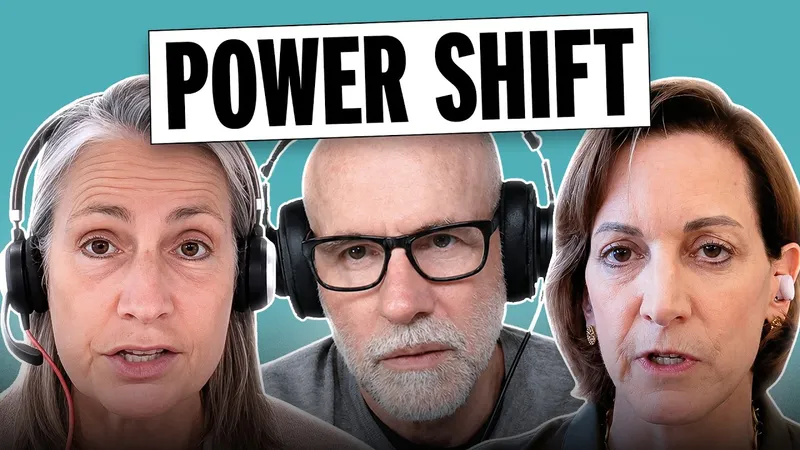
Anne Applebaum and Fiona Hill: Are the Autocrats Winning?
The Prof G Pod – Scott Galloway@TheProfGPodAnne Applebaum and Fiona Hill: Are the Autocrats Winning?
Scott Galloway speaks with Anne Applebaum and Fiona Hill about the wars in Iran and Ukraine and what they may mean for global power and America’s role. In the opening, they discuss the reasons for US involvement in Iran, Lebanon’s connection to the conflict, and how leaders approach war; the episode description also promises discussion of alliances and authoritarian regimes.

- Views
- 240.2K
- Likes
- 8.3K
- Comments
- 996
- Iran and Ukraine warsAuthoritarian regimesUS foreign policyGlobal power and alliances
Analysis
Scott Galloway speaks with Anne Applebaum and Fiona Hill about the wars in Iran and Ukraine and what they may mean for global power and America’s role. In the opening, they discuss the reasons for US involvement in Iran, Lebanon’s connection to the conflict, and how leaders approach war; the episode description also promises discussion of alliances and authoritarian regimes.
- InterviewPodcast episode
- Title
- Anne Applebaum and Fiona Hill: Are the Autocrats Winning?
“There's a big difference between wars that are existential and wars of choice. If you're America in Iran, why exactly are you fighting? You're fighting because Trump was angry that he didn't get rid of all the nuclear facilities and the bombing strike last year, I guess, you know, or you're fighting for Trump's need to make friends with Netanyahu or to show that he's on their side. I mean, who knows what it's Trump has never made it really clear why he's fighting or why America's fighting there. So, I don't think it's a problem of democracy. I think it's a problem of why are we in this war? And you wrote that Trump does not think strategically or historically. How do you assess his handling of this war u thus far? >> He's not handling it strategically. He's handling it the way he handles everything. Namely, when he looks at the problem, he doesn't think how do I solve this in a way that's good for Americans, that's good for the people of the Middle East, that's good for the people of Iran. He thinks, how is this good for me? How do I emerge from this conflict as the winner? Uh how do I make sure people don't say I'm just have I'm just adopting Obama's deal or people don't say X or Y. He's not thinking about solving the problem on behalf of others. He's thinking entirely about himself. And I mean, I think that's why you get these strange zigzags, these strange claims that he's about to do a deal or not to do a deal. He's trying to create applause. He's not trying to solve the problem. >> And Fiona, walk us through uh or either of you can comment on this. Walk us through. It appears I think Americans you know barely have the time to understand domestic politics much less international politics and it feels as if there's not enough attention or understanding around how Lebanon has become a key point of tension between Israel Iran and the US and you go first. What role or describe the situation and I'd like to get Fiona's reaction. So Lebanon is important to Israel because uh Lebanon is the home of Hezbollah which is a really important Iranian proxy. Uh Iran has tried to spread its revolution around the Middle East through the use of through the creation of other groups who have Islamic ideologies and who work not necessarily exactly coordinated with Iran but in the same you know toward in the same direction. And Israel feels that it won't be safe until it has destroyed not only the regime in Iran, which I think is still its ultimate goal, uh, but also all of these proxies. Um, and so the war in Lebanon is not from either from the Israeli or from the Iranian point of view. It's not a separate story. It's part of the same It's part of the same picture. I'm not sure that Donald Trump understands that um or that his team understands that. But for the Israelis, it's part of that um it's part of the story. And if the war isn't over there, if the Israelis haven't defeated Hezbollah there, which by the way, I should say is probably a generational task, uh then then the war is not over. >> Fiona, any thoughts? >>”
- 01Frame the central distinction
This sets up the key question of whether the war is necessary or chosen, and makes the lack of a clear rationale part of the issue.
The speaker distinguishes existential wars from wars of choice, then asks why America is fighting in Iran and proposes possible motives while acknowledging uncertainty.
“There's a big difference between wars that are existential and wars of choice. If you're America in Iran, why exactly are you fighting? You're fighting because Trump was angry that he didn't get rid of all the nuclear facilities and the bombing strike last year, I guess, you know, or you're fighting for Trump's need to make friends with Netanyahu or to show that he's on their side. I mean, who knows what it's Trump has never made it really clear why he's fighting or why America's fighting there. So, I don't think it's a problem of democracy. I think it's a problem of why are we in this war?”
- 02Ask for a strategic assessment
The question moves from the war's rationale to an assessment of its conduct, and the guest's brief answer sets up a fuller explanation.
The interviewer cites the guest's earlier writing about Trump's strategic and historical thinking, asks how he has handled the war, and the guest answers that he has not handled it strategically.
“And you wrote that Trump does not think strategically or historically. How do you assess his handling of this war u thus far? >> He's not handling it strategically.”
- 03Explain the guest's critique
The answer supplies the guest's explanation of the strategic criticism, but the exchange remains introductory: the interviewer next invites the other guest to widen the discussion.
The guest contrasts solving a problem for the public with trying to emerge as the winner personally, then characterizes the leader's shifting claims as an effort to create applause rather than solve the problem.
“He's handling it the way he handles everything. Namely, when he looks at the problem, he doesn't think how do I solve this in a way that's good for Americans, that's good for the people of the Middle East, that's good for the people of Iran. He thinks, how is this good for me? How do I emerge from this conflict as the winner? Uh how do I make sure people don't say I'm just have I'm just adopting Obama's deal or people don't say X or Y. He's not thinking about solving the problem on behalf of others. He's thinking entirely about himself. And I mean, I think that's why you get these strange zigzags, these strange claims that he's about to do a deal or not to do a deal. He's trying to create applause. He's not trying to solve the problem.”
- 04Widen the frame to Lebanon
This gives the discussion regional context and develops how Lebanon fits into the conflict. It ends with the interviewer asking Fiona for thoughts; the excerpt cuts off before her response, so the opening boundary is limited by the supplied source.
The interviewer invites Fiona or either guest to explain Lebanon's importance, noting limited public attention to international politics and describing Lebanon as a point of tension among Israel, Iran, and the US. The response explains the role of Hezbollah and Iran-aligned groups, Israel's stated security aims, and why Lebanon is part of the same conflict rather than a separate story.
“>> And Fiona, walk us through uh or either of you can comment on this. Walk us through. It appears I think Americans you know barely have the time to understand domestic politics much less international politics and it feels as if there's not enough attention or understanding around how Lebanon has become a key point of tension between Israel Iran and the US and you go first. What role or describe the situation and I'd like to get Fiona's reaction. So Lebanon is important to Israel because uh Lebanon is the home of Hezbollah which is a really important Iranian proxy. Uh Iran has tried to spread its revolution around the Middle East through the use of through the creation of other groups who have Islamic ideologies and who work not necessarily exactly coordinated with Iran but in the same you know toward in the same direction. And Israel feels that it won't be safe until it has destroyed not only the regime in Iran, which I think is still its ultimate goal, uh, but also all of these proxies. Um, and so the war in Lebanon is not from either from the Israeli or from the Iranian point of view. It's not a separate story. It's part of the same It's part of the same picture. I'm not sure that Donald Trump understands that um or that his team understands that. But for the Israelis, it's part of that um it's part of the story. And if the war isn't over there, if the Israelis haven't defeated Hezbollah there, which by the way, I should say is probably a generational task, uh then then the war is not over. >> Fiona, any thoughts? >>”