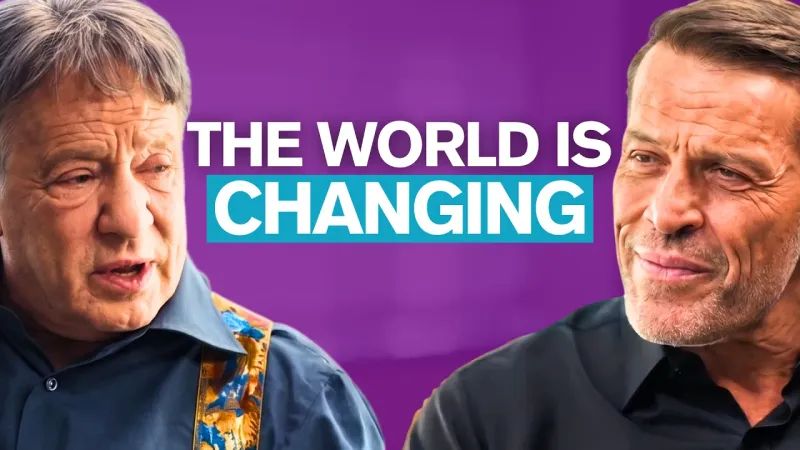
Ray Kurzweil Predicts AI Will Change Humanity Completely by 2030
Tony Robbins@TonyRobbinsLiveRay Kurzweil Predicts AI Will Change Humanity Completely by 2030
Tony Robbins interviews Ray Kurzweil about AI's accelerating development, the prospect of AGI, and how technology could reshape work, healthcare, longevity and society. In the opening, Kurzweil discusses simulated human trials and integrating AI with the brain; the source also highlights his forecasts for the coming decade.
- Views
- 316.9K
- Likes
- 7.9K
- Comments
- 943
- Artificial general intelligenceAI and Human FuturesLongevity and HealthcareExponential technology
Analysis
Tony Robbins interviews Ray Kurzweil about AI's accelerating development, the prospect of AGI, and how technology could reshape work, healthcare, longevity and society. In the opening, Kurzweil discusses simulated human trials and integrating AI with the brain; the source also highlights his forecasts for the coming decade.
- Interview

- Title
- Ray Kurzweil Predicts AI Will Change Humanity Completely by 2030
“The computer will actually generate The computer will actually generate The computer will actually generate millions of possibilities and go through millions of possibilities and go through millions of possibilities and go through them all. You can actually do human them all. You can actually do human them all. You can actually do human trials. trials. trials. >> Yes. >> Yes. >> Yes. >> But using simulated humans. As you go >> But using simulated humans. As you go >> But using simulated humans. As you go past 2032 yards, you get back more than past 2032 yards, you get back more than past 2032 yards, you get back more than a year. But you won't die of aging at a year. But you won't die of aging at a year. But you won't die of aging at that point. We're going to put the AI that point. We're going to put the AI that point. We're going to put the AI inside us. You're not going to know if inside us. You're not going to know if inside us. You're not going to know if it's coming from biological brain or a it's coming from biological brain or a it's coming from biological brain or a computational brain. It's going to be computational brain. It's going to be computational brain. It's going to be part of you. And that that's the future. part of you. And that that's the future. part of you. And that that's the future. >> This is the man who spent 60 years of >> This is the man who spent 60 years of >> This is the man who spent 60 years of his life studying artificial his life studying artificial his life studying artificial intelligence. He made 147 intelligence. He made 147 intelligence. He made 147 documented predictions about technology documented predictions about technology documented predictions about technology since 1990. And when he said most of since 1990. And when he said most of since 1990. And when he said most of them, scientists laughed. But his them, scientists laughed. But his them, scientists laughed. But his accuracy has been 86%. He predicted the accuracy has been 86%. He predicted the accuracy has been 86%. He predicted the explosion of the internet, smartphones explosion of the internet, smartphones explosion of the internet, smartphones before they existed, self-driving cars, before they existed, self-driving cars, before they existed, self-driving cars, AI-powered search engines. All this AI-powered search engines. All this AI-powered search engines. All this before most people even owned a desktop before most people even owned a desktop before most people even owned a desktop computer. computer. computer. And this is the power of exponential And this is the power of exponential And this is the power of exponential thinking. And the reason I'm telling thinking. And the reason I'm telling thinking. And the reason I'm telling this story is because it's exactly what this story is because it's exactly what this story is because it's exactly what most of us are missing right now. If you most of us are missing right now. If you most of us are missing right now. If you feel like you're behind, cuz you're at feel like you're behind, cuz you're at feel like you're behind, cuz you're at 1%? No, no, no. If you start using the 1%? No, no, no. If you start using the 1%? No, no, no. If you start using the technology that AI provides today, technology that AI provides today, technology that AI provides today, you're just a few doublings away from you're just a few doublings away from you're just a few doublings away from actually having everything you could actually having everything you could actually having everything you could dream about, be able to take care of dream about, be able to take care of dream about, be able to take care of your life, be able to to develop a your life, be able to to develop a your life, be able to to develop a quality of life that most people would quality of life that most people would quality of life that most people would never”
- 01Future possibility and striking consequence
A concrete, expansive possibility establishes the subject and leaves its implications open for the coming discussion.
The opening describes computers generating and testing enormous numbers of possibilities, then presents AI integration with people as a future in which the source of thought may be difficult to distinguish.
“The computer will actually generate The computer will actually generate The computer will actually generate millions of possibilities and go through millions of possibilities and go through millions of possibilities and go through them all. You can actually do human them all. You can actually do human them all. You can actually do human trials. trials. trials. >> Yes. >> Yes. >> Yes. >> But using simulated humans. As you go >> But using simulated humans. As you go >> But using simulated humans. As you go past 2032 yards, you get back more than past 2032 yards, you get back more than past 2032 yards, you get back more than a year. But you won't die of aging at a year. But you won't die of aging at a year. But you won't die of aging at that point. We're going to put the AI that point. We're going to put the AI that point. We're going to put the AI inside us. You're not going to know if inside us. You're not going to know if inside us. You're not going to know if it's coming from biological brain or a it's coming from biological brain or a it's coming from biological brain or a computational brain. It's going to be computational brain. It's going to be computational brain. It's going to be part of you. And that that's the future. part of you. And that that's the future. part of you. And that that's the future.”
- 02Forecaster's credentials and claimed record
This passage gives the forecast a reason to be considered by presenting the speaker's claimed track record, while examples make the record more concrete.
A narrated introduction describes the predictor's decades of AI study, number of documented technology predictions, reported reception, claimed accuracy, and several examples.
“>> This is the man who spent 60 years of >> This is the man who spent 60 years of >> This is the man who spent 60 years of his life studying artificial his life studying artificial his life studying artificial intelligence. He made 147 intelligence. He made 147 intelligence. He made 147 documented predictions about technology documented predictions about technology documented predictions about technology since 1990. And when he said most of since 1990. And when he said most of since 1990. And when he said most of them, scientists laughed. But his them, scientists laughed. But his them, scientists laughed. But his accuracy has been 86%. He predicted the accuracy has been 86%. He predicted the accuracy has been 86%. He predicted the explosion of the internet, smartphones explosion of the internet, smartphones explosion of the internet, smartphones before they existed, self-driving cars, before they existed, self-driving cars, before they existed, self-driving cars, AI-powered search engines. All this AI-powered search engines. All this AI-powered search engines. All this before most people even owned a desktop before most people even owned a desktop before most people even owned a desktop computer. computer. computer. And this is the power of exponential And this is the power of exponential And this is the power of exponential thinking.”
- 03Audience relevance and promised future
The passage connects the forecast to a recognizable audience concern and offers a hopeful account of what future capabilities could mean. The supplied ledger cuts off mid-sentence, so the introduction's full ending cannot be determined.
The speaker explains why the story matters, says many people are missing something, addresses those who feel behind, and connects present-day AI technology to a possible future of expanded capabilities and quality of life.
“And the reason I'm telling thinking. And the reason I'm telling thinking. And the reason I'm telling this story is because it's exactly what this story is because it's exactly what this story is because it's exactly what most of us are missing right now. If you most of us are missing right now. If you most of us are missing right now. If you feel like you're behind, cuz you're at feel like you're behind, cuz you're at feel like you're behind, cuz you're at 1%? No, no, no. If you start using the 1%? No, no, no. If you start using the 1%? No, no, no. If you start using the technology that AI provides today, technology that AI provides today, technology that AI provides today, you're just a few doublings away from you're just a few doublings away from you're just a few doublings away from actually having everything you could actually having everything you could actually having everything you could dream about, be able to take care of dream about, be able to take care of dream about, be able to take care of your life, be able to to develop a your life, be able to to develop a your life, be able to to develop a quality of life that most people would quality of life that most people would quality of life that most people would never”