The Hardest Problem AI Ever Solved, with Google DeepMind CEO
Cleo Abram@CleoAbramThe Hardest Problem AI Ever Solved, with Google DeepMind CEO
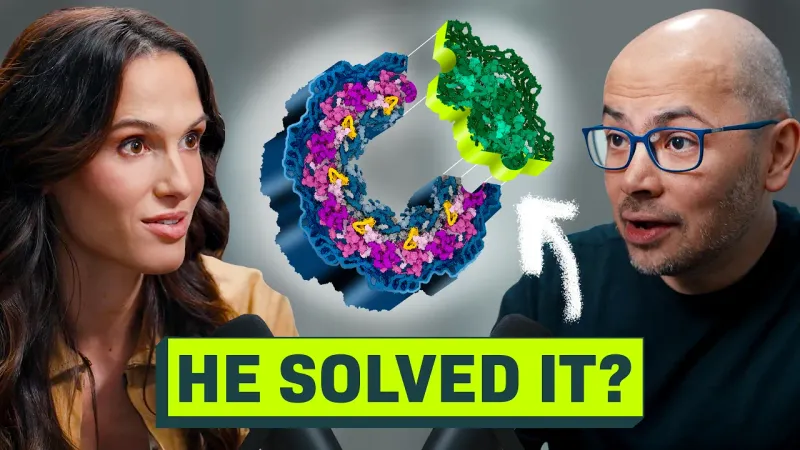
Cleo Abram interviews Google DeepMind CEO Demis Hassabis about AI’s potential role in science and medicine, including drug discovery and other research areas. They discuss his path into AI, the technology’s risks and governance, and the future he hopes to build; the conversation is framed as a live explainer rather than a management interview.

- Views
- 1.9M
- Likes
- 48.3K
- Comments
- 2.2K
- AI and Scientific DiscoveryDemis hassabis interviewAI in MedicineAI Risks and Governance
Analysis
Cleo Abram interviews Google DeepMind CEO Demis Hassabis about AI’s potential role in science and medicine, including drug discovery and other research areas. They discuss his path into AI, the technology’s risks and governance, and the future he hopes to build; the conversation is framed as a live explainer rather than a management interview.
- InterviewExplainer

- Title
- The Hardest Problem AI Ever Solved, with Google DeepMind CEO
“Something's obviously not quite right about the definition of intelligence. >> If we play this out, what's the limit here? >> The best use case of AI was to improve uh human health. It was the moment I've been waiting for that could achieve something no other system could. I want to use AI as a tool to help us understand the nature of reality around it. >> Governments are going to use AI. What would you hope that they use it for? There's two things to worry about. One is That's Demis Hassabis, the CEO of Google DeepMind. >> Nobel Prize winner. He is one of the most important people alive on what is quickly becoming the biggest technological leap in our lifetime. Because the biggest way that AI is going to impact our lives isn't something that we can see. It's not a chatbot, it's not an image generator. It's tools that are invisible to us in drug design and natural disaster detection and nuclear fusion and quantum computing. Tools that he and his team are building. Here he is winning the Nobel Prize for just one of those tools. So, who he is and what he chooses to build matters a lot for you and me. And he's fascinating. He's a childhood chess prodigy who at 17 turned down a reportedly million-dollar job offer from a gaming company to go to college instead and then got a PhD in cognitive neuroscience. He founded his company DeepMind with a mission to solve intelligence starting with beating video games. He then sold that company to Google specifically because they promised to let DeepMind focus on scientific research. But, as this has turned into the most intense technological battle in recent history, Demis is now in charge of much, much more. He's now behind basically everything Google does in AI. He's making decisions that affect your life and millions of other lives every single day. So, what is he planning to do with all of that power? My goal is to show you the future that Demis Hassabis wants to build so that you can decide for yourself what you think of it. Welcome to Huge Conversations.”
- 01Issue-framing excerpts
The excerpts establish the conversation's broad concerns and preview its range before the host identifies the guest and lays out the episode's focus.
Several short excerpts raise questions about the definition of intelligence, AI's limits and uses, and how governments might use it.
“Something's obviously not quite right about the definition of intelligence. >> If we play this out, what's the limit here? >> The best use case of AI was to improve uh human health. It was the moment I've been waiting for that could achieve something no other system could. I want to use AI as a tool to help us understand the nature of reality around it. >> Governments are going to use AI. What would you hope that they use it for? There's two things to worry about.”
- 02Guest credentials and significance
The guest's qualifications and the potential consequences of his work establish why this account matters. The contrast between familiar consumer tools and less visible applications broadens the premise.
The host identifies the guest, cites his credentials and describes AI's wider effects, naming areas where its tools may be less visible.
“One is That's Demis Hassabis, the CEO of Google DeepMind. >> Nobel Prize winner. He is one of the most important people alive on what is quickly becoming the biggest technological leap in our lifetime. Because the biggest way that AI is going to impact our lives isn't something that we can see. It's not a chatbot, it's not an image generator. It's tools that are invisible to us in drug design and natural disaster detection and nuclear fusion and quantum computing. Tools that he and his team are building. Here he is winning the Nobel Prize for just one of those tools. So, who he is and what he chooses to build matters a lot for you and me.”
- 03Guest background and episode promise
A compact biography supports the guest's relevance; the host then turns that relevance into a viewer-facing promise: an account of the guest's plans and a chance to judge them. The opening ends with the show's identification.
The host sketches the guest's background and DeepMind's founding mission, connects his role to consequential AI decisions, and states the goal of showing viewers his vision for the future.
“And he's fascinating. He's a childhood chess prodigy who at 17 turned down a reportedly million-dollar job offer from a gaming company to go to college instead and then got a PhD in cognitive neuroscience. He founded his company DeepMind with a mission to solve intelligence starting with beating video games. He then sold that company to Google specifically because they promised to let DeepMind focus on scientific research. But, as this has turned into the most intense technological battle in recent history, Demis is now in charge of much, much more. He's now behind basically everything Google does in AI. He's making decisions that affect your life and millions of other lives every single day. So, what is he planning to do with all of that power? My goal is to show you the future that Demis Hassabis wants to build so that you can decide for yourself what you think of it. Welcome to Huge Conversations.”