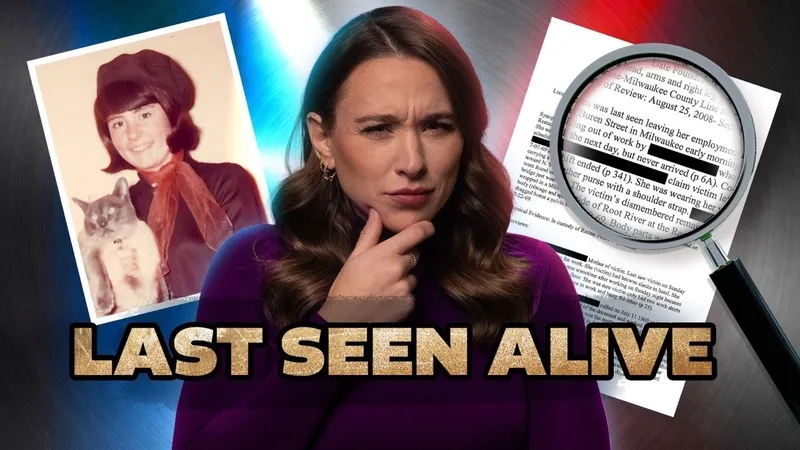
What Made Stephanie Casberg’s Case So Unusual?
Crime Junkie@CrimeJunkieWhat Made Stephanie Casberg’s Case So Unusual?
Ashley Flowers and Brit Prawat examine the 1969 killing of Stephanie Casberg, whose remains were found near the Root River in Wisconsin. They discuss her last known movements, evidence and suspects, and a new lead that may connect the case to a broader pattern. The case remains unsolved.

- Views
- 566.4K
- Likes
- 3.5K
- Comments
- 77
- Stephanie casberg case1969 Wisconsin MurderUnsolved cold caseInvestigation and Suspects
Analysis
Ashley Flowers and Brit Prawat examine the 1969 killing of Stephanie Casberg, whose remains were found near the Root River in Wisconsin. They discuss her last known movements, evidence and suspects, and a new lead that may connect the case to a broader pattern. The case remains unsolved.
- Podcast episodeDocumentary

- Title
- What Made Stephanie Casberg’s Case So Unusual?
“Hi, Crime Junkies. I'm your host Ashley Flowers. >> And I'm Britt. And the story I have for you today is one that has hung over a corner of Wisconsin for decades. In the summer of 1969, a teenage girl walked out of a restaurant after her waitressing shift and was never seen alive again. What turned up later, scattered in pieces across Racine County, told investigators that they were dealing with someone who had skill, patience, and time. Since then, this case has pulled detectives in every direction from a co-worker whose own family has been pointing the finger at him for years to a man who terrorized his children by claiming he was the killer. And just recently, a new lead surfaced, one that came straight from a Crime Junkie episode to a detective's ears. This is the story of Stephanie Casberg. Wednesday afternoon, July 9th, 1969 was a great time for fishing in Racine County, Wisconsin. The day was overcast, low 70s with a little drizzle. If you found just the right spot on Root River, you might catch a ton. One family out that day chose to set up near an old steel trestle bridge on 8 Mile Road. The bridge had actually been condemned a few weeks earlier, like shut down to traffic because it's basically falling apart, but that hasn't stopped people from coming by, including this family. At some point, while they're out there, their 10-year-old son makes his way down the riverbank to fish or just explore, whatever, but something on the water's edge catches his eye. It's hard to tell what it is from afar, just looks like this weird lumpy pile of something, but definitely not natural to the river. Any kid would be curious. So, he inches his way closer and closer, but he stops himself when he realizes what he's actually looking at. It's a foot. And it sends him running back to his parents, but the totality of what's there is so much worse. In several piles along the riverbank, half covered by mud and in a mix of torn brown paper bags and newspaper, were the dismembered remains of a teenage girl, or at least most of her. What police realized when they came to process the scene is this girl's torso and left leg were missing. And even a river dive never turns them up, which to police isn't all that surprising because based on the condition of the remains and how they were found, investigators are leaning toward the theory that they were likely dumped there, not like that they washed downstream. Now, despite what's missing, there are other clues that have been left behind, like the newspaper used to wrap sections of the girl's body. It was a Milwaukee Sentinel dated June 24th. And pressed into some of the newspaper folds are cigarette butts. On top of one of the piles, police collect a brown leather shoe, and under the remains were burned paper match sticks. Though none of the remains or the paper itself actually looks burned. What had been partially burned was a military style jacket with all of its patches removed that was like 8 ft away. And was there blood or anything on the jacket? >> No, it was like caked in mud. It looked like it actually might have been there for a while, and it was an older style, not something like current service members would have been issued, more like a fashion thing almost, like the kind of things showing up in thrift stores at the time.”
- 01Show and case premise
Establish the episode's case and its unresolved investigative question. The disappearance, shifting leads, and newly surfaced tip orient the viewer before the narrative turns to the circumstances of the discovery.
The hosts identify their show and introduce a long-standing Wisconsin case, describing the victim's disappearance and the competing directions investigators pursued, including a recent lead.
“Hi, Crime Junkies. I'm your host Ashley Flowers. >> And I'm Britt. And the story I have for you today is one that has hung over a corner of Wisconsin for decades. In the summer of 1969, a teenage girl walked out of a restaurant after her waitressing shift and was never seen alive again. What turned up later, scattered in pieces across Racine County, told investigators that they were dealing with someone who had skill, patience, and time. Since then, this case has pulled detectives in every direction from a co-worker whose own family has been pointing the finger at him for years to a man who terrorized his children by claiming he was the killer. And just recently, a new lead surfaced, one that came straight from a Crime Junkie episode to a detective's ears. This is the story of Stephanie Casberg.”
- 02Discovery scene and clues
Give the case a concrete discovery scene and introduce evidence that raises questions about what happened and how the remains came to be there. The opening ends during this evidence overview, before the case's broader explanation or resolution.
The narration establishes the day and setting, follows a child toward an unexplained object by the river, and reveals that it is a foot and part of a larger discovery. It then describes missing remains and physical evidence, with an investigator's question and answer about the jacket.
“Wednesday afternoon, July 9th, 1969 was a great time for fishing in Racine County, Wisconsin. The day was overcast, low 70s with a little drizzle. If you found just the right spot on Root River, you might catch a ton. One family out that day chose to set up near an old steel trestle bridge on 8 Mile Road. The bridge had actually been condemned a few weeks earlier, like shut down to traffic because it's basically falling apart, but that hasn't stopped people from coming by, including this family. At some point, while they're out there, their 10-year-old son makes his way down the riverbank to fish or just explore, whatever, but something on the water's edge catches his eye. It's hard to tell what it is from afar, just looks like this weird lumpy pile of something, but definitely not natural to the river. Any kid would be curious. So, he inches his way closer and closer, but he stops himself when he realizes what he's actually looking at. It's a foot. And it sends him running back to his parents, but the totality of what's there is so much worse. In several piles along the riverbank, half covered by mud and in a mix of torn brown paper bags and newspaper, were the dismembered remains of a teenage girl, or at least most of her. What police realized when they came to process the scene is this girl's torso and left leg were missing. And even a river dive never turns them up, which to police isn't all that surprising because based on the condition of the remains and how they were found, investigators are leaning toward the theory that they were likely dumped there, not like that they washed downstream. Now, despite what's missing, there are other clues that have been left behind, like the newspaper used to wrap sections of the girl's body. It was a Milwaukee Sentinel dated June 24th. And pressed into some of the newspaper folds are cigarette butts. On top of one of the piles, police collect a brown leather shoe, and under the remains were burned paper match sticks. Though none of the remains or the paper itself actually looks burned. What had been partially burned was a military style jacket with all of its patches removed that was like 8 ft away. And was there blood or anything on the jacket? >> No, it was like caked in mud. It looked like it actually might have been there for a while, and it was an older style, not something like current service members would have been issued, more like a fashion thing almost, like the kind of things showing up in thrift stores at the time.”