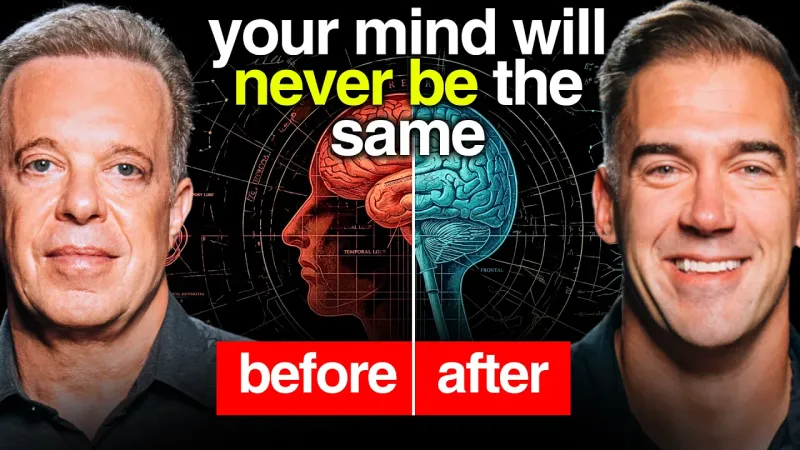
Dr Joe Dispenza’s NEW Research: You Can Heal Your Body With Your Thoughts
Lewis Howes@lewishowesDr Joe Dispenza’s NEW Research: You Can Heal Your Body With Your Thoughts
Lewis Howes interviews Joe Dispenza about using meditation to change habitual thoughts, behaviors, and emotional responses. The episode discusses Dispenza’s claims about brain changes and the body's capacity for healing, alongside research he says supports those ideas; the opening excerpt does not establish the evidence or outcomes.
- Views
- 463.1K
- Likes
- 15K
- Comments
- 808
- Meditation and Brain ChangeMind-Body Healing ClaimsChanging Habits and BeliefsPersonal transformation
Analysis
Lewis Howes interviews Joe Dispenza about using meditation to change habitual thoughts, behaviors, and emotional responses. The episode discusses Dispenza’s claims about brain changes and the body's capacity for healing, alongside research he says supports those ideas; the opening excerpt does not establish the evidence or outcomes.
- InterviewPodcast episode

- Title
- Dr Joe Dispenza’s NEW Research: You Can Heal Your Body With Your Thoughts
“Research says your nervous system can manufacture a pharmacy of chemicals that works three times better than any drug. You can do it so well that you can do it with your eyes open. How? >> Dr. Joe Dispenza. >> He is a New York Times best-selling author, a researcher, and one of the most pioneering minds in the science of manifestation and human transformation. >> I am in the business of studying how people change. About 5% of who we are is our conscious mind, and the 95% that's been programmed because of certain habits and behaviors has been programmed subconsciously. So, we use meditation as a tool to teach people how to slow their brain waves down so you can enter the operating system and rewrite the program. >> Oh my goodness. Today, he's here to break down the science behind how your mind can influence your ability to heal the body and so much more. >> This is where it gets exciting. When we show our data to scientists, I love looking at their faces. I mean, we just had two great stories. Pancreatic cancer, complete remission, gone. Nine out of 10 people that had PTSD no longer had it. We had five people step out of a wheelchair. Now, here's the crazy part. We saw areas of the brain actually grow in real estate. >> What does someone need to do to activate their internal pharmacy to create pain relief right now? >> We finally figured out a formula, and if you could follow that formula, you'll notice that you'll start changing. >> So, you can actually change your DNA? >> The answer is absolutely yes. >> Now, for all the skeptics that have a stressful life, that feel overwhelmed, overworked, but feel like meditation is not for them. Does meditation actually work? And if so, why? >> Well, we use meditation for three things in the work that we do cuz what I am in the business of studying how people change. Why we change, how we change, and um why is it so difficult to change? And if I do change, will my life change? That's That's kind of the experiment, right?”
- 01Striking claim
Establish the central proposition and make its proposed mechanism the immediate question.
An opening statement attributes a powerful result to a process, then asks how it can be achieved.
“Research says your nervous system can manufacture a pharmacy of chemicals that works three times better than any drug. You can do it so well that you can do it with your eyes open. How?”
- 02Guest credentials and framework
Give the coming account a named source and set up the conceptual explanation the episode will examine.
The guest is named and described through stated qualifications and a guide role, then gives a framework for how change happens and how a tool is used.
“>> Dr. Joe Dispenza. >> He is a New York Times best-selling author, a researcher, and one of the most pioneering minds in the science of manifestation and human transformation. >> I am in the business of studying how people change. About 5% of who we are is our conscious mind, and the 95% that's been programmed because of certain habits and behaviors has been programmed subconsciously. So, we use meditation as a tool to teach people how to slow their brain waves down so you can enter the operating system and rewrite the program.”
- 03Episode promise and reported outcomes
Connect the guest’s framework to the episode’s health premise and make the claimed results part of the discussion, without treating them as independently verified evidence.
The host promises a science-focused discussion of mind and healing. The guest follows with accounts of reported outcomes and a claim about brain changes.
“>> Oh my goodness. Today, he's here to break down the science behind how your mind can influence your ability to heal the body and so much more. >> This is where it gets exciting. When we show our data to scientists, I love looking at their faces. I mean, we just had two great stories. Pancreatic cancer, complete remission, gone. Nine out of 10 people that had PTSD no longer had it. We had five people step out of a wheelchair. Now, here's the crazy part. We saw areas of the brain actually grow in real estate.”
- 04Questions about the method and scope
Return to the opening’s mechanism question, promise a method, and widen the scope to a new question before the guest answers it.
A host asks what someone must do to produce an immediate result. The guest claims a formula has been found, and the host asks whether the proposed change can extend to DNA.
“>> What does someone need to do to activate their internal pharmacy to create pain relief right now? >> We finally figured out a formula, and if you could follow that formula, you'll notice that you'll start changing. >> So, you can actually change your DNA?”
- 05Answer and audience question
Provide a brief answer while opening a broader, audience-relevant question that leads into the guest’s explanation.
The guest gives an emphatic affirmative answer. The host then raises whether meditation can work for people who feel stressed, overworked, or unsuited to it, and why.
“>> The answer is absolutely yes. >> Now, for all the skeptics that have a stressful life, that feel overwhelmed, overworked, but feel like meditation is not for them. Does meditation actually work? And if so, why?”
- 06Guest’s questions about change
Broaden the episode from an immediate health question to a set of questions about changing behavior and its consequences; the guest’s next sentence begins answering them.
The guest says the practice serves three purposes, describes the subject of his work, and poses questions about why change happens, why it is difficult, and whether it changes one’s life.
“>> Well, we use meditation for three things in the work that we do cuz what I am in the business of studying how people change. Why we change, how we change, and um why is it so difficult to change? And if I do change, will my life change? That's That's kind of the experiment, right?”