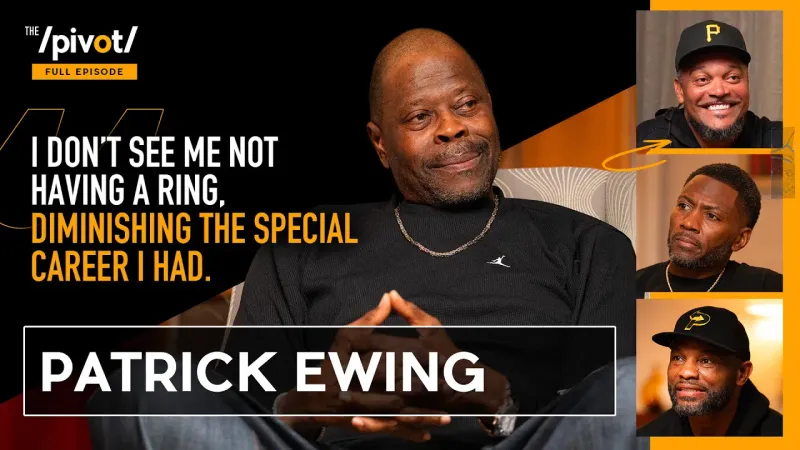
Patrick Ewing NBA icon, Knicks, facing MJ, Shaq, Hakeem & reality of never winning a ring| The Pivot
The Pivot Podcast@thepivotpodcastPatrick Ewing NBA icon, Knicks, facing MJ, Shaq, Hakeem & reality of never winning a ring| The Pivot
Patrick Ewing reflects on his career with the Knicks, his battles against Michael Jordan and other rivals, and the regret of coming close to an NBA title without winning one. The episode also looks back at his upbringing, family’s move from Jamaica, college years at Georgetown, and how he views his legacy.

- Views
- 762.5K
- Likes
- 12.1K
- Comments
- 1.6K
- Patrick Ewing's NBA CareerNew york knicks rivalriesChampionships and LegacyFamily and Early Life
Analysis
Patrick Ewing reflects on his career with the Knicks, his battles against Michael Jordan and other rivals, and the regret of coming close to an NBA title without winning one. The episode also looks back at his upbringing, family’s move from Jamaica, college years at Georgetown, and how he views his legacy.
- InterviewPodcast episode
- Title
- Patrick Ewing NBA icon, Knicks, facing MJ, Shaq, Hakeem & reality of never winning a ring| The Pivot
I don't have a ring, or Charles don't have a ring, or all the other great players who played this game and don't have a ring. I don't see that diminishing what they have accomplished. We were a physical ball club, and we weren't going to take any trash from anybody. Detroit, Bulls, whoever. Unfortunately, we played in the era where they had that guy 23. And I'm a damn Hall of Famer. Hell with MJ. I'm about to bust his ass, too. He's going at my guy, I'm going at their guy. I'm tunnel vision. I'm blocking everything out, especially in New York. I'm blocking everything out, and I'm trying to get the job done. The yes, I went one, but also I was number one in in coming out of high school. I try not to let the pressure, you know, get to me. I figured my mom and dad, that's pressure. Moving from Jamaica to here, coming to a country that we didn't know nothing about, that's pressure. When you're going into war, we don't think about who we're going against. We just go okay, who is next? That was definitely frustrating. It was definitely heartbreaking. I would have went down the wrong road. I would have been either dead or in jail. I'm going to wear them bad boys. And if I was playing right now, I'll be wearing them, too. >> No. I'm going to be wearing them and dropping 50. Did the Knicks let you down? To be a Hall of Famer and not HAVE A RING, SOMEBODY had to do something wrong, bro. That's the only regret. Of course, not winning it, you know, not being able to bring a title to New York. >> [music] >> Hey, Jay, I hit him up. I was like, "Hey, man, you know, let me know you're on your way." He's like, "Shit, I forgot." >> [laughter] >> I I had to run home, change, and throw something on. You're a legend. You can do that. No. >> for you, baby? No. I I pride myself on being on time. >> [laughter] >> If I'm going to say I'm going to be somewhere, I I pride myself on getting there. Yeah. Just getting old, boss. No. Hey, that's part of it. >> Yep. That's part of it, man. But, the voice you hear and the man you see is Patrick Ewing. Naismith Hall of Famer. I mean, national champion, three-time All-American with the three finals, 11 All-Stars, seven-time All-NBA team. I mean, the list goes on and on of what you've accomplished. So, this is really an honor for us. Something I've been trying I hit your son up about it. When I saw you at the hotel that day, I've been texting, so I'm glad we able to get it done. This is Channing Crowder. This is Fred Taylor and Ryan Clark. Pivot fam, thank you for being with us. I just read all those accolades, Patrick, and man, there's so many of them. And I feel like every time people talk about you, they go, "Man, but if he plays in a different era, he got a championship." How often do you think about how good of an individual player you were? How great some of those Knicks teams were, but how much y'all fell just short? Well, first of all, I just want to say thank y'all for having me on. I'm a big fan of all three of you guys. I watch y'all. When he came when he approached me with coming on, I'm like, "Hell yeah."
- 01The missing milestone and the speaker's view
Opens on the central tension and immediately supplies the speaker's own interpretation, inviting the viewer to consider how an unfulfilled milestone sits alongside a successful career.
The speaker says they lack a major achievement, compares their situation with others who also lack it, and argues that this absence does not erase what they accomplished.
“I don't have a ring, or Charles don't have a ring, or all the other great players who played this game and don't have a ring. I don't see that diminishing what they have accomplished.”
- 02Competition and determination
Gives the career tension a competitive setting and establishes the opposition that shaped the speaker's experience.
The speaker describes a physical team that would not accept disrespect, names opponents, and recalls competing in an era dominated by a particular rival.
“We were a physical ball club, and we weren't going to take any trash from anybody. Detroit, Bulls, whoever. Unfortunately, we played in the era where they had that guy 23.”
- 03Competitive mindset
Adds a forceful personal account of how the speaker approached competition, keeping the opening focused on the person behind the career record.
The speaker asserts their standing, says they would confront the rival, and describes blocking out distractions to get the job done.
“And I'm a damn Hall of Famer. Hell with MJ. I'm about to bust his ass, too. He's going at my guy, I'm going at their guy. I'm tunnel vision. I'm blocking everything out, especially in New York. I'm blocking everything out, and I'm trying to get the job done.”
- 04Pressure and background
Broadens the account beyond competition, revealing the personal pressures the speaker associates with their path.
The speaker mentions having been number one out of school, then describes pressure from family expectations and the experience of moving from Jamaica to an unfamiliar country.
“The yes, I went one, but also I was number one in in coming out of high school. I try not to let the pressure, you know, get to me. I figured my mom and dad, that's pressure. Moving from Jamaica to here, coming to a country that we didn't know nothing about, that's pressure.”
- 05The regret of falling short
Makes the cost of the missed goal personal and introduces the speaker's regret, while preserving the uncertainty and gravity of the alternative path they describe.
The speaker compares competition to going into war without worrying about the opponent, recalls frustration and heartbreak, and says a different path could have led to death or jail.
“When you're going into war, we don't think about who we're going against. We just go okay, who is next? That was definitely frustrating. It was definitely heartbreaking. I would have went down the wrong road. I would have been either dead or in jail.”
- 06Playful exchange before the interview
Provides a brief comic exchange within the cold open before the host asks directly about the Knicks and the missing ring.
The speaker jokes about what they would wear if they were playing now; another voice contradicts them and says they would wear them and score 50.
“I'm going to wear them bad boys. And if I was playing right now, I'll be wearing them, too. >> No. I'm going to be wearing them and dropping 50.”
- 07The Knicks question and the remaining regret
States the episode's central career question and gives a partial answer: the speaker's stated regret is the unfulfilled title goal. This leaves room for the interview to explore how he understands the rest of his career.
The host asks whether the Knicks let the speaker down and frames the lack of a ring as evidence that someone must have made a mistake. The speaker identifies not winning and failing to bring a title to New York as the regret.
“Did the Knicks let you down? To be a Hall of Famer and not HAVE A RING, SOMEBODY had to do something wrong, bro. That's the only regret. Of course, not winning it, you know, not being able to bring a title to New York.”
- 08Anecdote and show introduction
Acts as a conversational bridge before the formal guest identification. The supplied excerpt includes this show-introduction material, so it remains part of the opening even though it temporarily leaves the career topic.
After music, the hosts trade a short anecdote about contacting someone who forgot he was on his way, followed by laughter and banter about being on time.
>> [music] >> Hey, Jay, I hit him up. I was like, "Hey, man, you know, let me know you're on your way." He's like, "Shit, I forgot." >> [laughter] >> I I had to run home, change, and throw something on. You're a legend. You can do that. No. >> for you, baby? No. I I pride myself on being on time. >> [laughter] >> If I'm going to say I'm going to be somewhere, I I pride myself on getting there. Yeah. Just getting old, boss. No. Hey, that's part of it. >> Yep. That's part of it, man.
- 09Guest credentials and interview handoff
Names the guest and establishes relevant credentials before the main interview question. The source cuts off during the guest's initial response, so this is the boundary of the supplied opening, not a complete answer or a complete transcript of the introduction.
The host identifies Patrick Ewing and lists his basketball accomplishments, thanks him, introduces the hosts, and begins asking how often he thinks about his ability, his Knicks teams, and how close they came.
But, the voice you hear and the man you see is Patrick Ewing. Naismith Hall of Famer. I mean, national champion, three-time All-American with the three finals, 11 All-Stars, seven-time All-NBA team. I mean, the list goes on and on of what you've accomplished. So, this is really an honor for us. Something I've been trying I hit your son up about it. When I saw you at the hotel that day, I've been texting, so I'm glad we able to get it done. This is Channing Crowder. This is Fred Taylor and Ryan Clark. Pivot fam, thank you for being with us. I just read all those accolades, Patrick, and man, there's so many of them. And I feel like every time people talk about you, they go, "Man, but if he plays in a different era, he got a championship." How often do you think about how good of an individual player you were? How great some of those Knicks teams were, but how much y'all fell just short? Well, first of all, I just want to say thank y'all for having me on. I'm a big fan of all three of you guys. I watch y'all. When he came when he approached me with coming on, I'm like, "Hell yeah."