Trump’s Orwellian Maths and the Decline of the ‘Special Relationship’
The Rest Is Politics@restispoliticsTrump’s Orwellian Maths and the Decline of the ‘Special Relationship’
Rory Stewart and Alastair Campbell discuss whether the UK-US “special relationship” is breaking down amid Donald Trump’s conduct, and whether Britain needs a different long-term strategy. They also raise Europe’s ability to stand independently on defence, technology and nuclear matters, and question the political significance of Trump’s claims about numbers.
- Views
- 387.4K
- Likes
- 6.4K
- Comments
- 1.3K
- UK-US Special RelationshipTrump and DemocracyEuropean defence independenceBritain's Foreign Strategy
Analysis
Rory Stewart and Alastair Campbell discuss whether the UK-US “special relationship” is breaking down amid Donald Trump’s conduct, and whether Britain needs a different long-term strategy. They also raise Europe’s ability to stand independently on defence, technology and nuclear matters, and question the political significance of Trump’s claims about numbers.
- Co hosted conversationCommentary
- Title
- Trump’s Orwellian Maths and the Decline of the ‘Special Relationship’
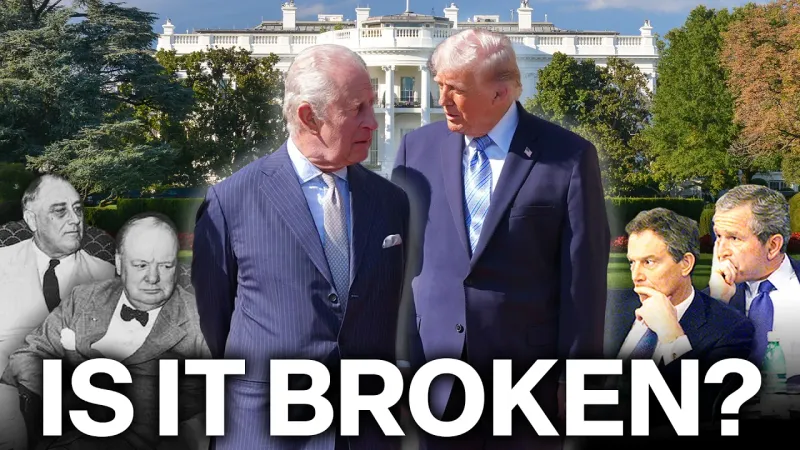
“Trump's vanity and narcissism is such that he sees himself as the king. He wants to be an emperor. He wants to be a an elected monarch. >> And the question now is, is it broken? The continual humiliations and insults from Trump, does this mean that Britain now needs to think about a radically different grand strategy for the next 20 years? >> Trust has broken down because of the way that Trump has conducted himself. >> The whole world is locked in a kind of abusive marriage where the Trump administration is saying to everybody else, you can't afford to leave me. >> The most powerful man in the world can't count, can't add up, doesn't know what a percentage is. Why have we got somebody so stupid as president and why do we treat them as normal? >> Welcome to the Rest Is Politics with me, Rory Stewart. >> And with me, Alistair Campbell. With the king in the United States, we're going to be talking about his role in diplomacy. We're going to talk about Donald Trump and expectations for the visit. We're going to talk about what that says about the broader relationship between the UK >> special relationship. >> so-called between the UK and the US. We're going to talk a lot about the Balkans because we did a very interesting interview with the president of Serbia this week and we're going to get into broader picture in that region which is, I think we don't talk about enough. And we're going to talk a little bit about what's happening inside Labour on a day when Keir Starmer yet again is facing a few travails. >> I heard a wonderful expression on my German podcast this morning, Rory, about King Charles. Said he's a diplomatische Wunderwaffe. >> Oh, what's that mean? >> Means a diplomatic wonder weapon. >> Oh, wonder weapon. >> So, there you go. >> Let me start you off then on the King's visits. So, right at the heart of this is this whole question of this thing called the special relationship, which was put together almost exactly 80 years ago, this phrase, by Winston Churchill. And it defined a world that was an anomaly. Emerged really in the Second World War through the relationship between Roosevelt and Churchill and after the Second World War was a big UK bet that they could be the junior partner in a US liberal order. And broadly speaking, America leading the world and us doing what we were told would work because there'd be free trade, there'd be a clear financial system, there'd be a rules-based international order, there'd be a United Nations. And it's not always been easy, and there've been moments where it's been a bit scratchy. So, I was reminded not just of the fact that Harold Wilson refused to go into the Vietnam War, but Edward Heath refused to allow the US to use British bases or overflight for the Yom Kippur War. There were controversies even in 1986 Libya bombing where other European states refused to allow the US to use bases or overflight. We did. And then of course there was the relationship that that you saw with Blair and Bush. But ultimately, it sort of worked as a bet for Britain. We diminished in size, we became a smaller and smaller economy, and we somehow managed to keep a form of global power going through this US relationship. And the question now is, is it broken? The threats on Greenland, the tariffs, the continual humiliations and insults from Trump, does this mean that Britain now needs to think about a radically different grand strategy for the next 20 years?”
- 01Opening judgment and question
Establishes a contentious premise and an unresolved question, giving the historical and strategic discussion a clear focus.
A pointed characterization of a leader leads into the question of whether the relationship is broken and what Britain should do next.
“Trump's vanity and narcissism is such that he sees himself as the king. He wants to be an emperor. He wants to be a an elected monarch. >> And the question now is, is it broken? The continual humiliations and insults from Trump, does this mean that Britain now needs to think about a radically different grand strategy for the next 20 years?”
- 02Interview excerpts and show identification
Offers competing characterizations of the situation before identifying the recurring show and its presenters. The harsh claims are presented as participants’ views, not independently verified facts.
Brief participant excerpts give explanations and sharp criticism, followed by the show welcome and presenter names.
“>> Trust has broken down because of the way that Trump has conducted himself. >> The whole world is locked in a kind of abusive marriage where the Trump administration is saying to everybody else, you can't afford to leave me. >> The most powerful man in the world can't count, can't add up, doesn't know what a percentage is. Why have we got somebody so stupid as president and why do we treat them as normal? >> Welcome to the Rest Is Politics with me, Rory Stewart. >> And with me, Alistair Campbell.”
- 03Episode roadmap
Sets expectations for the episode’s range while connecting the leaders’ visit to broader diplomatic and political questions.
The presenter previews discussion of the monarch’s diplomatic role, the visit, the UK–US relationship and the Balkans, then adds a Labour topic.
“With the king in the United States, we're going to be talking about his role in diplomacy. We're going to talk about Donald Trump and expectations for the visit. We're going to talk about what that says about the broader relationship between the UK >> special relationship. >> so-called between the UK and the US. We're going to talk a lot about the Balkans because we did a very interesting interview with the president of Serbia this week and we're going to get into broader picture in that region which is, I think we don't talk about enough. And we're going to talk a little bit about what's happening inside Labour on a day when Keir Starmer yet again is facing a few travails.”
- 04A diplomatic description
A brief conversational aside introduces an unusual characterization of the monarch’s diplomatic role before the discussion turns to the historical origins of the special relationship.
A presenter shares a striking German expression for the king, asks what it means and translates it as “a diplomatic wonder weapon.”
“>> I heard a wonderful expression on my German podcast this morning, Rory, about King Charles. Said he's a diplomatische Wunderwaffe. >> Oh, what's that mean? >> Means a diplomatic wonder weapon. >> Oh, wonder weapon. >> So, there you go.”
- 05Historical context and present-day question
Explains the historical bet behind the relationship and why it mattered to Britain, making the present-day question consequential. The passage ends on that unresolved question; the ledger provides no further evidence of where the introduction transitions into the main discussion.
The presenter introduces the special relationship’s origins and historical development, gives examples of past disagreements and cooperation, then returns to whether the relationship is broken and whether Britain needs a new strategy.
“>> Let me start you off then on the King's visits. So, right at the heart of this is this whole question of this thing called the special relationship, which was put together almost exactly 80 years ago, this phrase, by Winston Churchill. And it defined a world that was an anomaly. Emerged really in the Second World War through the relationship between Roosevelt and Churchill and after the Second World War was a big UK bet that they could be the junior partner in a US liberal order. And broadly speaking, America leading the world and us doing what we were told would work because there'd be free trade, there'd be a clear financial system, there'd be a rules-based international order, there'd be a United Nations. And it's not always been easy, and there've been moments where it's been a bit scratchy. So, I was reminded not just of the fact that Harold Wilson refused to go into the Vietnam War, but Edward Heath refused to allow the US to use British bases or overflight for the Yom Kippur War. There were controversies even in 1986 Libya bombing where other European states refused to allow the US to use bases or overflight. We did. And then of course there was the relationship that that you saw with Blair and Bush. But ultimately, it sort of worked as a bet for Britain. We diminished in size, we became a smaller and smaller economy, and we somehow managed to keep a form of global power going through this US relationship. And the question now is, is it broken? The threats on Greenland, the tariffs, the continual humiliations and insults from Trump, does this mean that Britain now needs to think about a radically different grand strategy for the next 20 years?”