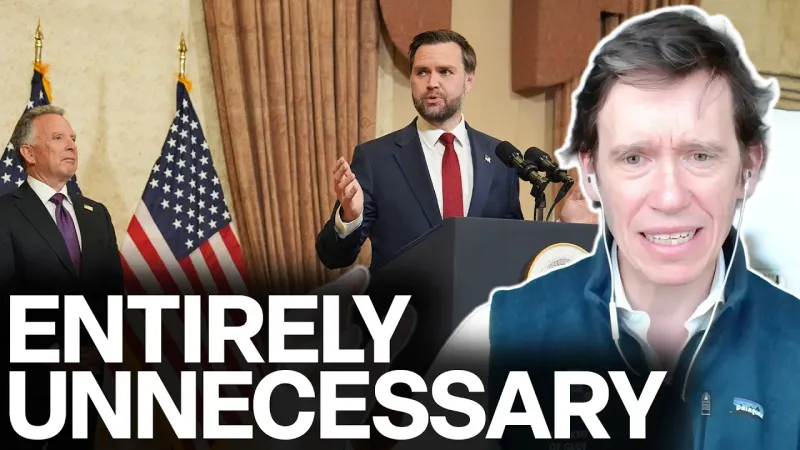
Iran War: The Art of the No Deal.
The Rest Is Politics@restispoliticsIran War: The Art of the No Deal.
Alastair Campbell and Rory Stewart discuss the US naval blockade of the Strait of Hormuz, failed Iran negotiations and the wider consequences for global norms and the economy. They also introduce a discussion of Ukraine and Rory Stewart’s interview with President Zelensky; the excerpt does not establish the episode’s full conclusions.
- Views
- 577.8K
- Likes
- 9.3K
- Comments
- 1.7K
- US iran conflictHormuz naval blockadeUS foreign policyGlobal economic impactUkraine and Zelensky
Analysis
Alastair Campbell and Rory Stewart discuss the US naval blockade of the Strait of Hormuz, failed Iran negotiations and the wider consequences for global norms and the economy. They also introduce a discussion of Ukraine and Rory Stewart’s interview with President Zelensky; the excerpt does not establish the episode’s full conclusions.
- Co hosted conversationPodcast episode
- Title
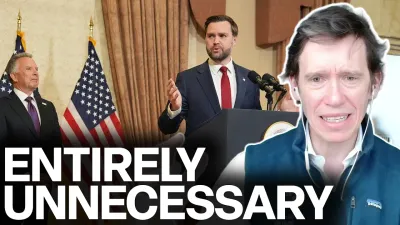
- Iran War: The Art of the No Deal.
This is classic Trump. I've got a ceasefire. I'm going to send J.D. Vance and it's all going to be done. And they give up because Iran didn't fold on day one. What's beginning to happen here is an America which doesn't even pay lip service to global norms. In fact, celebrates outrageously, chaotically defying them. The worry that the lesson that Tehran has drawn is not that restraint on nukes brings security, but that if you're vulnerable, you invite an attack. Welcome to The Rest Politics with me, Alistair Campbell. And with me, Rory Stewart. We're going to be focusing on what's happening with the blockade that President Trump has announced at the Straits of Hormuz, the next stage in this conflict with Iran. And then we're going to get on to Ukraine and in particular your recent interview with President Zelensky. Extraordinary scoop to get an interview with Zelensky. And the issues we're going to be looking at are, number one, what on earth is going on in Trump's head late at night, in the morning? Is it possible to predict his next moves? Secondly, what does this mean for the global economy? We haven't begun to get into the consequences for the Middle East, Asia, and Europe. And thirdly, I'd like to get into this question of is the US literally becoming a rogue state now? And how does the world respond if the United States becomes a rogue state? Quick explainer on Iran. So, since the last episode, Trump having threatened the end of civilization and the obliteration of Iran, there was then a ceasefire, a collective sigh of relief as everybody thought, "Well, actually, maybe this whole thing has come to an end." J.D. Vance, the Vice President, flew to Pakistan in order to negotiate with the Iranian team, came out after a 21-hour negotiation saying they hadn't got anywhere. And Trump then followed up saying that the US was going to block the Straits of Hormuz, put a naval blockade in place, later clarified as a blockade on any vessels touching Iranian ports. And that's where we currently are.
- 01Opening judgment
This gives the opening a definite critical position and establishes the gap between confident expectations and the stated outcome.
The speaker characterizes a political approach, gives a quoted-style first-person example of its confidence, and says the other side did not fold on day one.
“This is classic Trump. I've got a ceasefire. I'm going to send J.D. Vance and it's all going to be done. And they give up because Iran didn't fold on day one.”
- 02Broader consequence
This expands the opening from a failed expectation into a consequential interpretation of what the conflict may teach, establishing the stakes for the discussion.
The speaker argues that the US is celebrating defiance of global norms and raises concern about the lesson Tehran may draw about vulnerability and restraint.
“What's beginning to happen here is an America which doesn't even pay lip service to global norms. In fact, celebrates outrageously, chaotically defying them. The worry that the lesson that Tehran has drawn is not that restraint on nukes brings security, but that if you're vulnerable, you invite an attack.”
- 03Show identification and episode route
Show identification establishes the format; the focused roadmap signals both the immediate subject and the larger questions the conversation will address.
The host names the recurring show and its participants, identifies the blockade as the first focus, then previews discussion of an interview and questions about leadership, economic consequences, and the country's standing in the world.
“Welcome to The Rest Politics with me, Alistair Campbell. And with me, Rory Stewart. We're going to be focusing on what's happening with the blockade that President Trump has announced at the Straits of Hormuz, the next stage in this conflict with Iran. And then we're going to get on to Ukraine and in particular your recent interview with President Zelensky. Extraordinary scoop to get an interview with Zelensky. And the issues we're going to be looking at are, number one, what on earth is going on in Trump's head late at night, in the morning? Is it possible to predict his next moves? Secondly, what does this mean for the global economy? We haven't begun to get into the consequences for the Middle East, Asia, and Europe. And thirdly, I'd like to get into this question of is the US literally becoming a rogue state now? And how does the world respond if the United States becomes a rogue state?”
- 04Brief recap and immediate context
This supplies the immediate background needed to understand why the promised discussion is turning to the blockade. The introduction ends at the current-situation summary, before the sustained explanation of its effects.
The host recalls the prior episode's threats, the relief prompted by a ceasefire, the unsuccessful negotiation, and the subsequent blockade announcement, ending with the present situation.
Quick explainer on Iran. So, since the last episode, Trump having threatened the end of civilization and the obliteration of Iran, there was then a ceasefire, a collective sigh of relief as everybody thought, "Well, actually, maybe this whole thing has come to an end." J.D. Vance, the Vice President, flew to Pakistan in order to negotiate with the Iranian team, came out after a 21-hour negotiation saying they hadn't got anywhere. And Trump then followed up saying that the US was going to block the Straits of Hormuz, put a naval blockade in place, later clarified as a blockade on any vessels touching Iranian ports. And that's where we currently are.