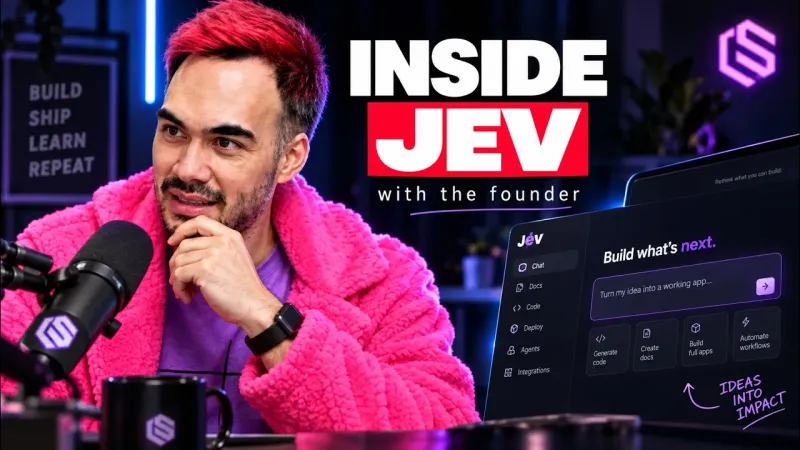
Why I couldn't build Jev at OpenAI — Diogo Almeida, TypeSafe Co-founder & CEO
Latent Space@LatentSpacePodWhy I couldn't build Jev at OpenAI — Diogo Almeida, TypeSafe Co-founder & CEO
TypeSafe co-founder and CEO Diogo Almeida discusses Jev, which he presents as a system-oriented AI model designed for software rather than chat. The conversation covers reliability, training methods, data, coding agents and why AI’s strong performance on difficult problems has not yet translated into automating more everyday work.
- Views
- 340.3K
- Likes
- 2.5K
- Comments
- 284
- System one AI modelsJev software AIAI model reliabilityAI Data and TrainingCoding agent design
Analysis
TypeSafe co-founder and CEO Diogo Almeida discusses Jev, which he presents as a system-oriented AI model designed for software rather than chat. The conversation covers reliability, training methods, data, coding agents and why AI’s strong performance on difficult problems has not yet translated into automating more everyday work.
- InterviewPodcast episode

- Title
- Why I couldn't build Jev at OpenAI — Diogo Almeida, TypeSafe Co-founder & CEO
“Like how can AI be so unbelievably Like how can AI be so unbelievably Like how can AI be so unbelievably smart? How can we like solve millennium smart? How can we like solve millennium smart? How can we like solve millennium prize problems in math but still not prize problems in math but still not prize problems in math but still not automate even the most basics of works automate even the most basics of works automate even the most basics of works like like really basic wrote stuff but like like really basic wrote stuff but like like really basic wrote stuff but we have this like supercharged engine of we have this like supercharged engine of we have this like supercharged engine of automation that just does not have like automation that just does not have like automation that just does not have like the right plugs and stuff to plug into the right plugs and stuff to plug into the right plugs and stuff to plug into all of this economically valuable work all of this economically valuable work all of this economically valuable work and you know like if the whole company and you know like if the whole company and you know like if the whole company of type safe disappears like maybe it'll of type safe disappears like maybe it'll of type safe disappears like maybe it'll take like a year or two for people to take like a year or two for people to take like a year or two for people to like truly catch up. I actually like truly catch up. I actually like truly catch up. I actually don't know how long it'll take. If if don't know how long it'll take. If if don't know how long it'll take. If if model quality matters, then we are going model quality matters, then we are going model quality matters, then we are going to be in a very good position for a long to be in a very good position for a long to be in a very good position for a long time, but time, but time, but”
- 01Capability question and contrast
Establishes the central mismatch between impressive problem-solving and practical automation, inviting an explanation of what the technology can and cannot do.
The speaker repeatedly asks how AI can be so smart, gives solving millennium-prize math problems as an example, then contrasts that with its failure to automate basic work.
“Like how can AI be so unbelievably Like how can AI be so unbelievably Like how can AI be so unbelievably smart? How can we like solve millennium smart? How can we like solve millennium smart? How can we like solve millennium prize problems in math but still not prize problems in math but still not prize problems in math but still not automate even the most basics of works automate even the most basics of works automate even the most basics of works like like really basic wrote stuff but like like really basic wrote stuff but like like really basic wrote stuff but we have this like supercharged engine of we have this like supercharged engine of we have this like supercharged engine of automation that just does not have like automation that just does not have like automation that just does not have like the right plugs and stuff to plug into the right plugs and stuff to plug into the right plugs and stuff to plug into all of this economically valuable work all of this economically valuable work all of this economically valuable work”
- 02Organizational consequences and qualification
Raises the stakes of the capability gap through a possible company failure and delayed catch-up, while preserving uncertainty. The cut-off prevents the thought from reaching a complete conclusion.
The speaker suggests that if the company disappears, people may take a year or two to catch up, then qualifies the forecast by saying they do not know how long it will take. The speaker adds that if model quality matters, they will be in a very good position for a long time, before the excerpt cuts off.
“and you know like if the whole company and you know like if the whole company and you know like if the whole company of type safe disappears like maybe it'll of type safe disappears like maybe it'll of type safe disappears like maybe it'll take like a year or two for people to take like a year or two for people to take like a year or two for people to like truly catch up. I actually like truly catch up. I actually like truly catch up. I actually don't know how long it'll take. If if don't know how long it'll take. If if don't know how long it'll take. If if model quality matters, then we are going model quality matters, then we are going model quality matters, then we are going to be in a very good position for a long to be in a very good position for a long to be in a very good position for a long time, but time, but time, but”