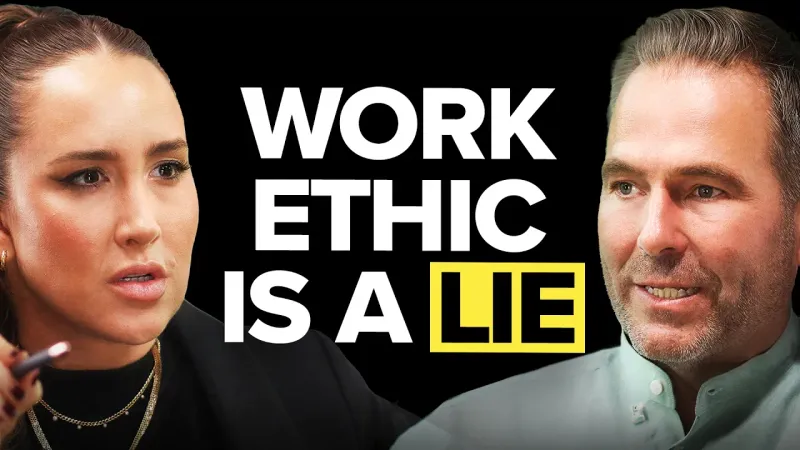
#1 CEO Coach: Effort Isn't What Makes You Rich, Do This Instead | Joe Hudson
BigDeal by Codie Sanchez@PodcastBigDeal#1 CEO Coach: Effort Isn't What Makes You Rich, Do This Instead | Joe Hudson
Joe Hudson discusses why he believes effort and work ethic alone do not create wealth, and how better decisions, emotional awareness and self-awareness can help leaders and entrepreneurs. The conversation also covers shame, difficult conversations, team culture, complexity and the limits of self-reliance.

- Views
- 250.8K
- Likes
- 2.5K
- Comments
- 118
- CEO Decision-MakingWork Ethic and WealthEntrepreneurial Self-AwarenessLeadership and Team CultureEmotional intelligence
Analysis
Joe Hudson discusses why he believes effort and work ethic alone do not create wealth, and how better decisions, emotional awareness and self-awareness can help leaders and entrepreneurs. The conversation also covers shame, difficult conversations, team culture, complexity and the limits of self-reliance.
- Interview

- Title
- #1 CEO Coach: Effort Isn't What Makes You Rich, Do This Instead | Joe Hudson
“Work ethic is way overrated. Work ethic is way overrated. Work ethic is way overrated. >> Wow. >> Wow. >> Wow. >> I know a lot of very successful people >> I know a lot of very successful people >> I know a lot of very successful people who do not do a lot of work at all. who do not do a lot of work at all. who do not do a lot of work at all. Effort is not the key. Make five or six Effort is not the key. Make five or six Effort is not the key. Make five or six great decisions a day, you can be great decisions a day, you can be great decisions a day, you can be incredibly successful. incredibly successful. incredibly successful. >> Today's guest is Joe Hudson, one >> Today's guest is Joe Hudson, one >> Today's guest is Joe Hudson, one of the most sought-after coaches who of the most sought-after coaches who of the most sought-after coaches who mentors founders from Mark Pinkis to Sam mentors founders from Mark Pinkis to Sam mentors founders from Mark Pinkis to Sam Alman. You'll hear the actual advice to Alman. You'll hear the actual advice to Alman. You'll hear the actual advice to get these billionaire founders unstuck get these billionaire founders unstuck get these billionaire founders unstuck and the most difficult truth nukes he and the most difficult truth nukes he and the most difficult truth nukes he drops on his clients that we get to drops on his clients that we get to drops on his clients that we get to steal. The best way to learn how to make steal. The best way to learn how to make steal. The best way to learn how to make great decisions is to be comfortable great decisions is to be comfortable great decisions is to be comfortable with all the emotional states. If I'm with all the emotional states. If I'm with all the emotional states. If I'm like, I can't feel this kind of like, I can't feel this kind of like, I can't feel this kind of discomfort, I can't be sad, then discomfort, I can't be sad, then discomfort, I can't be sad, then I am not going to see that set of I am not going to see that set of I am not going to see that set of solutions. If I'm willing to feel solutions. If I'm willing to feel solutions. If I'm willing to feel everything, I'll make better decisions. everything, I'll make better decisions. everything, I'll make better decisions. >> You coach billionaire CEOs. What do you >> You coach billionaire CEOs. What do you >> You coach billionaire CEOs. What do you tell them that the rest of us don't get tell them that the rest of us don't get tell them that the rest of us don't get to hear? to hear? to hear? >> That is a fantastic question. [music] >> That is a fantastic question. [music] >> That is a fantastic question. Um, >> one of the things you drilled down on >> one of the things you drilled down on >> one of the things you drilled down on that I thought was really interesting, that I thought was really interesting, that I thought was really interesting, you call the golden algorithm. Yeah. you call the golden algorithm. Yeah. you call the golden algorithm. Yeah. >> Can you explain what that is? >> Can you explain what that is? >> Can you explain what that is?”
- 01Challenge the conventional view
This establishes the episode’s counterintuitive premise and immediately offers an alternative: making five or six great decisions a day. The claim gives the later discussion a clear idea to examine.
The speaker repeats a claim that work ethic is overrated, then supports it with successful people who reportedly do little work and the assertion that effort is not the key.
“Work ethic is way overrated. Work ethic is way overrated. Work ethic is way overrated. >> Wow. >> Wow. >> Wow. >> I know a lot of very successful people >> I know a lot of very successful people >> I know a lot of very successful people who do not do a lot of work at all. who do not do a lot of work at all. who do not do a lot of work at all. Effort is not the key. Make five or six Effort is not the key. Make five or six Effort is not the key. Make five or six great decisions a day, you can be great decisions a day, you can be great decisions a day, you can be incredibly successful. incredibly successful. incredibly successful.”
- 02Introduce the expert and promise advice
The guest’s stated coaching experience provides relevant context for hearing his advice, while the promise of practical counsel from his work with founders extends the opening’s alternative to effort.
The host introduces Joe Hudson as a sought-after coach to founders and promises advice he gives to help billionaire founders get unstuck, including a difficult truth he shares with clients.
“>> Today's guest is Joe Hudson, one >> Today's guest is Joe Hudson, one >> Today's guest is Joe Hudson, one of the most sought-after coaches who of the most sought-after coaches who of the most sought-after coaches who mentors founders from Mark Pinkis to Sam mentors founders from Mark Pinkis to Sam mentors founders from Mark Pinkis to Sam Alman. You'll hear the actual advice to Alman. You'll hear the actual advice to Alman. You'll hear the actual advice to get these billionaire founders unstuck get these billionaire founders unstuck get these billionaire founders unstuck and the most difficult truth nukes he and the most difficult truth nukes he and the most difficult truth nukes he drops on his clients that we get to drops on his clients that we get to drops on his clients that we get to steal.”
- 03Preview the decision-making principle
This supplies an initial answer to the opening’s success premise and gives the discussion a more specific principle to develop: tolerating emotional experience while making decisions.
The host links great decisions to being comfortable with emotional states, and the guest explains that willingness to feel everything helps him make better decisions.
“The best way to learn how to make steal. The best way to learn how to make steal. The best way to learn how to make great decisions is to be comfortable great decisions is to be comfortable great decisions is to be comfortable with all the emotional states. If I'm with all the emotional states. If I'm with all the emotional states. If I'm like, I can't feel this kind of like, I can't feel this kind of like, I can't feel this kind of discomfort, I can't be sad, then discomfort, I can't be sad, then discomfort, I can't be sad, then I am not going to see that set of I am not going to see that set of I am not going to see that set of solutions. If I'm willing to feel solutions. If I'm willing to feel solutions. If I'm willing to feel everything, I'll make better decisions. everything, I'll make better decisions. everything, I'll make better decisions.”
- 04Ask about the advice for CEOs
The host connects the guest’s credentials to a specific, still-unexplained idea and asks for its meaning. This frames the conversation around advice the audience is invited to hear, while the excerpt ends before the explanation begins.
The host asks what Hudson tells billionaire CEOs that the rest of us do not get to hear. Hudson calls it a fantastic question, and the host refers to his “golden algorithm” before asking him to explain it.
“>> You coach billionaire CEOs. What do you >> You coach billionaire CEOs. What do you >> You coach billionaire CEOs. What do you tell them that the rest of us don't get tell them that the rest of us don't get tell them that the rest of us don't get to hear? to hear? to hear? >> That is a fantastic question. [music] >> That is a fantastic question. [music] >> That is a fantastic question. Um, >> one of the things you drilled down on >> one of the things you drilled down on >> one of the things you drilled down on that I thought was really interesting, that I thought was really interesting, that I thought was really interesting, you call the golden algorithm. Yeah. you call the golden algorithm. Yeah. you call the golden algorithm. Yeah. >> Can you explain what that is? >> Can you explain what that is? >> Can you explain what that is?”