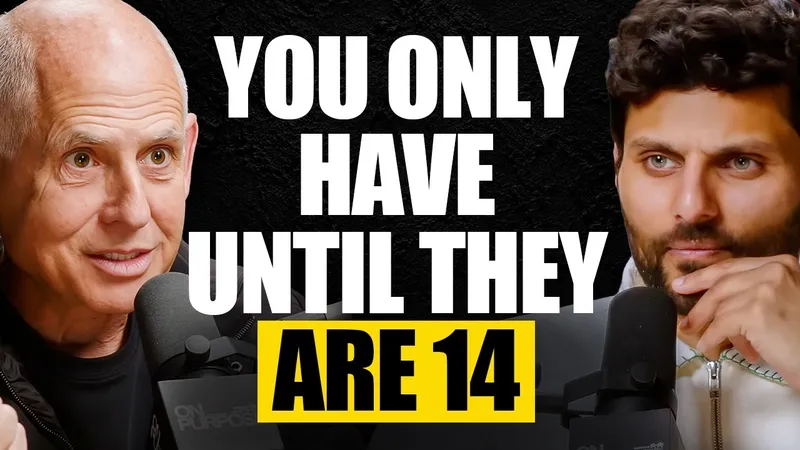
What Every Parent Should Fix While They Still Can (According to Science) | Dr. Daniel Amen
Jay Shetty Podcast@JayShettyPodcast.What Every Parent Should Fix While They Still Can (According to Science) | Dr. Daniel Amen
Dr. Daniel Amen and Jay Shetty discuss raising mentally strong children through parental presence, connection, and age-appropriate responsibility. Amen draws on his own childhood and clinical perspective to argue that solving every problem for a child can undermine independence, and discusses ways parents can encourage cooperation without discouraging free thinking.

- Views
- 1.7M
- Likes
- 13.1K
- Comments
- 521
- Parenting mentally strong kidsChildren's confidence and independenceParent-child connectionDiscipline and responsibility
Analysis
Dr. Daniel Amen and Jay Shetty discuss raising mentally strong children through parental presence, connection, and age-appropriate responsibility. Amen draws on his own childhood and clinical perspective to argue that solving every problem for a child can undermine independence, and discusses ways parents can encourage cooperation without discouraging free thinking.
- Interview

- Title
- What Every Parent Should Fix While They Still Can (According to Science) | Dr. Daniel Amen
“How do you set a goal for a kid and at what age does a goal become real? >> Well, the goal starts with parents. What kind of dad or mom do I want to be? And what kind of children do I want to raise? So, in raising mentally strong kids, I mean the first principle is you need to be mentally strong, right? You have to model the message. In Amen Clinics, our first core value is authenticity. And what what does that mean to be mentally strong? Well, the first principle is clarity. It is you want to know. So, when I was growing up, my mom was great. She was present, but there were way too many of us. There were seven. I'm third, means irrelevant. Uh at least that's what I thought. You know, Prince Harry's book Spare. Well, in a Lebanese family, the oldest son is golden and the second son's irrelevant. Now, there's huge upside to irrelevance, which means I can do anything I want. But, my mom was present and fun and playful and strict, uh all good qualities. My dad was gone. And so, when I'm thinking about what kind of parent do I want to be, is I want to be present. Uh because that caused a lot of bitterness in my life. And if you read sort of the latest neuroscience on child rearing, attachment is so important to prevent mental illness or mental health problems. And so, if I want to be present, then that leads to the second principle, which is bonding, which is connection. And how do you connect? And too many parents get that wrong. And like, oh, well, let me solve all of my child's problems, which creates entitlement and disaster. But the first one is what do you want? And I think it's a great question for kids when they're 6 or 7. What do you want in our relationship? Like I treat a lot of difficult kids. And one of my favorite questions to parents, how many times out of 10 when you ask this child to do something, will they do it the first time without arguing or fighting? And seven is the average for healthy kids. So, very few kids do something every time, right? But for the kids who see me, it's zero or less than three. And when I ask the children about this, 7 8 9, I'm like, is that your goal to make your mother cry? And like, no. And I'm like, why do you do it? I don't know. And the fact is they don't know because it's not will driven. It's brain driven. And that one concept all by itself, on top of which, if child doesn't do what you ask them to do, and you ignore it or you just repeat it, what you're doing is teaching them to do that. And the brain is lazy. So, um, this is going to be a fun conversation. >> [laughter] >> How about the people that would say that may make children obedient, but it doesn't make them free thinkers or it doesn't make them independently thoughtful. I think we sometimes feel like these two things work against each other, right? Like if we feel we're like they listen everything we say and they do what we say, then how do they build up their own sense of identity? How How does that work? >> Well, that's totally in the book on how to do that. And that is you do not solve all of your children's problems.”
- 01Frame the guiding question
These questions establish the child-rearing subject and orient the conversation around the parent's example and the qualities they hope to foster.
The exchange opens with questions about setting a goal for a child and the age at which a goal becomes real. The response shifts to the parents' role, asking what kind of parent the speaker wants to be and what kind of children to raise, then introduces mental strength and modeling as principles.
“How do you set a goal for a kid and at what age does a goal become real? >> Well, the goal starts with parents. What kind of dad or mom do I want to be? And what kind of children do I want to raise? So, in raising mentally strong kids, I mean the first principle is you need to be mentally strong, right? You have to model the message.”
- 02Set out principles, then give personal context
The principles and family recollection move the opening from general advice to the speaker's own perspective, setting up why parental presence matters to him.
The speaker names authenticity and clarity as principles, then recalls his mother and growing up as one of seven children. He adds a joking aside about being the third child and references Prince Harry's book to introduce a comparison with family birth order.
“In Amen Clinics, our first core value is authenticity. And what what does that mean to be mentally strong? Well, the first principle is clarity. It is you want to know. So, when I was growing up, my mom was great. She was present, but there were way too many of us. There were seven. I'm third, means irrelevant. Uh at least that's what I thought. You know, Prince Harry's book Spare. Well, in a Lebanese family, the oldest son is golden and the second son's irrelevant.”
- 03Connect childhood to a parenting choice
This personal history gives a concrete reason for the speaker's stated parenting priority and links it to a qualified reference to neuroscience.
The speaker describes the freedom he associates with being overlooked, lists positive qualities of his mother, and says his father was absent. He connects that absence and its bitterness to wanting to be a present parent, then cites attachment as important in the neuroscience of child-rearing and mental health.
“Now, there's huge upside to irrelevance, which means I can do anything I want. But, my mom was present and fun and playful and strict, uh all good qualities. My dad was gone. And so, when I'm thinking about what kind of parent do I want to be, is I want to be present. Uh because that caused a lot of bitterness in my life. And if you read sort of the latest neuroscience on child rearing, attachment is so important to prevent mental illness or mental health problems.”
- 04Move from presence to connection
This develops the opening's broad parenting premise into a practical question about connection while introducing a caution against over-solving children's problems.
The speaker identifies bonding and connection as a second principle, asks how parents connect, and warns that trying to solve every child's problem can create entitlement and disaster. He proposes asking children what they want from the relationship, then gives an example question for parents of difficult children.
“And so, if I want to be present, then that leads to the second principle, which is bonding, which is connection. And how do you connect? And too many parents get that wrong. And like, oh, well, let me solve all of my child's problems, which creates entitlement and disaster. But the first one is what do you want? And I think it's a great question for kids when they're 6 or 7. What do you want in our relationship? Like I treat a lot of difficult kids. And one of my favorite questions to parents, how many times out of 10 when you ask this child to do something, will they do it the first time without arguing or fighting?”
- 05Use an example to introduce the independence tension
The example gives the audience a concrete parenting situation, while the brain-driven explanation and the stated consequence of repeating requests lead into a broader discussion of children's behavior.
The speaker gives a claimed average for how often healthy children comply on the first request, contrasts it with the children he sees, and recounts asking children whether they want to make their mother cry. He says their behavior is brain-driven rather than will-driven, then warns that ignoring or repeatedly restating requests teaches the same pattern. The exchange ends with laughter and a promise of a fun conversation.
“And seven is the average for healthy kids. So, very few kids do something every time, right? But for the kids who see me, it's zero or less than three. And when I ask the children about this, 7 8 9, I'm like, is that your goal to make your mother cry? And like, no. And I'm like, why do you do it? I don't know. And the fact is they don't know because it's not will driven. It's brain driven. And that one concept all by itself, on top of which, if child doesn't do what you ask them to do, and you ignore it or you just repeat it, what you're doing is teaching them to do that. And the brain is lazy. So, um, this is going to be a fun conversation. >> [laughter] >>”
- 06Raise the tension between obedience and independent thought
This final exchange states the central tension directly and supplies a brief answer without exhausting the subject. The bounded transcript ends during the ensuing discussion, so the full introduction boundary cannot be confirmed beyond the supplied excerpt.
The interviewer asks whether making children obedient could work against making them free or independent thinkers. The question develops into a concern about children listening and following instructions versus building their own identity. The speaker responds that the book addresses how to do this, then offers a concise opening answer: do not solve all of children's problems.
“How about the people that would say that may make children obedient, but it doesn't make them free thinkers or it doesn't make them independently thoughtful. I think we sometimes feel like these two things work against each other, right? Like if we feel we're like they listen everything we say and they do what we say, then how do they build up their own sense of identity? How How does that work? >> Well, that's totally in the book on how to do that. And that is you do not solve all of your children's problems.”