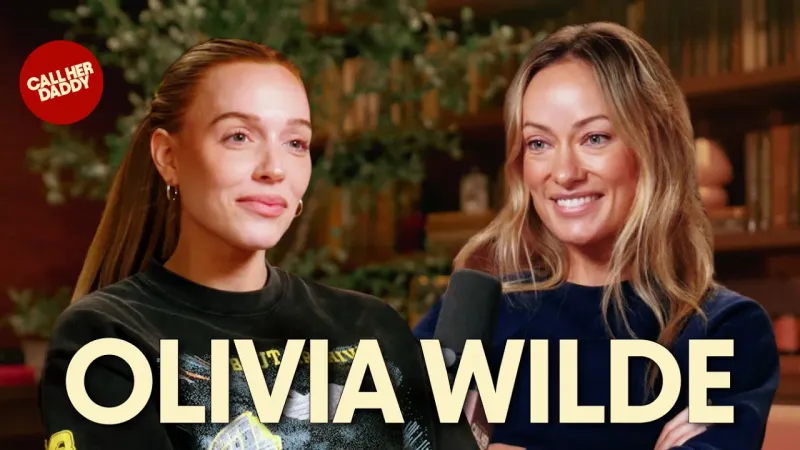
Olivia Wilde: Dating, Double Standards & Dealing with Scrutiny
Call Her Daddy@callherdaddyOlivia Wilde: Dating, Double Standards & Dealing with Scrutiny
Alex Cooper interviews Olivia Wilde about career double standards and scrutiny of her dating life, parenting, and fashion choices. They discuss Wilde’s film The Invite, its take on modern relationships, sex and intimacy, and the experiences and ideas that informed it, alongside motherhood and Wilde’s changing views on marriage.

- Views
- 1.5M
- Likes
- 3.9K
- Comments
- 572
- Olivia wilde interviewDating and Double StandardsThe Invite and RelationshipsMotherhood and Public Scrutiny
Analysis
Alex Cooper interviews Olivia Wilde about career double standards and scrutiny of her dating life, parenting, and fashion choices. They discuss Wilde’s film The Invite, its take on modern relationships, sex and intimacy, and the experiences and ideas that informed it, alongside motherhood and Wilde’s changing views on marriage.
- Interview
- Title
- Olivia Wilde: Dating, Double Standards & Dealing with Scrutiny
What is up, Daddy gang? It is your founding father, Alex Cooper, with Call Her Daddy. >> Olivia Wild. Welcome to Caller Daddy. >> Hi, Daddy. I am so excited to meet you. >> Likewise. >> It's been a long time coming. >> Yeah, >> I have so much respect for you. You have had such an incredible, impressive career. started as an actress, still are an actress, then obviously evolved into being a director, and I just feel like you have been at the center of some of the biggest conversations for women and motherhood and ambition and relationships and public everything. Like, you're it, girl. So, I'm so excited to talk to you today. >> Ditto in all the ways. >> Last night, let me paint the picture. >> Yeah. Take me through it. >> So, I get into bed. I get all my favorite pregnancy snacks. Yes. >> I sit back, relax, put on my heating pad, and I turn on your new film. >> And I had no idea what to expect because at first I was like, I saw the trailer, >> but it's still it was kind of ambiguous and like I didn't know what to expect. >> The invite is so incredible. Screen time zero. I didn't pick up my phone. >> Whoa. >> Well, because you throw us right into it. >> Yes. And it was so incredible the way that you explore modern relationships in a very like nuanced um psychological way. It was right up my alley. It's amazing. Seriously, >> it's so you I'm so happy that you watched it and that I mean we are both Pel heads. We both love Estair. Estair is all over that [ __ ] and was our literal consultant and we have to talk about that. Yes, we have to. But I'm so happy that that I can discuss it with you because it deals with so many of the things that you bring up so eloquently with your guests and it's relatable for so many of us going through relationship dramas in every single way. >> Well, that was what I found so fascinating was I I didn't know what when people were telling me like, "Oh my god, Esther Prell was involved." I'm like, "What does that even mean?" >> Yeah. Yeah. and she was a consultant on the movie every single time I've ever sat down with her because she's been on the show multiple times. She reframes everything for me. She reframed my life. Um, intimacy, relationships. What initially drew you to her work? >> Well, she was my shrink at one point. >> Oh, yeah. Years and years and years and years and years ago, I learned about her. I read Mating in Captivity 20 years ago and it blew my mind and I was immediately drawn to her and her completely original p like perspective on relationships and on individuality within relationships. And it felt like it was smashing this idea apart that we had all I had been raised with which was the idea that you um kind of needed to be in relationship with someone else as opposed to like who are you individually within the relationship and all the responsibility one needs to take within a relationship. But I have to tell you, I don't think I understood it 20 years ago. And I spent then 20 years of like going through relationships and then made this movie and suddenly felt like I understood a stair and and okay so when I read the script Rashidita Jones and Will McCormack had written this script and it was based on a Spanish play that was turned into a movie and this English language adaptation arrived and I was like this is so [ __ ] funny and real and it feels like it has a stere vibes and I asked Rashida I was like did you talked to Esther.
- 01Show and guest introduction
Establish the interview context and identify who the conversation centers on.
The host identifies the recurring show and introduces the guest.
“What is up, Daddy gang? It is your founding father, Alex Cooper, with Call Her Daddy. >> Olivia Wild. Welcome to Caller Daddy.”
- 02Welcome and guest framing
Make the guest's relevance to the conversation clear before the host describes what she wants to discuss.
The host and guest exchange greetings; the host praises the guest's career and connects her to major conversations affecting women and public life.
“>> Hi, Daddy. I am so excited to meet you. >> Likewise. >> It's been a long time coming. >> Yeah, >> I have so much respect for you. You have had such an incredible, impressive career. started as an actress, still are an actress, then obviously evolved into being a director, and I just feel like you have been at the center of some of the biggest conversations for women and motherhood and ambition and relationships and public everything. Like, you're it, girl. So, I'm so excited to talk to you today. >> Ditto in all the ways. >>”
- 03Film conversation opens
Move from the guest introduction into a specific, personal conversation about the film that prompts the opening exchange.
The host asks to describe the previous night; Wilde recounts settling in with pregnancy snacks and a heating pad to watch the host's new film.
“Last night, let me paint the picture. >> Yeah. Take me through it. >> So, I get into bed. I get all my favorite pregnancy snacks. Yes. >> I sit back, relax, put on my heating pad, and I turn on your new film.”
- 04Initial reaction and shared interest
Establish what drew Wilde into the film and connect its subject matter to the relationship themes the conversation will explore.
Wilde says the film's trailer left its premise ambiguous, then the speakers respond to how it begins and discuss its nuanced exploration of modern relationships.
“>> And I had no idea what to expect because at first I was like, I saw the trailer, >> but it's still it was kind of ambiguous and like I didn't know what to expect. >> The invite is so incredible. Screen time zero. I didn't pick up my phone. >> Whoa. >> Well, because you throw us right into it. >> Yes. And it was so incredible the way that you explore modern relationships in a very like nuanced um psychological way. It was right up my alley. It's amazing. Seriously, >> it's so you I'm so happy that you watched it and that I mean we are both Pel heads. We both love Estair. Estair is all over that [ __ ] and was our literal consultant and we have to talk about that. Yes, we have to. But I'm so happy that that I can discuss it with you because it deals with so many of the things that you bring up so eloquently with your guests and it's relatable for so many of us going through relationship dramas in every single way. >>”
- 05How the guest encountered the ideas
Begin Wilde's personal account of where her relationship perspective came from, then show that understanding it took more than an initial encounter.
The host recalls first hearing about the consultant, then asks what initially drew Wilde to her work. Wilde recounts reading a relationship book years earlier and describes how its ideas challenged assumptions about relationships and individuality.
Well, that was what I found so fascinating was I I didn't know what when people were telling me like, "Oh my god, Esther Prell was involved." I'm like, "What does that even mean?" >> Yeah. Yeah. and she was a consultant on the movie every single time I've ever sat down with her because she's been on the show multiple times. She reframes everything for me. She reframed my life. Um, intimacy, relationships. What initially drew you to her work? >> Well, she was my shrink at one point. >> Oh, yeah. Years and years and years and years and years ago, I learned about her. I read Mating in Captivity 20 years ago and it blew my mind and I was immediately drawn to her and her completely original p like perspective on relationships and on individuality within relationships. And it felt like it was smashing this idea apart that we had all I had been raised with which was the idea that you um kind of needed to be in relationship with someone else as opposed to like who are you individually within the relationship and all the responsibility one needs to take within a relationship.
- 06Later understanding and film connection
Develop the personal account from initial influence into later understanding and connect it to the film. The supplied opening ends while Wilde is still describing the script, so the introduction's transition into the main discussion is not available here.
Wilde qualifies that she did not understand the book's ideas at first, then links a later sense of understanding to years of relationships and making a film. She begins explaining how the script came to her and what struck her about it.
“But I have to tell you, I don't think I understood it 20 years ago. And I spent then 20 years of like going through relationships and then made this movie and suddenly felt like I understood a stair and and okay so when I read the script Rashidita Jones and Will McCormack had written this script and it was based on a Spanish play that was turned into a movie and this English language adaptation arrived and I was like this is so [ __ ] funny and real and it feels like it has a stere vibes and I asked Rashida I was like did you talked to Esther.”