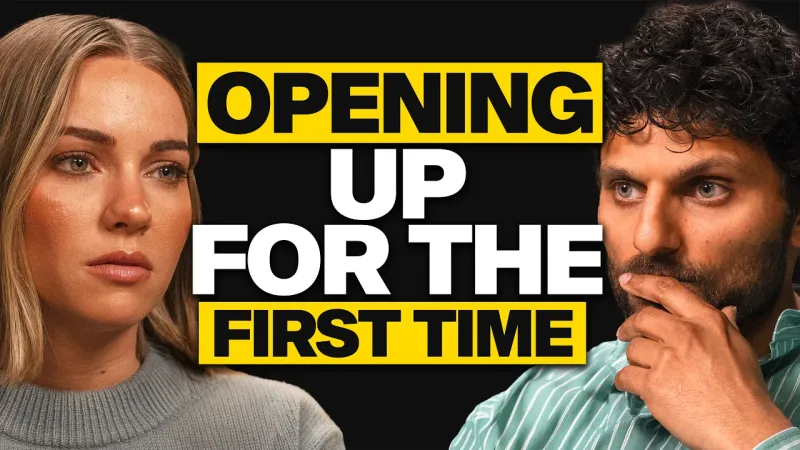
EMILIE KISER EXCLUSIVE: The Loss That Changed Her Forever
Jay Shetty Podcast@JayShettyPodcast.EMILIE KISER EXCLUSIVE: The Loss That Changed Her Forever
Emilie Kiser speaks with Jay Shetty about the loss of her son Trigg and how grief has affected her family, marriage, motherhood, and life online. They also discuss therapy, support, boundaries, and pool safety; the conversation is framed as an honest account of living with loss and raising awareness.

- Views
- 2M
- Likes
- 42.6K
- Comments
- 3.6K
- Child Loss and GriefGrief in PublicPool safety awarenessFamily Support and Healing
Analysis
Emilie Kiser speaks with Jay Shetty about the loss of her son Trigg and how grief has affected her family, marriage, motherhood, and life online. They also discuss therapy, support, boundaries, and pool safety; the conversation is framed as an honest account of living with loss and raising awareness.
- InterviewPodcast episode

- Title
- EMILIE KISER EXCLUSIVE: The Loss That Changed Her Forever
“I got a phone call from my husband that our son Trek had fallen in the pool. And that he wasn't breathing. Our whole world fell apart. There is no way to describe to someone what it's like losing a child. We did not think we would make it through that. >> Hey everyone, welcome back to On Purpose, the place you come to become happier, healthier, and more healed. You know, the thing that's most important to me is sharing real stories that allow individuals to express their journeys, express their challenges, express the lives that they've lived in a way that uplifts, inspires, and most importantly, heals all of us. Today, I get to sit down with Emily Kaiser. Emily has invited so many people into her life with honesty, warmth, and openness. And over the past year, she's walked through a life-altering experience. One that reshaped her world in ways no one is ever prepared for. Please welcome to On Purpose, Emily Kaiser. Emily, so wonderful to meet you. >> You too. I'm really grateful to be here. >> Your energy since you walked in this morning is so warm and cozy and comforting and I felt like I'd known you forever. >> I appreciate that. >> It was just so sweet, but I wanted to start off by just asking you, how are you today? >> I'm nervous. I'm honored to be here. Yeah, I I feel I feel okay. >> What does your normal day-to-day look like right now? >> I'm a mom, so my priority day-to-day is taking care of my younger son Teddy. So, my day-to-day is pretty normal. I wake up, I work out. I try to work out every day just cuz I know those like good endorphins will help me mentally throughout the day and I notice a really big difference if I don't do that. And then I kind of just spend the rest of my day with my son and just wherever it leads me. I've learned throughout a lot of my grief journey that I I just can't have too many expectations for myself, so I I just have to set small intentions and go where the day leads me. >> Yeah. And And what was your intention for coming here today? Like, what was going through your mind to want to come and share now and today? >> I have a large platform and going through what we've been through this past year, just honestly nothing has felt like an appropriate place to talk about fully in depth what happened, what our family's been through, just how much we miss Traeg, how much we love him. It just It honestly hasn't felt right and I feel like when you asked me to come, I I really felt like, okay, yeah, this is like a person that I can sit down with and have a really in-depth, meaningful conversation that will hopefully help people spread awareness, help me to maybe heal in a way. >> Yeah, I I really hope that this conversation is healing for all of us and kind and and healing for you as well. >> Yeah. >> We'll talk about the loss in a moment, but talk to me about what life was like before the loss. Like, talk to me about creating or sharing your life online in 2021. >> Mhm. >> What did it look like? What was the motivation behind that? What was the inspiration behind all of that? >>”
- 01The personal account
This cold open immediately establishes the central loss through the guest’s experience, making the gravity of the later interview clear before customary show identification.
The guest recounts the urgent call about their child and describes the family’s devastation and grief.
“I got a phone call from my husband that our son Trek had fallen in the pool. And that he wasn't breathing. Our whole world fell apart. There is no way to describe to someone what it's like losing a child. We did not think we would make it through that.”
- 02Show and guest introduction
The host identifies the recurring show and gives context for the personal account, presenting the guest’s experience as the subject of a conversation intended to uplift and heal.
The host welcomes the audience to the show, describes its purpose of sharing healing stories, introduces the guest, and characterizes her experience as life-altering.
“>> Hey everyone, welcome back to On Purpose, the place you come to become happier, healthier, and more healed. You know, the thing that's most important to me is sharing real stories that allow individuals to express their journeys, express their challenges, express the lives that they've lived in a way that uplifts, inspires, and most importantly, heals all of us. Today, I get to sit down with Emily Kaiser. Emily has invited so many people into her life with honesty, warmth, and openness. And over the past year, she's walked through a life-altering experience. One that reshaped her world in ways no one is ever prepared for. Please welcome to On Purpose, Emily Kaiser.”
- 03Welcome and emotional framing
This brief exchange establishes a welcoming interview atmosphere before the host asks about the guest’s current state.
The guest thanks the host, who describes her presence as warm and comforting; she responds appreciatively.
“Emily, so wonderful to meet you. >> You too. I'm really grateful to be here. >> Your energy since you walked in this morning is so warm and cozy and comforting and I felt like I'd known you forever. >> I appreciate that.”
- 04Checking in
The check-in lets the guest state her immediate feelings before the conversation moves toward her everyday life.
The host says he wants to start by asking how the guest is today. She says she is nervous and honored to be there, then says she feels okay.
“>> It was just so sweet, but I wanted to start off by just asking you, how are you today? >> I'm nervous. I'm honored to be here. Yeah, I I feel I feel okay. >>”
- 05Present-day routine and grief
The answer gives a brief picture of life now and shares a coping approach, connecting the interview’s broad subject of loss to the guest’s ordinary days without yet recounting the loss itself.
Asked about daily life, the guest describes caring for her younger son, working out, and keeping small intentions while navigating grief.
“What does your normal day-to-day look like right now? >> I'm a mom, so my priority day-to-day is taking care of my younger son Teddy. So, my day-to-day is pretty normal. I wake up, I work out. I try to work out every day just cuz I know those like good endorphins will help me mentally throughout the day and I notice a really big difference if I don't do that. And then I kind of just spend the rest of my day with my son and just wherever it leads me. I've learned throughout a lot of my grief journey that I I just can't have too many expectations for myself, so I I just have to set small intentions and go where the day leads me. >> Yeah.”
- 06Why share this now
This exchange explains why the guest chose this setting to speak in depth and what she hopes the conversation may offer, developing the interview’s disclosure and healing premise before the host turns to life before the loss.
The host asks what brought the guest to share her story now. She says her platform had not felt like the right place to discuss the past year in depth, including what happened and how much the family misses and loves their son. She says this interview feels like a meaningful conversation that could spread awareness and help her heal; the host hopes it will also be healing for viewers.
“And And what was your intention for coming here today? Like, what was going through your mind to want to come and share now and today? >> I have a large platform and going through what we've been through this past year, just honestly nothing has felt like an appropriate place to talk about fully in depth what happened, what our family's been through, just how much we miss Traeg, how much we love him. It just It honestly hasn't felt right and I feel like when you asked me to come, I I really felt like, okay, yeah, this is like a person that I can sit down with and have a really in-depth, meaningful conversation that will hopefully help people spread awareness, help me to maybe heal in a way. >> Yeah, I I really hope that this conversation is healing for all of us and kind and and healing for you as well. >> Yeah.”
- 07Transition to life before the loss
The host marks the loss as a forthcoming topic but first directs the interview toward the guest’s earlier life and motivations. This is a transition into the interview’s substantive discussion, so the introduction ends with this framing rather than the guest’s next answer.
The host says they will discuss the loss shortly, then asks about the guest’s life and online presence before it, including what motivated her to start sharing.
“>> We'll talk about the loss in a moment, but talk to me about what life was like before the loss. Like, talk to me about creating or sharing your life online in 2021. >> Mhm. >> What did it look like? What was the motivation behind that? What was the inspiration behind all of that? >>”