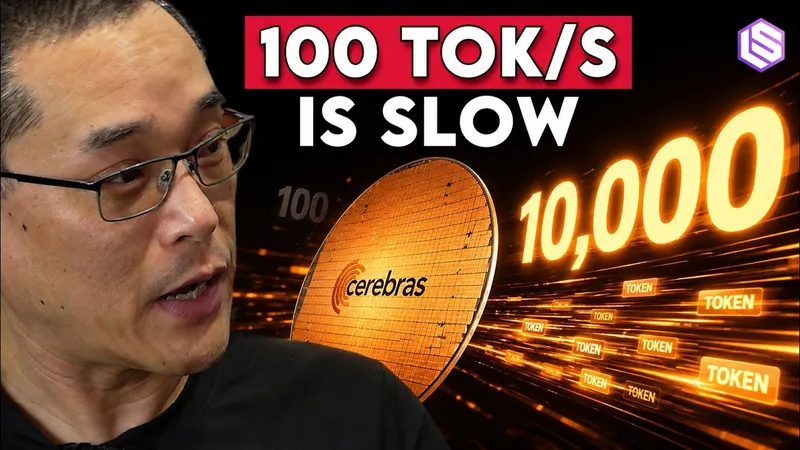
The Inference Frontier: from 100 to 10,000 tokens per second — Sean Lie, Cerebras CTO
Latent Space@LatentSpacePodThe Inference Frontier: from 100 to 10,000 tokens per second — Sean Lie, Cerebras CTO
Cerebras CTO Sean Lie discusses ultra-fast AI inference, wafer-scale chips, and the path from current systems toward 10,000 tokens per second. In a conversation with swyx and Vibhu, he also covers OpenAI’s partnership and chip efforts, model-hardware co-design, competing architectures, and emerging infrastructure bottlenecks.
- Views
- 412K
- Likes
- 281
- Comments
- 17
- Fast AI inferenceAI chip architectureModel-Hardware Co-DesignAI infrastructure competition
Analysis
Cerebras CTO Sean Lie discusses ultra-fast AI inference, wafer-scale chips, and the path from current systems toward 10,000 tokens per second. In a conversation with swyx and Vibhu, he also covers OpenAI’s partnership and chip efforts, model-hardware co-design, competing architectures, and emerging infrastructure bottlenecks.
- InterviewPodcast episode

- Title
- The Inference Frontier: from 100 to 10,000 tokens per second — Sean Lie, Cerebras CTO
“What used to be considered fast at like 1,000 100 or or 200 tokens per second is quickly becoming the new batch mode. And so I think that you know, there's a place for that. It's great for prompt processing. It's great for very very parallel workloads. Um >> But my eval's take 20 hours. I can hit a button and run it in 2 hours. >> Exactly. Exactly, right? [laughter] But but quickly, you know, being able to do prompt processing isn't isn't quite enough, right? That's a big part of the market, but that's not quite enough. >> Before we get into today's episode, I just have this small message for listeners. Thank you. We would not be able to bring you the AI engineering, science, and entertainment content that you so clearly want if you didn't choose to also click in and tune into our content. We've been approached by sponsors on an almost daily basis, but fortunately enough of you actually subscribe to us to keep all this sustainable without ads. And we want to keep it that way. But I just have one favor to ask all of you. The single most powerful, completely free thing you can do is to click that subscribe button. It's the only thing I'll ever ask of you, and it means absolutely everything to me and my team that works so hard to bring the In Space to you each and every week. If you do it, I promise you we'll never stop working to make the show even better. Now, let's get into it. Okay, we're here at Cerebras HQ with CTO Sean Lee. Welcome. Uh >> Thank you. Thank you for having us. >> Yeah, no, thank you for having me. >> Uh and it is the day after Hot Chips. Lots of things launching. Even like Apple launched >> [laughter] >> their M6 stuff. Uh but you guys obviously had We were at Supernova. You talked about CS-4. We're going to talk a little bit about CS-5. Open AI talks about jalapeno. All the all the hot stuff in Hot Chips. What's your take this year having been in this industry? >> I think I think Well, first of all, thank you for having me. Um and and you're absolutely right, it's a super exciting time right now. Um, Hot Chips is a is is a is really good, you know, time when the whole community comes together. Um, and you know, what what used to be, you know, I still remember going to Hot Chips 10, 20 years ago when it's a bunch of like, you know, computer architect, you know, geeks, you know, geeking out on, you know, speeds and feeds. And and now it's like this is where, you know, industry-changing hardware is being revealed. And so, um, you know, it's come a long ways. It's a really exciting, you know, community. And I think one of the main takeaways that that I had after, you know, after leaving Hot Chips yesterday is like, what an exciting time it is for the the chip design and the hardware industry. It's uh, you know, this is really the golden age of uh, of hardware right now. Um, and you know, like you said, I've been in this industry for some time. Um, this is a very very unique time. Not just because, you know, AI is taking off and you know, and there's uh, you know, obviously a lot of uh, people doing their own hardware, but the amount of innovation that's happening now across multiple fronts, we've never seen in the history of uh, of the semiconductor industry this level of innovation across all the levels, right?”
- 01A shifting benchmark
Establishes the changing standard that frames the discussion, while leaving room to examine which kinds of speed matter.
Opens with a question about what used to count as fast, then names several speeds and a new comparison point.
“What used to be considered fast at like 1,000 100 or or 200 tokens per second is quickly becoming the new batch mode. And so I think that you know, there's a place for that. It's great for prompt processing. It's great for very very parallel workloads. Um”
- 02A concrete time comparison
Makes the speed comparison concrete before the opening qualifies what prompt-processing speed can accomplish.
A speaker offers an evaluation-time example, followed by agreement and laughter.
“>> But my eval's take 20 hours. I can hit a button and run it in 2 hours. >> Exactly. Exactly, right? [laughter]”
- 03A qualification of the premise
Complicates the initial speed premise and points toward a wider discussion of performance needs.
The speaker says fast prompt processing is not enough by itself, while acknowledging its market relevance.
“But but quickly, you know, being able to do prompt processing isn't isn't quite enough, right? That's a big part of the market, but that's not quite enough.”
- 04Sponsor message
A sponsor-free support appeal interrupts the topic before the host resumes the episode; it belongs in the selected opening in its original order.
The host pauses the discussion for a listener message, thanks the audience, and explains how subscriptions support the show.
“>> Before we get into today's episode, I just have this small message for listeners. Thank you. We would not be able to bring you the AI engineering, science, and entertainment content that you so clearly want if you didn't choose to also click in and tune into our content. We've been approached by sponsors on an almost daily basis, but fortunately enough of you actually subscribe to us to keep all this sustainable without ads. And we want to keep it that way. But I just have one favor to ask all of you. The single most powerful, completely free thing you can do is to click that subscribe button. It's the only thing I'll ever ask of you, and it means absolutely everything to me and my team that works so hard to bring the In Space to you each and every week. If you do it, I promise you we'll never stop working to make the show even better.”
- 05Return to the episode and guest
Restores the episode after the support message and establishes the guest whose perspective will inform the discussion.
The host transitions back to the episode, identifies the location and the guest's role and name, and exchanges welcomes.
“Now, let's get into it. Okay, we're here at Cerebras HQ with CTO Sean Lee. Welcome. Uh >> Thank you. Thank you for having us. >> Yeah, no, thank you for having me. >>”
- 06Event and industry framing
Connects the episode to recent industry activity and opens the guest's account of how the field has changed.
The host situates the conversation just after an industry event, mentions announcements, then asks for the guest's view of the industry's current state.
“Uh and it is the day after Hot Chips. Lots of things launching. Even like Apple launched >> [laughter] >> their M6 stuff. Uh but you guys obviously had We were at Supernova. You talked about CS-4. We're going to talk a little bit about CS-5. Open AI talks about jalapeno. All the all the hot stuff in Hot Chips. What's your take this year having been in this industry? >>”
- 07Guest's opening perspective
Begins the guest's answer with personal context and a broad claim about the industry. The supplied excerpt ends during this response, before a transition to the main discussion is established.
The guest thanks the host, calls the period exciting, recalls earlier editions of an event, and describes the current hardware and chip-design moment as unusually dynamic.
“I think I think Well, first of all, thank you for having me. Um and and you're absolutely right, it's a super exciting time right now. Um, Hot Chips is a is is a is really good, you know, time when the whole community comes together. Um, and you know, what what used to be, you know, I still remember going to Hot Chips 10, 20 years ago when it's a bunch of like, you know, computer architect, you know, geeks, you know, geeking out on, you know, speeds and feeds. And and now it's like this is where, you know, industry-changing hardware is being revealed. And so, um, you know, it's come a long ways. It's a really exciting, you know, community. And I think one of the main takeaways that that I had after, you know, after leaving Hot Chips yesterday is like, what an exciting time it is for the the chip design and the hardware industry. It's uh, you know, this is really the golden age of uh, of hardware right now. Um, and you know, like you said, I've been in this industry for some time. Um, this is a very very unique time. Not just because, you know, AI is taking off and you know, and there's uh, you know, obviously a lot of uh, people doing their own hardware, but the amount of innovation that's happening now across multiple fronts, we've never seen in the history of uh, of the semiconductor industry this level of innovation across all the levels, right?”