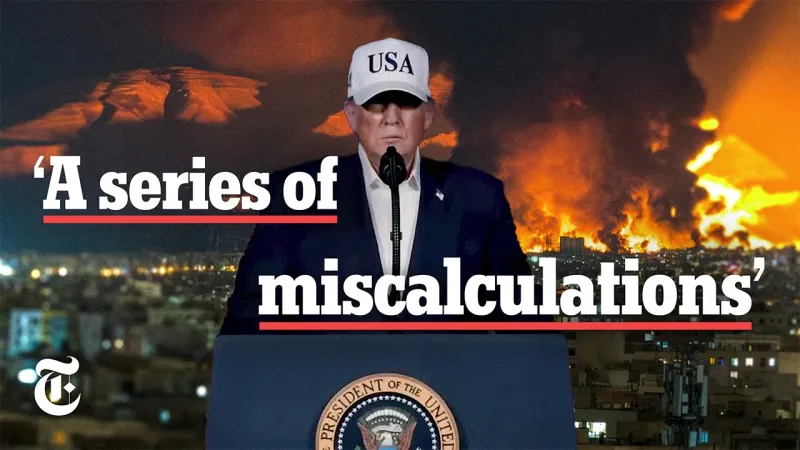
The Iran War: How America, Israel and Iran Got Here | The Ezra Klein Show
The Ezra Klein Show@EzraKleinShowThe Iran War: How America, Israel and Iran Got Here | The Ezra Klein Show
Ezra Klein opens with a critique of the Trump administration’s apparent lack of planning for its war with Iran, then speaks with Iran expert Ali Vaez. Their conversation begins with the 1979 Iranian Revolution and is framed as a broader history of how U.S., Israeli and Iranian relations deteriorated, including failed efforts to ease tensions.

- Views
- 673.6K
- Likes
- 10.4K
- Comments
- 1.5K
- U.S.-Iran RelationsIranian revolution historyIran nuclear dealU.S.-Israel Iran War
Analysis
Ezra Klein opens with a critique of the Trump administration’s apparent lack of planning for its war with Iran, then speaks with Iran expert Ali Vaez. Their conversation begins with the 1979 Iranian Revolution and is framed as a broader history of how U.S., Israeli and Iranian relations deteriorated, including failed efforts to ease tensions.
- InterviewPodcast episodeCommentary

- Title
- The Iran War: How America, Israel and Iran Got Here | The Ezra Klein Show
“I found myself struggling to describe the war President Trump has chosen to enter into with Iran. The the strange lightness with which he seems to have chosen this. Stay sheltered. Don't leave your home. It's [clears throat] very dangerous outside. Bombs will be dropping everywhere. I would say the war is spiraling out of control. But there's never a real pretense that it was under control. I find it hard to say Trump's plan for the war is failing because it is not clear there was any plan at all. There was a decision to strike. There was perhaps a belief that Iranians would rise up and overthrow their government as Trump invited them to do. When we are finished, take over your government. It will be yours to take. But there appears to have been an almost opposite belief held by the same people at the same time. That the Iranian regime included senior figures who might take power and make a deal with America much as Dusty Rodriguez did in Venezuela. To the extent America imagined who these leaders might be, there was no policy to identify and empower and work with them. Quite the opposite. Trump himself has said the leading candidates were killed in the initial attacks. So, you know, we had some in mind from that group that is is dead. We are so used to American wars failing >> [music] >> because of the presence of bad assumptions and bad information and bad plans. We're less used to what this appears to be. An almost absence of planning or information at all. There's almost a pride this administration takes in it. Trump appears to believe that it is not his job to know about the world. It is the world's job to know about him. He acts, the world reacts. >> [music] >> To do the work of planning, learning, building coalitions, considering consequences, all that is beneath him. Beneath a superpower. But now we are at war. >> [music] >> And any better future will require fuller understanding of how America, Israel, and Iran got to this place. So, I want to have someone on who could describe that history. Or to be more specific, those histories, because the three countries' narratives and understandings are very different. Ali Vaez is the Iran project director at the International Crisis Group. He was involved in the negotiations that led to the 2015 nuclear deal. He is in fact himself a nuclear scientist. And he's a co-author of How Sanctions Work, Iran and the Impact of Economic Warfare. As always, my email ezrakleinshow@nytimes.com. [music] >> [music] >> Ali Vaez, welcome to the show. Great pleasure. Thanks for having me.”
- 01Frame the conflict
This establishes the central conflict and its immediate danger, then points to the speaker’s concern about the manner in which the decision was made.
The speaker says they struggle to describe the war the president chose to enter, characterizes the decision as seeming unusually casual, and relays a warning to stay sheltered because of the danger and falling bombs.
“I found myself struggling to describe the war President Trump has chosen to enter into with Iran. The the strange lightness with which he seems to have chosen this. Stay sheltered. Don't leave your home. It's [clears throat] very dangerous outside. Bombs will be dropping everywhere.”
- 02Question the idea of control and planning
This develops the opening critique into a problem of unclear objectives: the account asks what the decision-makers expected to happen, rather than treating the conflict as a straightforwardly failed plan.
The speaker says the war appears to be spiraling out of control, but questions whether it was ever truly under control. They argue that it is hard to call the plan a failure when it is unclear whether there was a plan, then outline a decision to strike and a possible expectation of popular uprising.
“I would say the war is spiraling out of control. But there's never a real pretense that it was under control. I find it hard to say Trump's plan for the war is failing because it is not clear there was any plan at all. There was a decision to strike. There was perhaps a belief that Iranians would rise up and overthrow their government as Trump invited them to do. When we are finished, take over your government. It will be yours to take.”
- 03Expose competing assumptions
The contrast between two expectations—and the lack of a policy for acting on one of them—makes the opening’s planning critique concrete and raises the question of how those assumptions shaped events.
The speaker describes an opposing belief that senior figures in Iran might take power and make a deal, then says there was no policy for identifying or empowering such leaders. They cite the president’s statement that leading candidates were killed in the initial attacks.
“But there appears to have been an almost opposite belief held by the same people at the same time. That the Iranian regime included senior figures who might take power and make a deal with America much as Dusty Rodriguez did in Venezuela. To the extent America imagined who these leaders might be, there was no policy to identify and empower and work with them. Quite the opposite. Trump himself has said the leading candidates were killed in the initial attacks. So, you know, we had some in mind from that group that is is dead.”
- 04Broaden the critique and preview the account
This broadens the criticism into the episode’s rationale: understanding the countries’ different histories is presented as important to making sense of the current war and any better future.
The speaker links familiar failures in American wars to bad assumptions, information, and plans, then describes this case as an apparent absence of planning. They criticize the administration’s approach, state that America is at war, and say a better future requires understanding how America, Israel, and Iran arrived here.
“We are so used to American wars failing >> [music] >> because of the presence of bad assumptions and bad information and bad plans. We're less used to what this appears to be. An almost absence of planning or information at all. There's almost a pride this administration takes in it. Trump appears to believe that it is not his job to know about the world. It is the world's job to know about him. He acts, the world reacts. >> [music] >> To do the work of planning, learning, building coalitions, considering consequences, all that is beneath him. Beneath a superpower. But now we are at war. >> [music] >> And any better future will require fuller understanding of how America, Israel, and Iran got to this place.”
- 05Introduce the historical guide
This sets expectations for a history-focused discussion, supports the guest’s relevance with specific experience, and transitions from the opening argument into the interview.
The host says they want a guest to describe the histories behind the current situation, notes that the three countries have different narratives, and introduces the guest’s role, negotiation experience, scientific background, and book. The host gives the show’s email before music and the guest welcome.
“So, I want to have someone on who could describe that history. Or to be more specific, those histories, because the three countries' narratives and understandings are very different. Ali Vaez is the Iran project director at the International Crisis Group. He was involved in the negotiations that led to the 2015 nuclear deal. He is in fact himself a nuclear scientist. And he's a co-author of How Sanctions Work, Iran and the Impact of Economic Warfare. As always, my email ezrakleinshow@nytimes.com. [music] >> [music] >> Ali Vaez, welcome to the show. Great pleasure. Thanks for having me.”