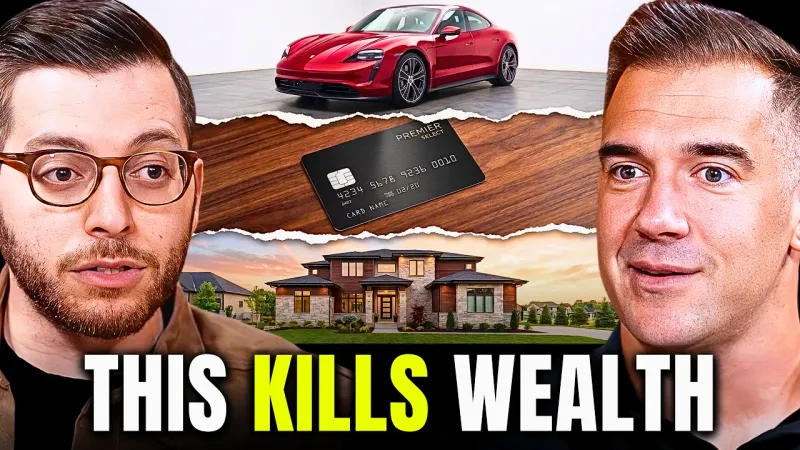
What RICH People Know About Wealth That Nobody Taught You | George Kamel
Lewis Howes@lewishowesWhat RICH People Know About Wealth That Nobody Taught You | George Kamel
George Kamel and Lewis Howes discuss habits and mindsets that can help build wealth, including delayed gratification, lifestyle creep, debt, and pressure to appear rich. The episode also promises advice on financial freedom, the Ramsey Baby Steps, buy-now-pay-later services, and a framework for making spending decisions.
- Views
- 110K
- Likes
- 2.3K
- Comments
- 130
- Building Long-Term WealthSpending and Debt HabitsFinancial mindsetPersonal finance advice
Analysis
George Kamel and Lewis Howes discuss habits and mindsets that can help build wealth, including delayed gratification, lifestyle creep, debt, and pressure to appear rich. The episode also promises advice on financial freedom, the Ramsey Baby Steps, buy-now-pay-later services, and a framework for making spending decisions.
- InterviewPodcast episode

- Title
- What RICH People Know About Wealth That Nobody Taught You | George Kamel
It's insecure people who have the hardest time building wealth because every dollar has to be spent flexing to look rich instead of becoming wealthy. Nobody really cares how you live your life. What kind of car do you drive? It's really just how secure are you? He is a number one national bestselling author, a co-host of the Ramsay Show, and one of the top personal finance experts. We have the inspiring George Camel in the house. >> I found out over 60% of people 35 and under, social media is their number one source of financial advice. So, you're watching a Tik Tok of a guy telling you to go open up this whole life insurance policy to borrow money taxfree and then go buy 10 pieces of property. All they're doing is being overleveraged trying to get rich quick and they're going to fall flat on their face or worst case buy the guy's course for $3,000 and then be broke after that. >> What does true financial freedom look like to you? I think it comes down to >> what is the mindset that needs to change in people in order for their bank account to change? >> Ooh, there's a lot of delayed gratification missing from today's culture. And it's it's not all your fault. like marketing, the companies, technology, it all exists to create everything to be frictionless >> so that your money passes through your fingers like sand. And the problem is if you don't grab a hold of it and make a plan for it before the marketing companies do, it's over. It's game over. Your bank account's going to be back to zero and you're going to be paycheck to paycheck. And here's what's crazy, Louis. You would think, well, people who make more money, it's much easier for them. I just saw a Goldman Sachs study. 40% of people who make over $500,000 are paycheck to paycheck. >> So, it's not always the case that you make more, you're just going to save more. If you don't get control of it, your lifestyle creep will just rise up to meet you. You'll have a bigger car payment, a bigger house. >> So, 40% of people making over a half a million dollars a year are living paycheck to paycheck. >> They're broke. There's nothing left in the month after they make all their payments. >> How is that possible? >> That's my question. Now you, if you listen to the Ramsay show, you'll go, "Oh, I see how it's possible." They overextended themselves, overleveraged, got way too big of a house too soon because now you have to live a $500,000 lifestyle. There's expectations. >> You don't have to. >> Of course, you don't have to. You got to buy the boat. >> Sarcasm, by the way. People watching are like, "Wow, this guy's an idiot." It's sarcasm. But there's expectations you put on yourself, >> expectations your people around you put on you. And a lot of them are self-imposed, truthfully, because nobody really cares >> how you live your life, what kind of car do you drive? It's really just how secure are you. >> The more secure you are, the better your ability to build wealth.
- 01Opening claim
This states the central point immediately and sets up the distinction between looking successful and having real security.
The introduction opens with a broad claim linking insecurity to spending for appearances, then contrasts how others judge someone's life with a more personal measure of security.
“It's insecure people who have the hardest time building wealth because every dollar has to be spent flexing to look rich instead of becoming wealthy. Nobody really cares how you live your life. What kind of car do you drive? It's really just how secure are you?”
- 02Guest credentials and introduction
The relevant credentials support the guest's role in the coming conversation, while the welcome establishes the exchange.
The host lists the guest's publishing, show, and finance credentials, then welcomes him.
“He is a number one national bestselling author, a co-host of the Ramsay Show, and one of the top personal finance experts. We have the inspiring George Camel in the house.”
- 03Advice-source concern
The cited statistic and vivid example establish concern about where financial advice comes from and raise the risk of following it uncritically.
The guest says that social media is the leading financial-advice source for people 35 and under, then gives an example of risky-sounding advice about borrowing against life insurance to buy multiple properties. He warns that overleveraging or buying an expensive course could leave people broke.
“>> I found out over 60% of people 35 and under, social media is their number one source of financial advice. So, you're watching a Tik Tok of a guy telling you to go open up this whole life insurance policy to borrow money taxfree and then go buy 10 pieces of property. All they're doing is being overleveraged trying to get rich quick and they're going to fall flat on their face or worst case buy the guy's course for $3,000 and then be broke after that.”
- 04Question about financial freedom
These questions shift from criticizing outside advice to the mindset and definition of financial freedom that the conversation will examine.
The host asks what financial freedom looks like to the guest and follows by asking what mindset must change for a person's bank account to change.
“>> What does true financial freedom look like to you? I think it comes down to >> what is the mindset that needs to change in people in order for their bank account to change? >>”
- 05Delayed gratification and spending pressure
This offers an initial explanation for the financial problem: easy spending and external pressures can undermine a person's control over money. The short answer develops the question without resolving the broader discussion.
The guest identifies a lack of delayed gratification and points to marketing, companies, and technology making spending frictionless. He says that without a plan, money can slip away and leave someone back at zero and living paycheck to paycheck.
“Ooh, there's a lot of delayed gratification missing from today's culture. And it's it's not all your fault. like marketing, the companies, technology, it all exists to create everything to be frictionless >> so that your money passes through your fingers like sand. And the problem is if you don't grab a hold of it and make a plan for it before the marketing companies do, it's over. It's game over. Your bank account's going to be back to zero and you're going to be paycheck to paycheck.”
- 06High-income financial strain
The striking income figure turns the discussion into a puzzle: high earnings do not necessarily bring financial security. The speakers begin to explain that gap through spending and lifestyle changes.
The host introduces the counterintuitive possibility that earning more may not make saving easier, then cites a Goldman Sachs study claiming 40% of people earning over $500,000 live paycheck to paycheck. The guest connects this to lifestyle creep and rising payments.
“And here's what's crazy, Louis. You would think, well, people who make more money, it's much easier for them. I just saw a Goldman Sachs study. 40% of people who make over $500,000 are paycheck to paycheck. >> So, it's not always the case that you make more, you're just going to save more. If you don't get control of it, your lifestyle creep will just rise up to meet you. You'll have a bigger car payment, a bigger house. >> So, 40% of people making over a half a million dollars a year are living paycheck to paycheck. >>”
- 07Explaining the high-income puzzle
This gives an initial explanation for the earlier statistic and connects the financial strain to choices and expectations. The example opens up how lifestyle can consume income, without yet completing the larger discussion.
The guest says high earners can have nothing left after payments. The host asks how that is possible, and the guest starts explaining overextension, an oversized house, and expectations attached to an expensive lifestyle.
They're broke. There's nothing left in the month after they make all their payments. >> How is that possible? >> That's my question. Now you, if you listen to the Ramsay show, you'll go, "Oh, I see how it's possible." They overextended themselves, overleveraged, got way too big of a house too soon because now you have to live a $500,000 lifestyle. There's expectations. >>
- 08Sarcastic example and return to security
The sarcastic boat example punctures the pressure to spend, while the clarification ensures the point is understood. The exchange returns to the opening contrast and briefly answers the question about what supports wealth-building: greater security.
The host counters that people do not have to meet those expectations. The guest sarcastically suggests buying a boat, clarifies the sarcasm, and returns to self-imposed and social expectations. He repeats that others care less about someone's car than their financial security, which the host links to the ability to build wealth.
You don't have to. >> Of course, you don't have to. You got to buy the boat. >> Sarcasm, by the way. People watching are like, "Wow, this guy's an idiot." It's sarcasm. But there's expectations you put on yourself, >> expectations your people around you put on you. And a lot of them are self-imposed, truthfully, because nobody really cares >> how you live your life, what kind of car do you drive? It's really just how secure are you. >> The more secure you are, the better your ability to build wealth.