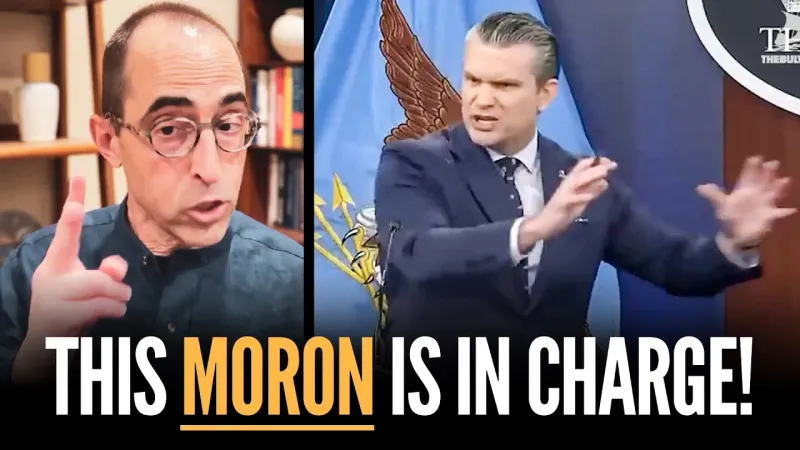
Is Hegseth the Dumbest Man in the Trump Admin?
The Bulwark@bulwarkmediaIs Hegseth the Dumbest Man in the Trump Admin?
Will Saletan argues that Pete Hegseth’s wartime briefings focus too much on attacking past presidents, the press, and allies instead of building support for the Iran war. The opening examines remarks about Obama, Biden, George W. Bush, and Paul Bremer; chapter headings indicate later discussion of religion, the press, and edited footage.

- Views
- 1.3M
- Likes
- 26.7K
- Comments
- 4.6K
- Pete hegseth briefingsIran war messagingPolitical Attacks and Allies
Analysis
Will Saletan argues that Pete Hegseth’s wartime briefings focus too much on attacking past presidents, the press, and allies instead of building support for the Iran war. The opening examines remarks about Obama, Biden, George W. Bush, and Paul Bremer; chapter headings indicate later discussion of religion, the press, and edited footage.
- MonologueCommentary

- Title
- Is Hegseth the Dumbest Man in the Trump Admin?
“Hey, it's Will Saletan from The Bulwark. So, who do you think is the dumbest person in the Trump administration? Now, I know it's a tough contest, but I think the answer might be Pete Hegseth, the Secretary of War. Today, I want to show you just how petty and incompetent and stupid this guy is. So, here's the situation. We're in a war with Iran. Now, setting aside however you feel about that war, one of the main jobs of the Secretary of War is to unite our country and to build the broadest possible coalition on our side. >> [clears throat] >> Instead, this idiot is doing everything he can to alienate Americans and piss off other countries who should be our allies. So, let me show you the first briefing he gave on the war. This is March 2nd, a month ago. Iran had a conventional gun to our head as they tried to lie their way to a nuclear bomb. It almost worked under Obama and his terrible deal, but not under this president. This is 3 minutes into his first briefing on the war. He He hasn't even named the head or the former head of Iran, the country we're supposed to be fighting. Instead, he is already going after a former president of our country, Barack Obama. American troops are out there fighting the enemy, but Pete Hegseth is back here fighting a domestic political war. And then, later in the same briefing, he decides to go after another American president. Here he is talking about what a genius Donald Trump is. And what he has shown ability to do that other presidents can't quite seem to have the aptitude to do. Well, I mean, Joe Biden didn't even know what he was doing. >> This is half an hour later. Hegseth still has not named the current or the former head of Iran, but now he's going after two two American former presidents. Most Americans who voted for president in the last 20 years voted at some point for Obama or Biden. And here is the Secretary of War taking a gratuitous shot at all of those people. Okay, but that still leaves another half of the country that didn't vote for Obama or Biden. So, just in case Hegseth didn't piss off enough people in that first briefing, he came back two days later and on March 4th, he gave another briefing. And this time This time he started off with a shot at Republicans. Thus far, Operation Epic Fury has delivered twice the air power of shock and awe of Iraq in 2003 minus Paul Bremer and the nation building. So, shock and awe was the bombing campaign in Iraq under George W. Bush, the last Republican president before Trump. So, Hegseth is bragging that Trump's bombing campaign is way way bigger than Bush's. Okay, we are in a war. We're literally in a war and this guy is trying to have a size contest with the last Republican administration. And And that crack about Paul Bremer? So, Paul Bremer was the guy that Bush put in charge of Iraq. Okay, nobody Nobody even remembers that. But Hegseth does and he cannot let go. He is trying to use this new war to settle his personal scores with all the Democrats and Republicans he doesn't like. And he has kept this up in every briefing he's given during the war. Here he is on March 10th.”
- 01Question and qualified answer
Establish the episode’s provocative judgment and identify the person whose conduct the speaker will examine.
The speaker identifies themself and the outlet, asks who is the least capable person in a named group, then gives a qualified answer.
“Hey, it's Will Saletan from The Bulwark. So, who do you think is the dumbest person in the Trump administration? Now, I know it's a tough contest, but I think the answer might be Pete Hegseth, the Secretary of War.”
- 02Criticism and standard
Set out the criticism and the standard against which the following examples will be judged.
The speaker promises to show the person’s alleged shortcomings, then states the situation and the responsibility associated with the role.
“Today, I want to show you just how petty and incompetent and stupid this guy is. So, here's the situation. We're in a war with Iran. Now, setting aside however you feel about that war, one of the main jobs of the Secretary of War is to unite our country and to build the broadest possible coalition on our side.”
- 03First alleged example
Move from the general accusation to a specific example, keeping the argument focused on a conflict between the role’s responsibility and the alleged behavior.
After a brief throat-clearing cue, the speaker says the person is alienating people who should be allies and introduces the first war briefing as evidence.
“>> [clears throat] >> Instead, this idiot is doing everything he can to alienate Americans and piss off other countries who should be our allies. So, let me show you the first briefing he gave on the war.”
- 04Briefing remarks and political contrast
Build the case with a specific briefing and sharpen the claimed mismatch between the military situation and the official’s political focus.
The speaker dates the briefing, summarizes its framing of the conflict and prior administration, then argues that Hegseth attacks a domestic political figure instead of naming Iran’s leaders. The beat ends by contrasting troops fighting abroad with Hegseth fighting a domestic political war.
“This is March 2nd, a month ago. Iran had a conventional gun to our head as they tried to lie their way to a nuclear bomb. It almost worked under Obama and his terrible deal, but not under this president. This is 3 minutes into his first briefing on the war. He He hasn't even named the head or the former head of Iran, the country we're supposed to be fighting. Instead, he is already going after a former president of our country, Barack Obama. American troops are out there fighting the enemy, but Pete Hegseth is back here fighting a domestic political war.”
- 05Further examples and broader implication
Extend the criticism from one example to a broader political audience, making the alleged alienation more consequential.
The speaker introduces comments about Trump and Biden, points out that Hegseth still has not named Iran’s leaders, and says he has moved on to two former presidents. The speaker then argues that many Americans voted for Obama or Biden and frames the remarks as a gratuitous shot at those voters.
“And then, later in the same briefing, he decides to go after another American president. Here he is talking about what a genius Donald Trump is. And what he has shown ability to do that other presidents can't quite seem to have the aptitude to do. Well, I mean, Joe Biden didn't even know what he was doing. >> This is half an hour later. Hegseth still has not named the current or the former head of Iran, but now he's going after two two American former presidents. Most Americans who voted for president in the last 20 years voted at some point for Obama or Biden. And here is the Secretary of War taking a gratuitous shot at all of those people.”
- 06Second briefing and historical comparison
Continue the evidence-led critique while setting up the next point: the speaker sees a comparison of military campaigns as an inappropriate political contest during a war.
The speaker says the first briefing still left many people unoffended, then introduces a second briefing two days later. He summarizes its comparison of the current bombing campaign with the Iraq campaign, explains the reference to Paul Bremer, and argues that Hegseth is boasting about scale and trying to outdo a prior Republican administration.
“Okay, but that still leaves another half of the country that didn't vote for Obama or Biden. So, just in case Hegseth didn't piss off enough people in that first briefing, he came back two days later and on March 4th, he gave another briefing. And this time This time he started off with a shot at Republicans. Thus far, Operation Epic Fury has delivered twice the air power of shock and awe of Iraq in 2003 minus Paul Bremer and the nation building. So, shock and awe was the bombing campaign in Iraq under George W. Bush, the last Republican president before Trump. So, Hegseth is bragging that Trump's bombing campaign is way way bigger than Bush's. Okay, we are in a war. We're literally in a war and this guy is trying to have a size contest with the last Republican administration.”
- 07Personal score-settling claim
Conclude the opening’s case by interpreting the recurring remarks as score-settling, then lead into another cited example. The bounded excerpt ends as that example begins.
The speaker asks what the Paul Bremer reference means, identifies Bremer’s role in Iraq, and argues that Hegseth is using the war to settle personal scores with Democrats and Republicans he dislikes. The speaker says this pattern has continued in every briefing and introduces remarks from March 10.
“And And that crack about Paul Bremer? So, Paul Bremer was the guy that Bush put in charge of Iraq. Okay, nobody Nobody even remembers that. But Hegseth does and he cannot let go. He is trying to use this new war to settle his personal scores with all the Democrats and Republicans he doesn't like. And he has kept this up in every briefing he's given during the war. Here he is on March 10th.”