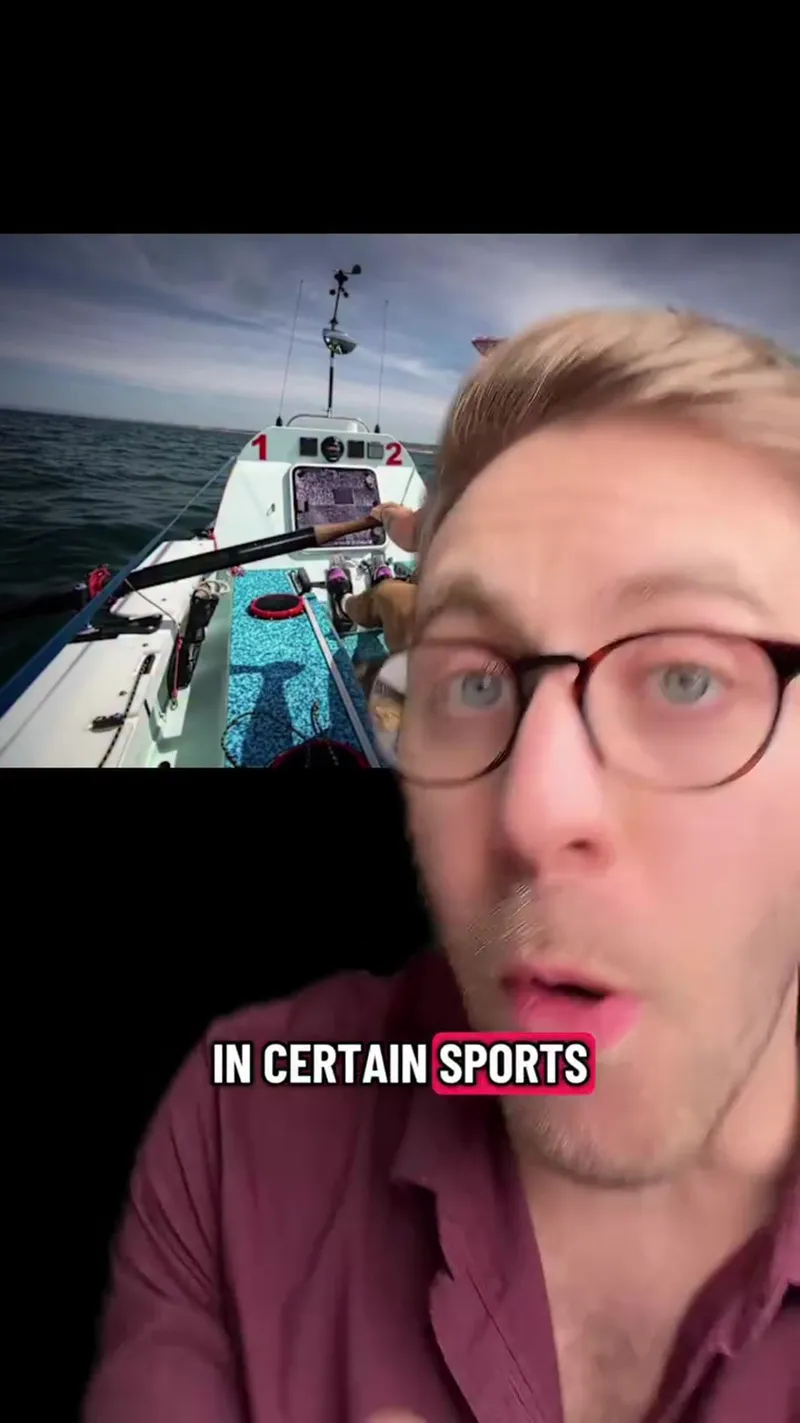
The video explores the rising trend of women outperforming men in ultra-endurance sports and discusses the biological theories behind it. It highlights potential advantages in fat metabolism and muscle composition while calling out the lack of scientific research dedicated to female athletes.
Why Women are Beating Men in Endurance Sports
The presenter shares examples of women winning or setting records in long-distance events, including rowing, ultrarunning, and cycling. He discusses possible reasons, such as differences in metabolism and fatigue, while stressing that women remain under-researched.
- Likes
- 201.3K
- Comments
- 4.9K
- Women in ultra-enduranceGender differences in enduranceWomen in sports researchUltra-endurance race records
Analysis
The presenter shares examples of women winning or setting records in long-distance events, including rowing, ultrarunning, and cycling. He discusses possible reasons, such as differences in metabolism and fatigue, while stressing that women remain under-researched.
- Talking headGreen screenExplainer
- Spoken
- Original
“Women are starting to beat men in certain sports and we're not totally sure why.”
- On-screen text
- Original
“WOMEN ARE STARTING TO BEAT MEN IN CERTAIN SPORTS”
- Visual
- Text-led composition supported by illustrative footageA close-up presenter occupies the foreground, with footage of a woman rowing on open water inset above. The presenter points toward the inset in one supplied frame; bold captions appear below it.
- The presenter appears beside rowing images early on, then a PubMed page about fatigue and recovery appears as he discusses muscle fibers. The visuals illustrate the spoken examples and research claims.
“Women are starting to beat men in certain sports and we're not totally sure why. Last week, Kelsey Fendler finished her 43 day journey rowing across the Pacific Ocean from California to Hawaii. And she beat the men's record. Sorry, did I say beat? I meant shattered by nine days. But she's not the only woman doing this kind of thing. It's actually becoming kind of a pattern. Three months ago, Rachel Entrekin won Cocodona, a 250 mile race. Fiona Kohlbinger won a 4,000 kilometer cycling race in Europe. And Courtney Dewalter, one of my favorite athletes, won the Moab 240, 10 hours ahead of the second place competitor. It's becoming increasingly apparent that past a certain distance, the physical advantages that men have in sport start to disappear. But why does this happen? Well, we're not totally sure. Women are very under researched. Of all sports science studies, only 6% focus on women. But there are a few theories. One is that it is a metabolism thing and women can use fat for energy more efficiently than men who are more glycogen dependent. Another theory is that women fatigue less over long distances, possibly due to having more slow twitch muscle fibers, whereas men tend to have more fast twitch muscle fibers. Some even think it may be something psychological that women have a higher pain tolerance or perhaps that they pace themselves better, but we really don't know. Mostly because we need more research. So if you are a scientist, please study some of these badass women who are absolutely crushing ultra endurance events.”
- 01State the surprising pattern and anchor it with an example
Makes the topic concrete and signals that the striking result is not isolated, setting up the larger question of why it is happening.
Introduces a counterintuitive trend, recounts a standout case, and sharpens the scale of the result with a brief self-correction. Additional cases establish that it is a broader pattern.
“Women are starting to beat men in certain sports and we're not totally sure why. Last week, Kelsey Fendler finished her 43 day journey rowing across the Pacific Ocean from California to Hawaii. And she beat the men's record. Sorry, did I say beat? I meant shattered by nine days. But she's not the only woman doing this kind of thing. It's actually becoming kind of a pattern. Three months ago, Rachel Entrekin won Cocodona, a 250 mile race. Fiona Kohlbinger won a 4,000 kilometer cycling race in Europe. And Courtney Dewalter, one of my favorite athletes, won the Moab 240, 10 hours ahead of the second place competitor.”
- 02Frame the broader explanation question and its research limits
Turns the examples into a general explanatory question, while establishing why a definitive answer is not available yet.
States that the trend may emerge beyond a certain threshold, asks why, acknowledges uncertainty, and explains that the group is under-researched.
“It's becoming increasingly apparent that past a certain distance, the physical advantages that men have in sport start to disappear. But why does this happen? Well, we're not totally sure. Women are very under researched. Of all sports science studies, only 6% focus on women. But there are a few theories.”
- 03Present competing explanations with qualifications
Provides possible answers to the central question without overstating certainty; the sequence of theories pays off the question while preserving the knowledge gap.
Lists several possible physiological and psychological explanations, repeatedly qualifying them, then concludes that the cause remains unknown and more research is needed.
“One is that it is a metabolism thing and women can use fat for energy more efficiently than men who are more glycogen dependent. Another theory is that women fatigue less over long distances, possibly due to having more slow twitch muscle fibers, whereas men tend to have more fast twitch muscle fibers. Some even think it may be something psychological that women have a higher pain tolerance or perhaps that they pace themselves better, but we really don't know. Mostly because we need more research.”
- 04Invite research and close with an emphatic example-based appeal
Converts the unresolved explanation into a clear call for more evidence and closes on an affirming summary of the examples.
Addresses scientists directly, asks them to study the high-performing group, and ends by celebrating their achievements.
“So if you are a scientist, please study some of these badass women who are absolutely crushing ultra endurance events.”