GTX vs RTX Graphics Cards
Zach's Tech Turf@ZachsTechTurfGTX vs RTX Graphics Cards
A presenter explains how Nvidia’s RTX cards differ from older GTX cards, covering ray tracing hardware, performance, and GPU value. He argues that the RTX label matters less than comparing the exact card models.
- Views
- 1.2M
- Likes
- 56.9K
- Comments
- 966
- RTX vs GTX graphics cardsGPU pricing and valueRay tracing performancePC gaming graphics
Analysis
A presenter explains how Nvidia’s RTX cards differ from older GTX cards, covering ray tracing hardware, performance, and GPU value. He argues that the RTX label matters less than comparing the exact card models.
- Talking headVoiceoverHot takeExplainerComparison
- Spoken
- Original
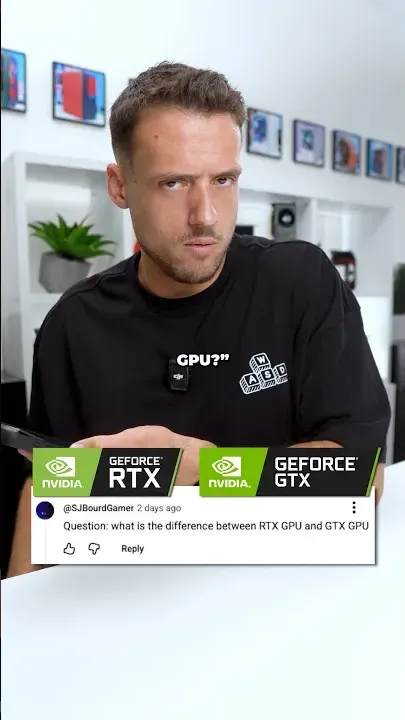
“What's the difference between an RTX GPU What's the difference between an RTX GPU What's the difference between an RTX GPU and a GTX GPU?”
- On-screen text
- Original
“Question about the difference between RTX and GTX GPUs”
- Visual
- Text-led compositionA centered presenter holds and looks at a phone in a medium shot; a viewer-comment card appears across the lower portion of the frame.
- The presenter addresses the camera while captions track his speech. Sampled gameplay footage illustrates his discussion of ray tracing and RTX performance.
“What's the difference between an RTX GPU What's the difference between an RTX GPU What's the difference between an RTX GPU and a GTX GPU? and a GTX GPU? and a GTX GPU? >> Corporate greed, my friend. The exact >> Corporate greed, my friend. The exact >> Corporate greed, my friend. The exact downfall of PC gaming. downfall of PC gaming. downfall of PC gaming. >> Before RTX GPUs, we lived in a time of >> Before RTX GPUs, we lived in a time of >> Before RTX GPUs, we lived in a time of GTX 1070s and 1080 TIs. I know the new GTX 1070s and 1080 TIs. I know the new GTX 1070s and 1080 TIs. I know the new PC builders won't believe me, but this PC builders won't believe me, but this PC builders won't believe me, but this was a time where people actually liked was a time where people actually liked was a time where people actually liked the value of the GPUs they were buying. the value of the GPUs they were buying. the value of the GPUs they were buying. >> The GTX 1070 was a monster FPS per >> The GTX 1070 was a monster FPS per >> The GTX 1070 was a monster FPS per dollar graphics card. dollar graphics card. dollar graphics card. >> But after that, Nvidia had a different >> But after that, Nvidia had a different >> But after that, Nvidia had a different plan. They started focusing on ray plan. They started focusing on ray plan. They started focusing on ray tracing, which at the time was just tracing, which at the time was just tracing, which at the time was just fancy puddles and lighting reflections. fancy puddles and lighting reflections. fancy puddles and lighting reflections. It absolutely tanked your FPS and wasn't It absolutely tanked your FPS and wasn't It absolutely tanked your FPS and wasn't worth turning it on at all. In order to worth turning it on at all. In order to worth turning it on at all. In order to accomplish this though, they used RT accomplish this though, they used RT accomplish this though, they used RT cores, tensor cores, and started really cores, tensor cores, and started really cores, tensor cores, and started really promoting the RTX on and RTX off promoting the RTX on and RTX off promoting the RTX on and RTX off marketing for ray tracing. Now, Nvidia marketing for ray tracing. Now, Nvidia marketing for ray tracing. Now, Nvidia did actually have one more GTX did actually have one more GTX did actually have one more GTX generation of GPU after that, which was generation of GPU after that, which was generation of GPU after that, which was the 16 series. This was kind of like a the 16 series. This was kind of like a the 16 series. This was kind of like a separation which GPUs could use ray separation which GPUs could use ray separation which GPUs could use ray tracing and which ones couldn't. Even tracing and which ones couldn't. Even tracing and which ones couldn't. Even though the RTX 2060 still had no though the RTX 2060 still had no though the RTX 2060 still had no business running ray tracing because the business running ray tracing because the business running ray tracing because the performance was so bad. Ever since then, performance was so bad. Ever since then, performance was so bad. Ever since then, now Nvidia just calls all of their cards now Nvidia just calls all of their cards now Nvidia just calls all of their cards RTX. For most gamers, it is not an RTX. For most gamers, it is not an RTX. For most gamers, it is not an important distinction. Again, just like important distinction. Again, just like important distinction. Again, just like everything else, always compare the everything else, always compare the everything else, always compare the exact model you're buying.”
- 01Question and blunt thesis
Answers the opening question with a strong organizing claim; the judgment invites the following historical explanation.
The repeated opening asks how two product categories differ, then gives a terse, critical explanation and frames the change as damaging to the field.
“What's the difference between an RTX GPU What's the difference between an RTX GPU What's the difference between an RTX GPU and a GTX GPU? and a GTX GPU? and a GTX GPU? >> Corporate greed, my friend. The exact >> Corporate greed, my friend. The exact >> Corporate greed, my friend. The exact downfall of PC gaming. downfall of PC gaming. downfall of PC gaming.”
- 02Recall the earlier value
Supports the initial criticism with a nostalgic comparison and concrete evidence of the earlier category's appeal.
The script contrasts the current era with an earlier period, anticipates disbelief, and says people valued what they were buying; a specific example illustrates the favorable performance-to-price ratio.
“>> Before RTX GPUs, we lived in a time of >> Before RTX GPUs, we lived in a time of >> Before RTX GPUs, we lived in a time of GTX 1070s and 1080 TIs. I know the new GTX 1070s and 1080 TIs. I know the new GTX 1070s and 1080 TIs. I know the new PC builders won't believe me, but this PC builders won't believe me, but this PC builders won't believe me, but this was a time where people actually liked was a time where people actually liked was a time where people actually liked the value of the GPUs they were buying. the value of the GPUs they were buying. the value of the GPUs they were buying. >> The GTX 1070 was a monster FPS per >> The GTX 1070 was a monster FPS per >> The GTX 1070 was a monster FPS per dollar graphics card. dollar graphics card. dollar graphics card.”
- 03Explain the new direction and its tradeoff
Explains the shift behind the opening thesis and establishes the practical downside that motivates the next explanation of the product line.
A new strategy leads into a feature described in dismissive terms, followed by its performance cost and a judgment that the tradeoff was not worthwhile.
“>> But after that, Nvidia had a different >> But after that, Nvidia had a different >> But after that, Nvidia had a different plan. They started focusing on ray plan. They started focusing on ray plan. They started focusing on ray tracing, which at the time was just tracing, which at the time was just tracing, which at the time was just fancy puddles and lighting reflections. fancy puddles and lighting reflections. fancy puddles and lighting reflections. It absolutely tanked your FPS and wasn't It absolutely tanked your FPS and wasn't It absolutely tanked your FPS and wasn't worth turning it on at all. In order to worth turning it on at all. In order to worth turning it on at all. In order to accomplish this though, they used RT accomplish this though, they used RT accomplish this though, they used RT cores, tensor cores, and started really cores, tensor cores, and started really cores, tensor cores, and started really promoting the RTX on and RTX off promoting the RTX on and RTX off promoting the RTX on and RTX off marketing for ray tracing. Now, Nvidia marketing for ray tracing. Now, Nvidia marketing for ray tracing.”
- 04Show the category split and qualify the advice
Completes the historical explanation, tempers the category distinction for typical users, and resolves the discussion with a concrete comparison criterion.
The script notes an additional generation that separated products by feature support, qualifies early performance as poor, describes how the naming later changed, and closes by saying the distinction is not always important and exact models should be compared.
“Now, Nvidia did actually have one more GTX did actually have one more GTX did actually have one more GTX generation of GPU after that, which was generation of GPU after that, which was generation of GPU after that, which was the 16 series. This was kind of like a the 16 series. This was kind of like a the 16 series. This was kind of like a separation which GPUs could use ray separation which GPUs could use ray separation which GPUs could use ray tracing and which ones couldn't. Even tracing and which ones couldn't. Even tracing and which ones couldn't. Even though the RTX 2060 still had no though the RTX 2060 still had no though the RTX 2060 still had no business running ray tracing because the business running ray tracing because the business running ray tracing because the performance was so bad. Ever since then, performance was so bad. Ever since then, performance was so bad. Ever since then, now Nvidia just calls all of their cards now Nvidia just calls all of their cards now Nvidia just calls all of their cards RTX. For most gamers, it is not an RTX. For most gamers, it is not an RTX. For most gamers, it is not an important distinction. Again, just like important distinction. Again, just like important distinction. Again, just like everything else, always compare the everything else, always compare the everything else, always compare the exact model you're buying.”