Microsoft is Killing Our Frame Rates Soon
Zach's Tech Turf@ZachsTechTurfMicrosoft is Killing Our Frame Rates Soon
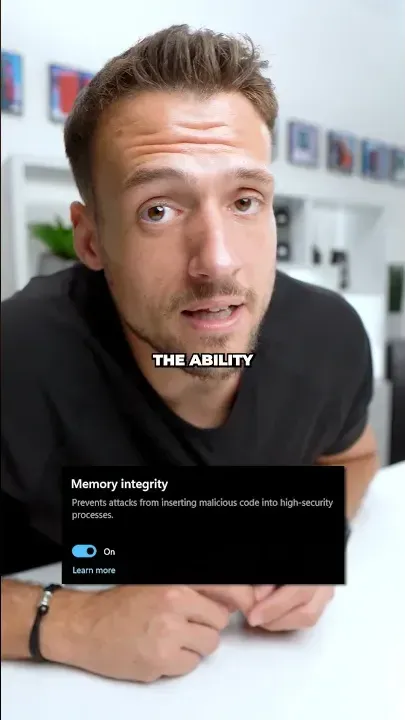
A presenter explains that Windows 11 is set to re-enable memory integrity automatically and says it may lower gaming frame rates, especially on older PCs. He notes it is a security feature and says users can turn it off if they accept the security risk.
- Views
- 1.3M
- Likes
- 57.8K
- Comments
- 2.7K
- Windows 11 memory integrityPC gaming frame ratesWindows security updates
Analysis
A presenter explains that Windows 11 is set to re-enable memory integrity automatically and says it may lower gaming frame rates, especially on older PCs. He notes it is a security feature and says users can turn it off if they accept the security risk.
- Talking headExplainer
- Spoken
- Original
“Us PC builders are now one month away Us PC builders are now one month away Us PC builders are now one month away from our frame rates just instantly from our frame rates just instantly from our frame rates just instantly tanking.”
- On-screen text
- Original
“BUILDERS MONTH”
- Visual
- Presenter-ledA centered presenter addresses the camera at a desk, gesturing toward himself and then holding up one finger. Brief bold white words appear over his shirt, and a rectangular inset image appears below him.
- The presenter speaks to camera while captions highlight key words. Windows imagery and a Microsoft article screenshot support the discussion of the update and its security purpose.
“Us PC builders are now one month away Us PC builders are now one month away Us PC builders are now one month away from our frame rates just instantly from our frame rates just instantly from our frame rates just instantly tanking. Windows is about to roll out an tanking. Windows is about to roll out an tanking. Windows is about to roll out an update that isn't good for our FPS update that isn't good for our FPS update that isn't good for our FPS numbers. This rolls out automatically on numbers. This rolls out automatically on numbers. This rolls out automatically on October 13th. Microsoft is re-enabling a October 13th. Microsoft is re-enabling a October 13th. Microsoft is re-enabling a feature called memory integrity on all feature called memory integrity on all feature called memory integrity on all Windows 11 systems. Well, at least the Windows 11 systems. Well, at least the Windows 11 systems. Well, at least the ones that are connected to the internet ones that are connected to the internet ones that are connected to the internet and still receiving updates. The reason and still receiving updates. The reason and still receiving updates. The reason I say re-enable is because Microsoft I say re-enable is because Microsoft I say re-enable is because Microsoft used to have this in here, but even they used to have this in here, but even they used to have this in here, but even they decided that was a bad idea. Now, this decided that was a bad idea. Now, this decided that was a bad idea. Now, this is a security feature and as a is a security feature and as a is a security feature and as a cybersecurity guy, I'll take all the cybersecurity guy, I'll take all the cybersecurity guy, I'll take all the security layers I can get. Memory security layers I can get. Memory security layers I can get. Memory integrity ensures that only verified integrity ensures that only verified integrity ensures that only verified kernel level code can be loaded to kernel level code can be loaded to kernel level code can be loaded to prevent cyberattacks. But, this was prevent cyberattacks. But, this was prevent cyberattacks. But, this was enabled years ago and Microsoft actually enabled years ago and Microsoft actually enabled years ago and Microsoft actually recommended gamers turn it off, at least recommended gamers turn it off, at least recommended gamers turn it off, at least temporarily, if your game was heavily temporarily, if your game was heavily temporarily, if your game was heavily affected. This can have a major impact affected. This can have a major impact affected. This can have a major impact on your gaming performance, especially on your gaming performance, especially on your gaming performance, especially on older systems. Windows 11 is already on older systems. Windows 11 is already on older systems. Windows 11 is already a pain on older PCs. This is going to a pain on older PCs. This is going to a pain on older PCs. This is going to make things even worse. Certain games make things even worse. Certain games make things even worse. Certain games are going to be affected more or less, are going to be affected more or less, are going to be affected more or less, depending on how they're developed. But, depending on how they're developed. But, depending on how they're developed. But, come October, if you see your FPS come October, if you see your FPS come October, if you see your FPS numbers just drop out of nowhere, you'll numbers just drop out of nowhere, you'll numbers just drop out of nowhere, you'll have the ability to turn this off if you have the ability to turn this off if you have the ability to turn this off if you want to accept the security risk.”
- 01Urgent opening and impending change
Establishes urgency and the consequence upfront, then names the change that the rest of the explanation will clarify.
Repeats an audience-group and countdown hook, then states the likely negative impact and identifies an upcoming automatic change and date.
“Us PC builders are now one month away Us PC builders are now one month away Us PC builders are now one month away from our frame rates just instantly from our frame rates just instantly from our frame rates just instantly tanking. Windows is about to roll out an tanking. Windows is about to roll out an tanking. Windows is about to roll out an update that isn't good for our FPS update that isn't good for our FPS update that isn't good for our FPS numbers. This rolls out automatically on numbers. This rolls out automatically on numbers. This rolls out automatically on October 13th.”
- 02Identify the change and qualify its reach
Turns the warning into a specific policy update and adds the historical context needed to understand why it is returning.
Names the feature being re-enabled, limits the claim to qualifying systems, and explains why the change is described as a re-enabling.
“Microsoft is re-enabling a October 13th. Microsoft is re-enabling a October 13th. Microsoft is re-enabling a feature called memory integrity on all feature called memory integrity on all feature called memory integrity on all Windows 11 systems. Well, at least the Windows 11 systems. Well, at least the Windows 11 systems. Well, at least the ones that are connected to the internet ones that are connected to the internet ones that are connected to the internet and still receiving updates. The reason and still receiving updates. The reason and still receiving updates. The reason I say re-enable is because Microsoft I say re-enable is because Microsoft I say re-enable is because Microsoft used to have this in here, but even they used to have this in here, but even they used to have this in here, but even they decided that was a bad idea. Now, this decided that was a bad idea. Now, this decided that was a bad idea. Now, this is a security feature and as a is a security feature and as a is a security feature and as a cybersecurity guy, I'll take all the cybersecurity guy, I'll take all the cybersecurity guy, I'll take all the security layers I can get. Memory security layers I can get. Memory security layers I can get. Memory”
- 03Explain the benefit and the performance concern
Balances the security benefit against the opening’s performance warning, giving viewers context for the apparent contradiction and who may feel the effect.
Explains what the feature protects against, contrasts that purpose with past advice to disable it, and describes possible performance costs, especially on older systems.
“integrity ensures that only verified integrity ensures that only verified integrity ensures that only verified kernel level code can be loaded to kernel level code can be loaded to kernel level code can be loaded to prevent cyberattacks. But, this was prevent cyberattacks. But, this was prevent cyberattacks. But, this was enabled years ago and Microsoft actually enabled years ago and Microsoft actually enabled years ago and Microsoft actually recommended gamers turn it off, at least recommended gamers turn it off, at least recommended gamers turn it off, at least temporarily, if your game was heavily temporarily, if your game was heavily temporarily, if your game was heavily affected. This can have a major impact affected. This can have a major impact affected. This can have a major impact on your gaming performance, especially on your gaming performance, especially on your gaming performance, especially on older systems. Windows 11 is already on older systems. Windows 11 is already on older systems. Windows 11 is already a pain on older PCs. This is going to a pain on older PCs. This is going to a pain on older PCs. This is going to make things even worse.”
- 04Qualify the impact and offer a conditional response
Avoids presenting the impact as universal and closes with a practical choice while making its tradeoff explicit.
Says effects vary by how individual products are developed, then gives a date-based sign to watch for, an option to disable the feature, and the security risk of doing so.
“Certain games make things even worse. Certain games make things even worse. Certain games are going to be affected more or less, are going to be affected more or less, are going to be affected more or less, depending on how they're developed. But, depending on how they're developed. But, depending on how they're developed. But, come October, if you see your FPS come October, if you see your FPS come October, if you see your FPS numbers just drop out of nowhere, you'll numbers just drop out of nowhere, you'll numbers just drop out of nowhere, you'll have the ability to turn this off if you have the ability to turn this off if you have the ability to turn this off if you want to accept the security risk.”