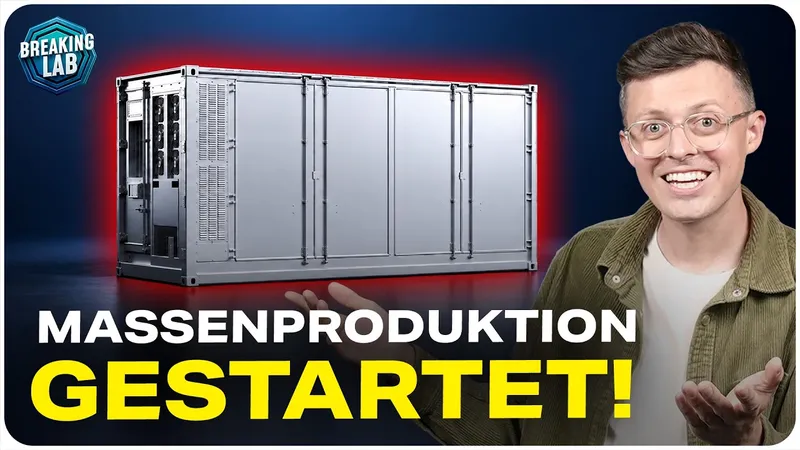
Natriumbatterie geht in Massenproduktion!
Natriumbatterie geht in Massenproduktion!
The video examines CATL’s sodium-ion energy storage system and its planned large-scale production, explaining how sodium batteries compare with lithium-ion batteries. It outlines potential advantages for stationary storage and promises to address a major drawback beyond energy density, while asking whether the system could help bring sodium storage to the mass market.
- Views
- 543.6K
- Likes
- 9.2K
- Comments
- 658
- Sodium-Ion BatteriesGrid-Scale Energy StorageCATL battery systemBattery Technology Trade-Offs
Analysis
The video examines CATL’s sodium-ion energy storage system and its planned large-scale production, explaining how sodium batteries compare with lithium-ion batteries. It outlines potential advantages for stationary storage and promises to address a major drawback beyond energy density, while asking whether the system could help bring sodium storage to the mass market.
- Explainer

- Title
- Natriumbatterie geht in Massenproduktion!
“Eines der größten Batterieunternehmen weltweit, die chinesische Firma CATL hat jetzt in München das erste Natriumionen Energiespeichersystem vorgestellt, also Batterien aus Salz. Und das System, das wird erstmals im richtig großen Stil produziert und installiert. In China will das Unternehmen noch dieses Jahr die ersten Systeme im Gigawatt Bereich ausliefern, aber Natium Batterien haben vor allem einen großen Nachteil gegenüber Litium Ion Batterien, den wahrscheinlich die meisten gar nicht so auf dem Schirm haben. Und schon mal vorweg, es ist nicht die Größe bzw. Energiedichte. [musik] Welcher Nachteil das ist, ob CATLS Batteriespeichersystem trotzdem hält, was es verspricht und ob sie der Startschuss für den Massenmarkt ist. Darum geht's in diesem Video und damit willkommen bei Breaking Lab. Jakob hier und los geht's.”
- 01Announce the development
Establishes the timely subject and concrete production claim that the packaging announces, while the planned deliveries make the scale and timing part of the premise.
Introduces a major company, its newly presented technology, and the claim that it will be produced and installed at scale, with initial deliveries planned.
“Eines der größten Batterieunternehmen weltweit, die chinesische Firma CATL hat jetzt in München das erste Natriumionen Energiespeichersystem vorgestellt, also Batterien aus Salz. Und das System, das wird erstmals im richtig großen Stil produziert und installiert. In China will das Unternehmen noch dieses Jahr die ersten Systeme im Gigawatt Bereich ausliefern, aber Natium Batterien haben vor allem einen großen Nachteil gegenüber Litium Ion Batterien, den wahrscheinlich die meisten gar nicht so auf dem Schirm haben.”
- 02Narrow the unresolved drawback
The qualification sharpens the open question instead of allowing viewers to assume the drawback is a familiar limitation. The linked questions connect the technology’s shortcoming to its commercial promise and market significance.
The presenter rules out size and energy density as the disadvantage, then poses questions about what it is, whether CATL’s system fulfills its promise, and whether this is a starting gun for the mass market.
“Und schon mal vorweg, es ist nicht die Größe bzw. Energiedichte. [musik] Welcher Nachteil das ist, ob CATLS Batteriespeichersystem trotzdem hält, was es verspricht und ob sie der Startschuss für den Massenmarkt ist.”
- 03Identify the episode and host
Turns the open questions into the episode’s stated agenda and identifies the recurring show and its host. The introduction ends here, before the main explanation begins.
The presenter says these questions are the subject of the video, welcomes viewers to Breaking Lab, identifies himself as Jakob, and begins.
“Darum geht's in diesem Video und damit willkommen bei Breaking Lab. Jakob hier und los geht's.”