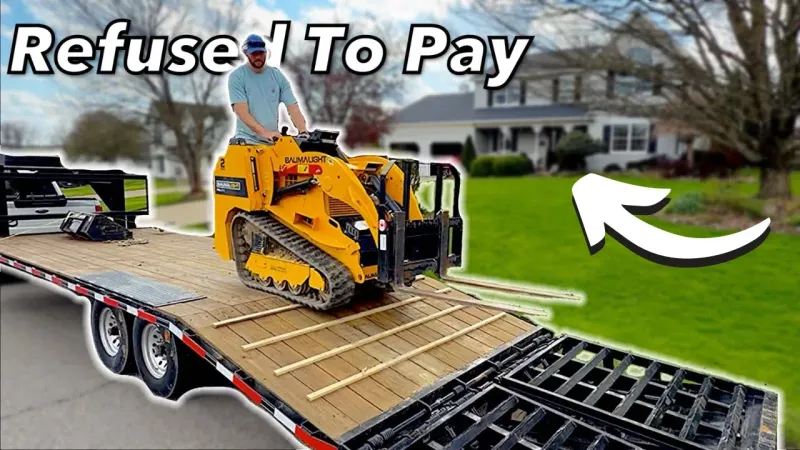
My First Customer That Refused To Pay
Hometown Acres@HometownAcresMy First Customer That Refused To Pay
The creator removes three large arborvitae stumps and their roots at his parents’ home using a mini skid steer, then handles loading and cleanup. He frames the unpaid job as useful practice and discusses maneuvering across a cared-for lawn while limiting damage; the excerpt explains the trees were removed because they had become unattractive.
- Views
- 284.5K
- Likes
- 6.8K
- Comments
- 227
- Arborvitae stump removalMini skid steer workResidential yard care
Analysis
The creator removes three large arborvitae stumps and their roots at his parents’ home using a mini skid steer, then handles loading and cleanup. He frames the unpaid job as useful practice and discusses maneuvering across a cared-for lawn while limiting damage; the excerpt explains the trees were removed because they had become unattractive.
- DemonstrationVlog
- Title
- My First Customer That Refused To Pay
“You ever get that feeling you're about You ever get that feeling you're about You ever get that feeling you're about to go do a job that you're not going to to go do a job that you're not going to to go do a job that you're not going to get paid for? get paid for? get paid for? I got that feeling pretty strong on this I got that feeling pretty strong on this I got that feeling pretty strong on this one. one. one. >> [music] [music] >> All right, so the reason I got a feeling >> All right, so the reason I got a feeling >> All right, so the reason I got a feeling I'm not getting paid for this job is cuz I'm not getting paid for this job is cuz I'm not getting paid for this job is cuz it's at my parents house, but this gives it's at my parents house, but this gives it's at my parents house, but this gives me some good practice on doing some me some good practice on doing some me some good practice on doing some residential work like driving through a residential work like driving through a residential work like driving through a yard of somebody who takes pretty good yard of somebody who takes pretty good yard of somebody who takes pretty good care of their yard and I think we did a care of their yard and I think we did a care of their yard and I think we did a pretty good job of not tearing this one pretty good job of not tearing this one pretty good job of not tearing this one up at all. up at all. up at all. As long as you don't make any sharp As long as you don't make any sharp As long as you don't make any sharp turns, you're just going to leave small turns, you're just going to leave small turns, you're just going to leave small little imprints that will settle out little imprints that will settle out little imprints that will settle out over time and not be an issue. Even over time and not be an issue. Even over time and not be an issue. Even getting back up in here, getting back up in here, getting back up in here, uh we didn't really tear anything up uh we didn't really tear anything up uh we didn't really tear anything up either. I had to come in here, stay try either. I had to come in here, stay try either. I had to come in here, stay try to stay in the landscaping as much as to stay in the landscaping as much as to stay in the landscaping as much as possible and then back back up and possible and then back back up and possible and then back back up and didn't tear up the grass at all, but didn't tear up the grass at all, but didn't tear up the grass at all, but what we're the job we're working on here what we're the job we're working on here what we're the job we're working on here for my dad is he has a couple of for my dad is he has a couple of for my dad is he has a couple of 30-year-old arborvitaes that Why Why are 30-year-old arborvitaes that Why Why are 30-year-old arborvitaes that Why Why are you taking them out? I mean, obviously you taking them out? I mean, obviously you taking them out? I mean, obviously we cut them down and trimmed them up and we cut them down and trimmed them up and we cut them down and trimmed them up and stuff, but stuff, but stuff, but >> They've got ugly over the years.”
- 01Name the worry
Introduces the central payment concern as a personal experience and gives viewers a reason to learn what made this job feel different.
The speaker repeats a question about the feeling of taking on a job that may go unpaid, then says that feeling was strong about this particular one.
“You ever get that feeling you're about You ever get that feeling you're about You ever get that feeling you're about to go do a job that you're not going to to go do a job that you're not going to to go do a job that you're not going to get paid for? get paid for? get paid for? I got that feeling pretty strong on this I got that feeling pretty strong on this I got that feeling pretty strong on this one. one. one.”
- 02Explain the counterweight
Balances the unpaid-work concern with a reason the job had value and establishes the residential setting and care involved. The supplied excerpt then starts a new question about the arborvitaes but cuts off, so the introduction's transition or resolution cannot be established.
The speaker explains that the job was at his parents' house, where it provided practice in residential work, then describes the care taken not to damage the yard. The account remains contextual and gives a small reassuring result: they did not tear anything up.
“>> [music] [music] >> All right, so the reason I got a feeling >> All right, so the reason I got a feeling >> All right, so the reason I got a feeling I'm not getting paid for this job is cuz I'm not getting paid for this job is cuz I'm not getting paid for this job is cuz it's at my parents house, but this gives it's at my parents house, but this gives it's at my parents house, but this gives me some good practice on doing some me some good practice on doing some me some good practice on doing some residential work like driving through a residential work like driving through a residential work like driving through a yard of somebody who takes pretty good yard of somebody who takes pretty good yard of somebody who takes pretty good care of their yard and I think we did a care of their yard and I think we did a care of their yard and I think we did a pretty good job of not tearing this one pretty good job of not tearing this one pretty good job of not tearing this one up at all. up at all. up at all. As long as you don't make any sharp As long as you don't make any sharp As long as you don't make any sharp turns, you're just going to leave small turns, you're just going to leave small turns, you're just going to leave small little imprints that will settle out little imprints that will settle out little imprints that will settle out over time and not be an issue. Even over time and not be an issue. Even over time and not be an issue. Even getting back up in here, getting back up in here, getting back up in here, uh we didn't really tear anything up uh we didn't really tear anything up uh we didn't really tear anything up either. I had to come in here, stay try either. I had to come in here, stay try either. I had to come in here, stay try to stay in the landscaping as much as to stay in the landscaping as much as to stay in the landscaping as much as possible and then back back up and possible and then back back up and possible and then back back up and didn't tear up the grass at all, but didn't tear up the grass at all, but didn't tear up the grass at all, but what we're the job we're working on here what we're the job we're working on here what we're the job we're working on here for my dad is he has a couple of for my dad is he has a couple of for my dad is he has a couple of 30-year-old arborvitaes that Why Why are 30-year-old arborvitaes that Why Why are 30-year-old arborvitaes that Why Why are you taking them out? I mean, obviously you taking them out? I mean, obviously you taking them out? I mean, obviously we cut them down and trimmed them up and we cut them down and trimmed them up and we cut them down and trimmed them up and stuff, but stuff, but stuff, but >> They've got ugly over the years.”