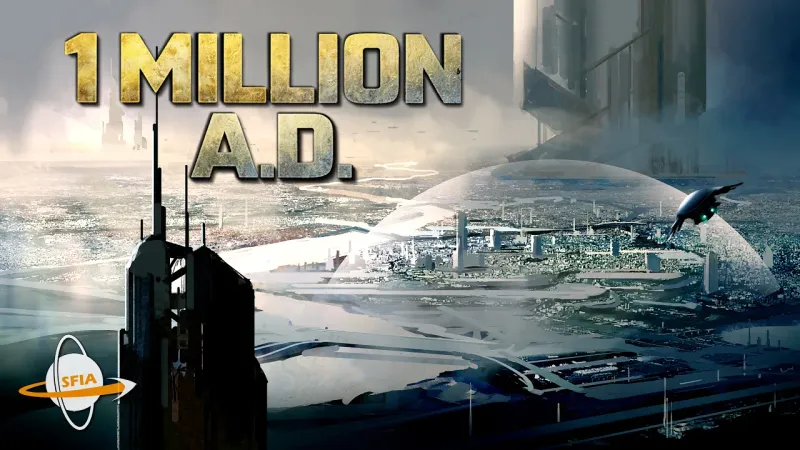
1 Million A.D.
Isaac Arthur@isaacarthurSFIA1 Million A.D.
Isaac Arthur explores what humanity might become by the year 1 million AD, including whether civilization could spread across the galaxy and how human bodies, minds, and identity might change. The video also considers Earth's distant future and whether people alive today could still be around.
- Views
- 261.2K
- Likes
- 8.9K
- Comments
- 997
- Humanity in One Million ADFuture space civilizationsHuman Evolution and IdentityEarth's Far Future
Analysis
Isaac Arthur explores what humanity might become by the year 1 million AD, including whether civilization could spread across the galaxy and how human bodies, minds, and identity might change. The video also considers Earth's distant future and whether people alive today could still be around.
- ExplainerDocumentary
- Title
- 1 Million A.D.
“We've come a long way. Let's see where We've come a long way. Let's see where We've come a long way. Let's see where that journey leads a million years from that journey leads a million years from that journey leads a million years from now. A million is a funny number. It's big A million is a funny number. It's big A million is a funny number. It's big enough to feel almost abstract. Whether enough to feel almost abstract. Whether enough to feel almost abstract. Whether we're talking about years in the future we're talking about years in the future we're talking about years in the future or subscribers on this channel, and as or subscribers on this channel, and as or subscribers on this channel, and as we hit that milestone, it felt like a we hit that milestone, it felt like a we hit that milestone, it felt like a good time to ask a much bigger question. good time to ask a much bigger question. good time to ask a much bigger question. What does humanity look like in the year What does humanity look like in the year What does humanity look like in the year 1 million AD? By then, we may have 1 million AD? By then, we may have 1 million AD? By then, we may have spread across the galaxy, reshaped our spread across the galaxy, reshaped our spread across the galaxy, reshaped our bodies and minds, and learned to bodies and minds, and learned to bodies and minds, and learned to experience time in ways that make a experience time in ways that make a experience time in ways that make a million years feel like a lifetime or a million years feel like a lifetime or a million years feel like a lifetime or a long weekend. We may not even agree on long weekend. We may not even agree on long weekend. We may not even agree on what it means to be human anymore. what it means to be human anymore. what it means to be human anymore. There's also a chance that some of us There's also a chance that some of us There's also a chance that some of us alive today might still be around to alive today might still be around to alive today might still be around to find out. find out. find out. So, grab a drink and a snack, subscribe So, grab a drink and a snack, subscribe So, grab a drink and a snack, subscribe if you're not one of the million folks if you're not one of the million folks if you're not one of the million folks who already have, and let's take a look who already have, and let's take a look who already have, and let's take a look at the year 1 million AD, at the year 1 million AD, at the year 1 million AD, the galaxy by 1 million AD. the galaxy by 1 million AD. the galaxy by 1 million AD. When we talk about a million years in When we talk about a million years in When we talk about a million years in the future, the first question we have the future, the first question we have the future, the first question we have to ask is a simple one. How far could we to ask is a simple one. How far could we to ask is a simple one. How far could we actually go? Because the galaxy is big, actually go? Because the galaxy is big, actually go?”
- 01Turn progress into a future question
Establish the speculative premise and make an almost abstract span of time feel like a meaningful reason to ask what comes next.
Repeats a short statement about how far things have come, then links that journey to a distant future and emphasizes how immense the timescale is.
“We've come a long way. Let's see where We've come a long way. Let's see where We've come a long way. Let's see where that journey leads a million years from that journey leads a million years from that journey leads a million years from now. A million is a funny number. It's big A million is a funny number. It's big A million is a funny number. It's big enough to feel almost abstract. Whether enough to feel almost abstract. Whether enough to feel almost abstract. Whether we're talking about years in the future we're talking about years in the future we're talking about years in the future or subscribers on this channel, and as or subscribers on this channel, and as or subscribers on this channel, and as we hit that milestone, it felt like a we hit that milestone, it felt like a we hit that milestone, it felt like a good time to ask a much bigger question. good time to ask a much bigger question. good time to ask a much bigger question.”
- 02Imagine what humanity might become
Give the broad question concrete speculative directions while keeping them qualified as possibilities, not predictions stated as fact.
Asks what humanity could look like in the year 1 million A.D., then proposes uncertain possibilities involving expansion, human change, and the experience of time.
“What does humanity look like in the year What does humanity look like in the year What does humanity look like in the year 1 million AD? By then, we may have 1 million AD? By then, we may have 1 million AD? By then, we may have spread across the galaxy, reshaped our spread across the galaxy, reshaped our spread across the galaxy, reshaped our bodies and minds, and learned to bodies and minds, and learned to bodies and minds, and learned to experience time in ways that make a experience time in ways that make a experience time in ways that make a million years feel like a lifetime or a million years feel like a lifetime or a million years feel like a lifetime or a long weekend. We may not even agree on long weekend. We may not even agree on long weekend. We may not even agree on what it means to be human anymore. what it means to be human anymore. what it means to be human anymore. There's also a chance that some of us There's also a chance that some of us There's also a chance that some of us alive today might still be around to alive today might still be around to alive today might still be around to find out. find out. find out.”
- 03Invite the audience into the exploration
Shift from the speculative premise toward the coming exploration and leave the audience with its guiding question. The supplied excerpt ends during this transition, before the discussion develops.
Offers a casual viewing invitation and subscription request, then introduces the subject as a look at the galaxy in the year 1 million A.D. before posing the practical framing question of how far humanity could go.
“So, grab a drink and a snack, subscribe So, grab a drink and a snack, subscribe So, grab a drink and a snack, subscribe if you're not one of the million folks if you're not one of the million folks if you're not one of the million folks who already have, and let's take a look who already have, and let's take a look who already have, and let's take a look at the year 1 million AD, at the year 1 million AD, at the year 1 million AD, the galaxy by 1 million AD. the galaxy by 1 million AD. the galaxy by 1 million AD. When we talk about a million years in When we talk about a million years in When we talk about a million years in the future, the first question we have the future, the first question we have the future, the first question we have to ask is a simple one. How far could we to ask is a simple one. How far could we to ask is a simple one. How far could we actually go? Because the galaxy is big, actually go? Because the galaxy is big, actually go?”