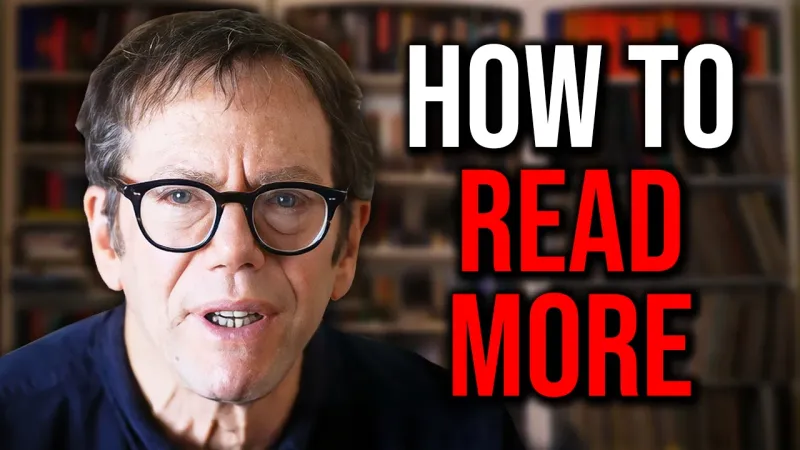
Read Books That Challenge Your Mind
Robert Greene@RobertGreeneOfficialRead Books That Challenge Your Mind
Robert Greene argues that readers should finish books and choose challenging texts rather than only entertaining ones. He compares reading difficult material to resistance training, saying the effort can build strength and confidence, and raises concerns about students being taught excerpts instead of entire texts.
- Views
- 644.8K
- Likes
- 23.8K
- Comments
- 648
- Reading challenging booksFinishing entire booksBuilding reading habits
Analysis
Robert Greene argues that readers should finish books and choose challenging texts rather than only entertaining ones. He compares reading difficult material to resistance training, saying the effort can build strength and confidence, and raises concerns about students being taught excerpts instead of entire texts.
- ExplainerMonologue

- Title
- Read Books That Challenge Your Mind
“The main thing is to always finish books The main thing is to always finish books The main thing is to always finish books and don't just choose things that you and don't just choose things that you and don't just choose things that you think are entertaining and fun because think are entertaining and fun because think are entertaining and fun because that's going to make you lazy and it's that's going to make you lazy and it's that's going to make you lazy and it's going to make you weak and it's make you going to make you weak and it's make you going to make you weak and it's make you always look for things that are always look for things that are always look for things that are entertaining, fun, and distracting. You entertaining, fun, and distracting. You entertaining, fun, and distracting. You want things that are going to challenge want things that are going to challenge want things that are going to challenge you constantly. How to read more books? [music] I think How to read more books? [music] I think How to read more books? [music] I think a lot of problems that I'm reading about a lot of problems that I'm reading about a lot of problems that I'm reading about in the papers and then online is that in in the papers and then online is that in in the papers and then online is that in colleges, etc., young people are not colleges, etc., young people are not colleges, etc., young people are not taught to read entire texts. They're taught to read entire texts. They're taught to read entire texts. They're given passages, citations, chapters, but given passages, citations, chapters, but given passages, citations, chapters, but they're not reading the whole thing they're not reading the whole thing they're not reading the whole thing because it's so difficult to get through because it's so difficult to get through because it's so difficult to get through an entire text. And what you want to do an entire text. And what you want to do an entire text. And what you want to do is you have to do kind of resistance is you have to do kind of resistance is you have to do kind of resistance training. And what I mean by that is the training. And what I mean by that is the training. And what I mean by that is the following. If everything in life were following. If everything in life were following. If everything in life were easy and pleasant and fun, we would easy and pleasant and fun, we would easy and pleasant and fun, we would never get anywhere. When you go to the never get anywhere. When you go to the never get anywhere. When you go to the gym, if you use weights, it's creating gym, if you use weights, it's creating gym, if you use weights, it's creating resistance. And the more resistance you resistance. And the more resistance you resistance. And the more resistance you have, the stronger you get. And it's not have, the stronger you get. And it's not have, the stronger you get. And it's not necessarily fun in the moment as you're necessarily fun in the moment as you're necessarily fun in the moment as you're lifting weights, but slowly you start lifting weights, but slowly you start lifting weights, but slowly you start developing muscle, you start developing developing muscle, you start developing developing muscle, you start developing confidence, you start looking good, confidence, you start looking good, confidence, you start looking good, feeling better, and it does become kind feeling better, and it does become kind feeling better, and it does become kind of pleasant.”
- 01Recommendation and contrast
This establishes the speaker's central opinion and the contrast between comfortable entertainment and challenging material. It sets up why the recommended choice might matter.
The speaker urges readers to finish books and not choose only what seems entertaining or fun, arguing that such choices can encourage passivity. They instead recommend material that challenges the reader.
“The main thing is to always finish books The main thing is to always finish books The main thing is to always finish books and don't just choose things that you and don't just choose things that you and don't just choose things that you think are entertaining and fun because think are entertaining and fun because think are entertaining and fun because that's going to make you lazy and it's that's going to make you lazy and it's that's going to make you lazy and it's going to make you weak and it's make you going to make you weak and it's make you going to make you weak and it's make you always look for things that are always look for things that are always look for things that are entertaining, fun, and distracting. You entertaining, fun, and distracting. You entertaining, fun, and distracting. You want things that are going to challenge want things that are going to challenge want things that are going to challenge you constantly.”
- 02Question and reading difficulty
The question gives the opening a practical audience-facing concern, while the explanation identifies a barrier rather than treating reading more as a simple matter of will. The excerpt does not yet provide a complete method.
The speaker asks how to read more books, then points to the many problems they read about in papers and online. They say young people are not taught to read entire texts, and that reading the whole thing can be difficult.
“How to read more books? [music] I think How to read more books? [music] I think How to read more books? [music] I think a lot of problems that I'm reading about a lot of problems that I'm reading about a lot of problems that I'm reading about in the papers and then online is that in in the papers and then online is that in in the papers and then online is that in colleges, etc., young people are not colleges, etc., young people are not colleges, etc., young people are not taught to read entire texts. They're taught to read entire texts. They're taught to read entire texts. They're given passages, citations, chapters, but given passages, citations, chapters, but given passages, citations, chapters, but they're not reading the whole thing they're not reading the whole thing they're not reading the whole thing because it's so difficult to get through because it's so difficult to get through because it's so difficult to get through an entire text.”
- 03Effort as resistance training
The analogy explains why the earlier call to tackle challenging material could be worthwhile, connecting immediate effort with possible later growth. The ledger cuts off before the thought is fully resolved, so the introduction's final point cannot be established beyond the supplied text.
The speaker says developing capacity requires resistance, then compares following a difficult path to lifting weights: more resistance can make you stronger. They add that the effort may not feel fun in the moment, but may lead to muscle, confidence, feeling better, and a more pleasant experience. The supplied excerpt ends as this analogy is still unfolding.
“And what you want to do an entire text. And what you want to do an entire text. And what you want to do is you have to do kind of resistance is you have to do kind of resistance is you have to do kind of resistance training. And what I mean by that is the training. And what I mean by that is the training. And what I mean by that is the following. If everything in life were following. If everything in life were following. If everything in life were easy and pleasant and fun, we would easy and pleasant and fun, we would easy and pleasant and fun, we would never get anywhere. When you go to the never get anywhere. When you go to the never get anywhere. When you go to the gym, if you use weights, it's creating gym, if you use weights, it's creating gym, if you use weights, it's creating resistance. And the more resistance you resistance. And the more resistance you resistance. And the more resistance you have, the stronger you get. And it's not have, the stronger you get. And it's not have, the stronger you get. And it's not necessarily fun in the moment as you're necessarily fun in the moment as you're necessarily fun in the moment as you're lifting weights, but slowly you start lifting weights, but slowly you start lifting weights, but slowly you start developing muscle, you start developing developing muscle, you start developing developing muscle, you start developing confidence, you start looking good, confidence, you start looking good, confidence, you start looking good, feeling better, and it does become kind feeling better, and it does become kind feeling better, and it does become kind of pleasant.”