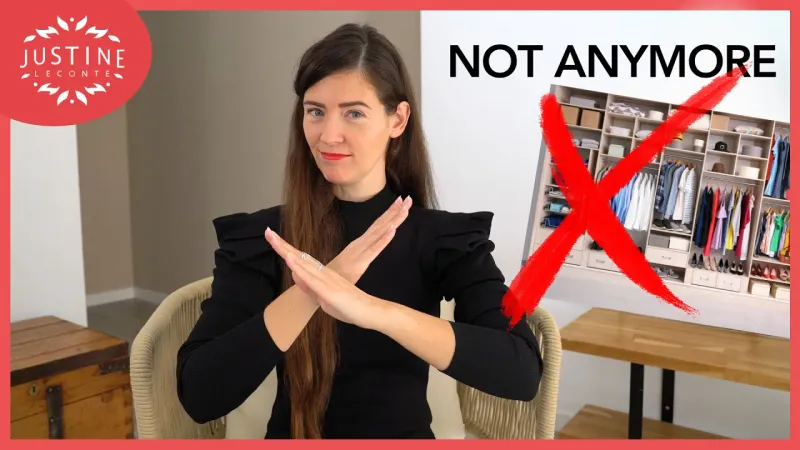
I'm a fashion designer: 9 things I don't waste money on
Justine Leconte officiel@justineleconteI'm a fashion designer: 9 things I don't waste money on
Fashion designer Justine Leconte shares nine things she says she no longer buys, updating her choices around fashion and clothing. The opening covers garments that cannot be washed, acetate linings, and micro handbags, explaining her concerns about durability, care, and practical use.
- Views
- 226.6K
- Likes
- 12.1K
- Comments
- 1.3K
- Fashion spending choicesClothing fabric qualityHandbag functionality
Analysis
Fashion designer Justine Leconte shares nine things she says she no longer buys, updating her choices around fashion and clothing. The opening covers garments that cannot be washed, acetate linings, and micro handbags, explaining her concerns about durability, care, and practical use.
- ListicleCommentary

- Title
- I'm a fashion designer: 9 things I don't waste money on
“Hi everyone, it's Justine. Welcome back to this channel. I want to give you an update on things that I'm not going to buy this year and don't buy anymore cuz some things have evolved, especially as far as fashion and clothing is concerned. Grab a tea and let's do this. Number one, clothes made in fabrics that are not washable. I see that happening more and more in the fashion industry. Brands use fabrics and materials that cannot be washed. Two reasons for that. The first one is they save production costs. If the material doesn't have to withstand washing or cleaning of any kind, then they can use much much cheaper qualities of fabrics which is not good for you as a consumer. Second reason, if they don't have to guarantee cleaning, washing at a certain temperature, they don't have to take the responsibility in case you wash your garment and then it shrinks or it loses its color or whatever happens. That's not good. I mean, I understand if you say only dry cleaning in some cases. For instance, a tailored suit doesn't like to be spinned and folded and I understand this because of the construction or a dress you wear as a wedding guest that is tailored and draped. They don't like washing either that. Okay. Dry clean only. I understand. But then not washable at all. Neither in the washing machine nor at the dry cleaners. That raises so many questions. Why would I want this? And also how concretely gross. Next one. Clothes with the lining in acetate. It has always been a pet peeve of mine, but I'm seeing this happening more and more right now in the garment industry. You have a beautifully drap silk dress. Beautiful, perfectly constructed. And then the lining is in acetate. This makes me sad every time. Acetate is not a good quality material. It's in fact the worst of the synthetic materials that exist in the industry. Like that's the worst thing you could pick. It's also by far the cheapest. Maybe that's why. But acetate does not last. Does not withstand washing very well. It loses its color. Like the color turns when exposed to sunlight. This is really not a good investment. I mean, it makes noise when you move in it. Who wants that, right? So, I've banned acetate from my life entirely and I'm not going back. I don't recommend you invest your money in acetate clothing either. It's not worth it. Next one, micro handbags, tiny clutches. It's a huge trend right now. Um, you buy a micro handbag from a luxury brand that creates aspiration. I understand this. Like, you can get the brand but at a more affordable price point because there is a lot less material. But if a handbag cannot even hold my phone and my keys, what can I use it for? It's just not functional, is it? And I have clutches and pouches in my own handbag line. I get that question a lot. Justine, does a large phone fit into your handbag designs? Well, yes, because as a designer, I don't create products that I wouldn't use myself. If you're wondering which handbag line, I'm a designer. I have among other things a handbag line which you can see on JUSTINELECONTE.COM/ELIXIR. It's the name of this collection. It includes clutches in a format that can carry your phone, your keys, and more things because that's kind of the point of a handbag. I think you'll need to check what's in stock because some designs are already sold out, but there is still plenty to choose from.”
- 01Premise and invitation
States the episode’s consumer-choice premise and sets up a sequence of examples to come.
The host welcomes viewers, introduces an update on what she will not buy this year or anymore, connects the change to fashion and clothing, and invites viewers to settle in.
“Hi everyone, it's Justine. Welcome back to this channel. I want to give you an update on things that I'm not going to buy this year and don't buy anymore cuz some things have evolved, especially as far as fashion and clothing is concerned. Grab a tea and let's do this.”
- 02First example and rationale
Begins the promised list with a specific consumer concern, explaining both the potential cost-saving incentive for brands and the cleaning responsibility shifted to buyers, while acknowledging legitimate exceptions.
She names non-washable clothing as the first item, gives two reasons she sees brands using it, and qualifies that some garments reasonably require special cleaning.
“Number one, clothes made in fabrics that are not washable. I see that happening more and more in the fashion industry. Brands use fabrics and materials that cannot be washed. Two reasons for that. The first one is they save production costs. If the material doesn't have to withstand washing or cleaning of any kind, then they can use much much cheaper qualities of fabrics which is not good for you as a consumer. Second reason, if they don't have to guarantee cleaning, washing at a certain temperature, they don't have to take the responsibility in case you wash your garment and then it shrinks or it loses its color or whatever happens. That's not good. I mean, I understand if you say only dry cleaning in some cases. For instance, a tailored suit doesn't like to be spinned and folded and I understand this because of the construction or a dress you wear as a wedding guest that is tailored and draped. They don't like washing either that. Okay. Dry clean only. I understand.”
- 03Boundary and next example
Closes the first example’s qualification and tees up another numbered choice, using the contrast between limited care and no cleaning option to underline her objection.
She distinguishes clothing that cannot be cleaned at all from garments that are dry-clean-only, reacts with rhetorical questions, and moves to clothes with acetate lining, a personal pet peeve she says is increasingly common.
“But then not washable at all. Neither in the washing machine nor at the dry cleaners. That raises so many questions. Why would I want this? And also how concretely gross. Next one. Clothes with the lining in acetate. It has always been a pet peeve of mine, but I'm seeing this happening more and more right now in the garment industry.”
- 04Second example and personal verdict
Develops the second list item with concrete reasons and a personal conclusion, then leads directly into the next example.
She describes a polished garment paired with acetate lining, criticizes the material’s quality, cost and durability, and says she has removed acetate from her own life and does not recommend spending money on acetate clothing.
“You have a beautifully drap silk dress. Beautiful, perfectly constructed. And then the lining is in acetate. This makes me sad every time. Acetate is not a good quality material. It's in fact the worst of the synthetic materials that exist in the industry. Like that's the worst thing you could pick. It's also by far the cheapest. Maybe that's why. But acetate does not last. Does not withstand washing very well. It loses its color. Like the color turns when exposed to sunlight. This is really not a good investment. I mean, it makes noise when you move in it. Who wants that, right? So, I've banned acetate from my life entirely and I'm not going back. I don't recommend you invest your money in acetate clothing either. It's not worth it. Next one, micro handbags, tiny clutches.”
- 05Third example and designer qualification
Continues the list with a practical objection, then supports her answer with her design approach and a brief, explicit mention of her own products. The supplied excerpt ends during this promotional qualification, so the introduction boundary is incomplete.
She questions the usefulness of micro handbags, answers a frequently asked question about phone fit in her own designs, identifies herself as a designer, and mentions her handbag collection and its functional capacity and stock status.
“It's a huge trend right now. Um, you buy a micro handbag from a luxury brand that creates aspiration. I understand this. Like, you can get the brand but at a more affordable price point because there is a lot less material. But if a handbag cannot even hold my phone and my keys, what can I use it for? It's just not functional, is it? And I have clutches and pouches in my own handbag line. I get that question a lot. Justine, does a large phone fit into your handbag designs? Well, yes, because as a designer, I don't create products that I wouldn't use myself. If you're wondering which handbag line, I'm a designer. I have among other things a handbag line which you can see on JUSTINELECONTE.COM/ELIXIR. It's the name of this collection. It includes clutches in a format that can carry your phone, your keys, and more things because that's kind of the point of a handbag. I think you'll need to check what's in stock because some designs are already sold out, but there is still plenty to choose from.”