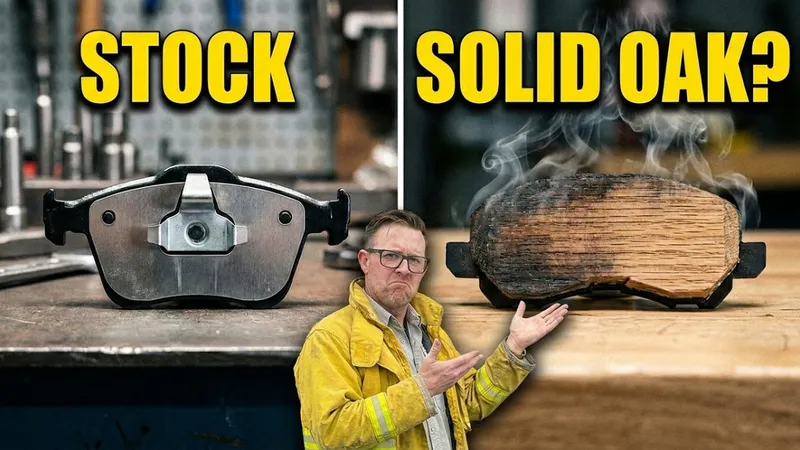
I Tried Making My Own Brake Pads.
I Tried Making My Own Brake Pads.
Justin sets out to make five sets of brake pads from materials including oak, leather, carbon fiber and 3D-printed material, then test whether they can stop a car. The opening explains how he designs the pad backers and tackles the challenge of keeping friction material attached, while raising safety concerns about asbestos.
- Views
- 338.6K
- Likes
- 11K
- Comments
- 916
- Homemade brake padsBrake material testingDIY automotive fabrication
Analysis
Justin sets out to make five sets of brake pads from materials including oak, leather, carbon fiber and 3D-printed material, then test whether they can stop a car. The opening explains how he designs the pad backers and tackles the challenge of keeping friction material attached, while raising safety concerns about asbestos.
- ExperimentDemonstration
- Title
- I Tried Making My Own Brake Pads.
“Okay. Homemade brake pads. Solid oak, leather, carbon fiber, 3D printed brake pads in three, two, one. I do not feel good about this. Oh. Oh. Oh. Woo. About 3 years ago, one of those videos featuring some dudes in a mud hut factory wearing safety sandals crossed my feed and they just happened to be refurbishing brake pads. Naturally, seeing them make brake pads made me think I could make brake pads. But the only problem is is I have absolutely no interest in grabbing handfuls of asbestos to make my brake pads because it's illegal in the states and it's actually really bad for you. I mean, take a look at this kid here. He looks like a teenager, but by the end of the video, he's got more gray hair than father time, which makes me think the old man in the beginning grabbing the friction material is probably about 20 years old. I have no interest in this, but getting non-asbestos friction material here in the states requires a degree in chemistry and metallurgy just to get a sample of it along with whatever glue and resin holds this stuff together. So, I kind of struck out on this idea. >> Come [clears throat] on, really? But that is until I decided to just make my own friction material using everything from 400-year-old technology all the way up to modern-day aerospace components with one goal in mind. >> To see if my homemade brake pads will stop this car before I hit the end of that thousand ft road and crash into the ditch of death. >> Oh no, the ditch of death.”
- 01Teaser and test stakes
This cold open quickly establishes the unusual project and previews its central test before explaining how the idea arose. The consequence makes the result worth following, while the speaker's reaction adds a comic note.
A compact list of possible versions of the project leads into the speaker's apprehension and the question of whether the homemade item can pass a high-stakes test.
“Okay. Homemade brake pads. Solid oak, leather, carbon fiber, 3D printed brake pads in three, two, one. I do not feel good about this. Oh. Oh. Oh. Woo.”
- 02How the idea began
The anecdote grounds the project in a specific trigger and makes the initial leap from seeing a related task to attempting it understandable.
The speaker recalls encountering a video about brake-pad refurbishment and explains how it prompted the idea of making brake pads.
“About 3 years ago, one of those videos featuring some dudes in a mud hut factory wearing safety sandals crossed my feed and they just happened to be refurbishing brake pads. Naturally, seeing them make brake pads made me think I could make brake pads.”
- 03The sourcing problem
This passage turns the initial idea into a practical challenge: the key material is not readily available, and the speaker does not have the specialist credentials or ingredients. The aside keeps the explanation in the opening's comic register.
The speaker explains why asbestos is not an option, adds a joking observation about someone in the referenced video, and describes the expertise and materials needed to obtain a non-asbestos alternative.
“But the only problem is is I have absolutely no interest in grabbing handfuls of asbestos to make my brake pads because it's illegal in the states and it's actually really bad for you. I mean, take a look at this kid here. He looks like a teenager, but by the end of the video, he's got more gray hair than father time, which makes me think the old man in the beginning grabbing the friction material is probably about 20 years old. I have no interest in this, but getting non-asbestos friction material here in the states requires a degree in chemistry and metallurgy just to get a sample of it along with whatever glue and resin holds this stuff together.”
- 04Setback and workaround
The setback sharpens the problem, and the pivot supplies the opening's turning point: instead of abandoning the project, the speaker proposes an unusually broad set of approaches.
The speaker says the initial idea stalled, then pivots to making the friction material personally, drawing on sources from centuries-old technology to modern aerospace components.
“So, I kind of struck out on this idea. >> Come [clears throat] on, really? But that is until I decided to just make my own friction material using everything from 400-year-old technology all the way up to modern-day aerospace components with one goal in mind.”
- 05The test and its consequence
This gives the project a specific, consequential test and makes the unresolved result the clearest reason to continue. The follow-up joke lightens, but does not erase, the stated risk.
A brief exchange states the goal of seeing whether the homemade pads can stop the car before the end of a thousand-foot road, followed by a comic repetition of the crash scenario.
“>> To see if my homemade brake pads will stop this car before I hit the end of that thousand ft road and crash into the ditch of death. >> Oh no, the ditch of death.”