Ferrari 355 F1 vs 1981 Corvette: Which Is the Smarter Buy? | Jay Leno's Garage
Jay Leno's Garage@jaylenosgarageFerrari 355 F1 vs 1981 Corvette: Which Is the Smarter Buy? | Jay Leno's Garage
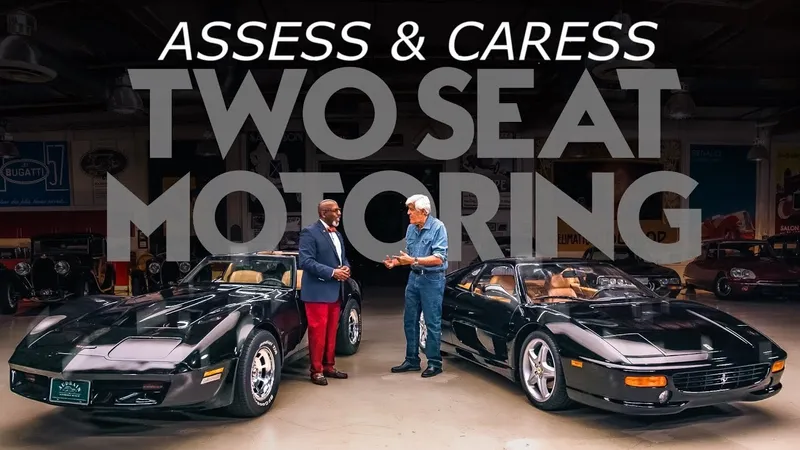
Jay Leno and Donald Osborne compare a 1997 Ferrari 355 F1 Berlinetta with a 1981 Chevrolet Corvette at the Audrain Automobile Museum. They discuss the Ferrari’s design, gearbox and reliability, alongside the Corvette’s engineering and reputation, as they consider which car was the smarter buy over the past five years. The supplied description says Jay makes a pick and Donald presents the numbers.
- Views
- 231.1K
- Likes
- 4.6K
- Comments
- 473
- Ferrari 355 F11981 Chevrolet CorvetteClassic car valuesSports car engineering
Analysis
Jay Leno and Donald Osborne compare a 1997 Ferrari 355 F1 Berlinetta with a 1981 Chevrolet Corvette at the Audrain Automobile Museum. They discuss the Ferrari’s design, gearbox and reliability, alongside the Corvette’s engineering and reputation, as they consider which car was the smarter buy over the past five years. The supplied description says Jay makes a pick and Donald presents the numbers.
- ComparisonInterview
- Title
- Ferrari 355 F1 vs 1981 Corvette: Which Is the Smarter Buy? | Jay Leno's Garage
“Welcome to the episode of Assess on Caress on Jay Lenel's Garage. The two cars we're featuring today from the Audrain Automotive Museum in Newport, Rhode Island. One of the great museums every three months that the exhibits change. A lot of museums you go to, you go to the 10 years later and the same cars in the same spot. No, it's very fluid. It's it's a kinetic museum. It's a lot of fun. And these cars got here via reliable transportation. They drive them across the country and then they go back the same week and they don't get damaged. They don't get scratched. You know, they're enclosed trailers. So, if you've got a car you want to transport, give them a call. I think you might like it. What are we doing here, Donald? >> Well, Jay, today's theme is two seat motoring, high and low. >> Right. >> Now, obviously, the high and low is obvious. And the cars are a 1981 Chevrolet Corvette and a 1997 Ferrari 355 F1 Berlinetta. >> Well, like he says, but like with Donald, the high is obvious and the low as well. Okay. Well, which one do you want to start with? Let's start with the Ferrari. >> Okay, let me get on the other side here. >> This is one of my favorite periods of of Ferrari design. Pina did a beautiful job. This car has much of the feeling of sort of the classic what you think of as a Ferrari, the 308 GTB, and it's also got a bit of that uh Ferrari Dino look. It's very clean, very elemental uh aerodynamic, sexy, especially in black. It's absolutely amazing. Well, it's interesting and this is probably a very controversial thing to say, but there's another influence here that seems obvious to me. That's the Honda NSX. This looks like the Honda NSX. The Honda NSX, I think, was the car that made Ferrari re-evaluate everything because they were selling cars and yeah, well, I get change the oil, but it wasn't customer centric. It was they were selling cars and you bought it because it was Ferrari. When the NSX came out, here was a car. It was powerful, but it was not literally maintenance-free, but built to such a high quality and it was a sports car. And I think Ferrari looked at that and evaluated, we got to get our game together here because, you know, competition is getting better and better all around the world. And I think it really made them change the game. Don't you see a little Honda NSX in this? I do, but I think the influence is a little backwards. The Honda NSX was designed to look like an Italian sports car. >> Well, yeah. Yeah, but and it it it's very evident that well, first of all, obviously everybody knows Honda did a brilliant job with the NSX. >> And I think what the NSX really brought to the table was the fact that uh you know, much like the Toyota 2000 GT, right? >> It looked like a European car, but it was very much a Japanese car. And Honda did the same thing with the NSX because they made a car which instantly to the entire world said this is a sports car. This is a serious sports car. It looks like those Italian sports cars, but they brought a level of practicality to it and and user friendliness and reliability. Exactly. The thing about this particular car this uh this this year and this model, the the 355,”
- 01Show and setting
Identifies the established format and gives context for the comparison before the central pairing is made explicit.
The host names the recurring show and introduces the featured items and their source or setting.
“Welcome to the episode of Assess on Caress on Jay Lenel's Garage. The two cars we're featuring today from the Audrain Automotive Museum in Newport, Rhode Island.”
- 02Distinctive context
Adds context beyond the items’ names and builds interest in the setting’s unusual qualities.
The host explains what makes the source or setting distinctive, contrasts it with a more familiar alternative, and gives a brief positive assessment.
“One of the great museums every three months that the exhibits change. A lot of museums you go to, you go to the 10 years later and the same cars in the same spot. No, it's very fluid. It's it's a kinetic museum. It's a lot of fun.”
- 03A practical aside
Adds a practical aside tied to the featured items before returning to the episode’s central comparison.
The host describes how the featured items arrived, comments on their safe transport, and gives a brief recommendation to viewers who need a similar service.
“And these cars got here via reliable transportation. They drive them across the country and then they go back the same week and they don't get damaged. They don't get scratched. You know, they're enclosed trailers. So, if you've got a car you want to transport, give them a call. I think you might like it.”
- 04Theme and named alternatives
Makes the comparison premise explicit and supplies the concrete alternatives the viewer can follow.
The host asks the guest what they are doing, and the guest states the two-part theme. The hosts then identify the items as a high–low pairing and name both models.
“What are we doing here, Donald? >> Well, Jay, today's theme is two seat motoring, high and low. >> Right. >> Now, obviously, the high and low is obvious. And the cars are a 1981 Chevrolet Corvette and a 1997 Ferrari 355 F1 Berlinetta.”
- 05Clarify the contrast and choose a starting point
Turns the broad pairing into an ordered examination, beginning with the selected alternative.
The host restates the contrast, then asks which item to begin with and the guest chooses one.
“>> Well, like he says, but like with Donald, the high is obvious and the low as well. Okay. Well, which one do you want to start with? Let's start with the Ferrari.”
- 06Begin the first alternative’s design discussion
Begins the first car’s discussion and adds a less expected design-history angle. The excerpt then continues into sustained explanation, marking the end of the introduction.
The speaker moves into a design appraisal of the chosen car, compares its styling to familiar models, and introduces a claim about another car’s influence.
“>> Okay, let me get on the other side here. >> This is one of my favorite periods of of Ferrari design. Pina did a beautiful job. This car has much of the feeling of sort of the classic what you think of as a Ferrari, the 308 GTB, and it's also got a bit of that uh Ferrari Dino look. It's very clean, very elemental uh aerodynamic, sexy, especially in black. It's absolutely amazing. Well, it's interesting and this is probably a very controversial thing to say, but there's another influence here that seems obvious to me. That's the Honda NSX. This looks like the Honda NSX. The Honda NSX, I think, was the car that made Ferrari re-evaluate everything because they were selling cars and yeah, well, I get change the oil, but it wasn't customer centric. It was they were selling cars and you bought it because it was Ferrari. When the NSX came out, here was a car. It was powerful, but it was not literally maintenance-free, but built to such a high quality and it was a sports car. And I think Ferrari looked at that and evaluated, we got to get our game together here because, you know, competition is getting better and better all around the world. And I think it really made them change the game. Don't you see a little Honda NSX in this? I do, but I think the influence is a little backwards. The Honda NSX was designed to look like an Italian sports car. >> Well, yeah. Yeah, but and it it it's very evident that well, first of all, obviously everybody knows Honda did a brilliant job with the NSX. >> And I think what the NSX really brought to the table was the fact that uh you know, much like the Toyota 2000 GT, right? >> It looked like a European car, but it was very much a Japanese car. And Honda did the same thing with the NSX because they made a car which instantly to the entire world said this is a sports car. This is a serious sports car. It looks like those Italian sports cars, but they brought a level of practicality to it and and user friendliness and reliability. Exactly. The thing about this particular car this uh this this year and this model, the the 355,”