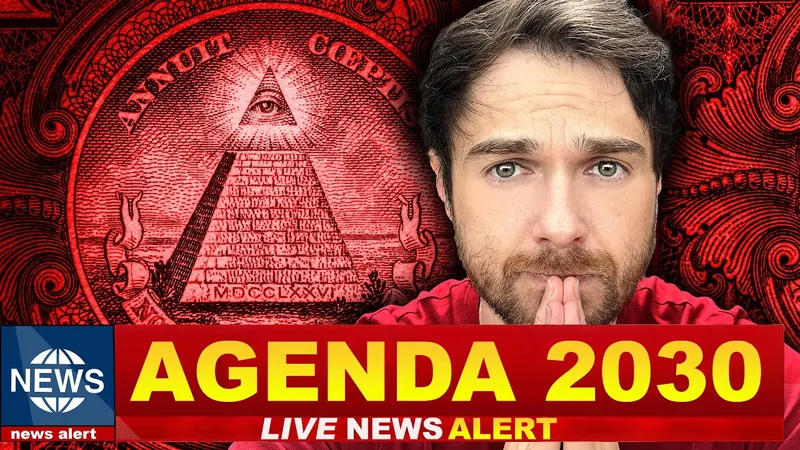
What The Elites Are Planning
Andrei Jikh@AndreiJikhWhat The Elites Are Planning
The video presents claims that United Nations plans for sustainable development and Agenda 2030 could increase government control over land, resources, and daily life. The opening connects these concerns to past UN agreements, a World Economic Forum video, and the European Central Bank’s digital euro project, while acknowledging the topic may sound like a conspiracy theory.
- Views
- 858.9K
- Likes
- 24K
- Comments
- 3.1K
- Agenda 2030 ClaimsUnited nations policiesDigital euroSustainable development
Analysis
The video presents claims that United Nations plans for sustainable development and Agenda 2030 could increase government control over land, resources, and daily life. The opening connects these concerns to past UN agreements, a World Economic Forum video, and the European Central Bank’s digital euro project, while acknowledging the topic may sound like a conspiracy theory.
- CommentaryNews analysis
- Title
- What The Elites Are Planning
“So, I want to show you a plan that's been in the works for almost 50 years. It was agreed upon by almost every government in the world. And that plan covers where you should live, what you should own, what you should eat, and how you should pay for things. Now, most people have probably never heard of it. It's been called different names throughout the decades, like Agenda 21. Agenda 21 is kind of a code name for a master plan originated at the United Nations to change the political and economic system of the world to one of total collectivism. And in order to do that, people must not be allowed to have independence. They must be dependent on the state. In order to control mankind, we have to get them all into the big cities. We have to rack them up and stack them up. Get them dependent on the state for their food, their shelter, their electrical power, their water, everything. That's the dirty secret behind Agenda 21. Now, when I first heard about this, my reaction was that this sounds like some crazy conspiracy theory. There's no way that a group of people sat in a room somewhere and wrote down a plan to get everyone off their land into cities and dependent on the state. Except way back in 1976 at a United Nations conference, world governments wrote that land quote could not be treated as an ordinary asset controlled by individuals. And in 1992, 178 governments signed on to a 350 page plan for how humanity should live, how it should produce and consume for the next century. In 2015, every country in the United Nations agreed to a goal of giving every person in the world a legal identity by the year 2030. The World Economic Forum made a video telling you that by 2030, you'll have no privacy. You'll own nothing and you'll be happy. And then last week, the European Central Bank switched on the first piece of the digital euro. Monday 21st of September we will launch Pontes. Now Pontes is to summarize it quickly for you. It's digital euro made available for banks so that they can transact amongst themselves using tokenized assets and distributed ledger technology. We very much hope that the piece of legislation that is currently under debate concerning the digital euro will see its completion and finalization before the end of this year. And the earlier the better. So that's phase one. And by the way, all of this is published for everyone to see. And if you do decide to read it, what you're going to find is that this is the master plan to inventory and control the world's resources. It is the inventory and control plan. Inventory and control of all land, all water, all minerals, all plants, all animals, all construction, all means of production, all food, all energy, all information, and all human beings in the world. And this is a plan that was agreed to by 179 nations back in 1992. It's a United Nations plan. It's called the agenda for the 21st century. And so many of us around the world think that um well, sustainable development, it just sounds so great. Isn't it about recycling and creative reuse and uh and creating energy and food resources for everyone? And the answer is no. It really is not. It's about moving populations into city centers, concentrated city centers, and clearing them out of the rural areas. All systems have to be brought into harmony in order to control them all.”
- 01Promise and scope
This immediately establishes the episode’s subject and stakes: the plan is presented as consequential to daily life. The breadth of the claim gives the viewer a reason to hear what the speaker says it is.
The speaker offers to explain a long-running plan, claims broad government agreement, and lists the areas of life it allegedly concerns.
“So, I want to show you a plan that's been in the works for almost 50 years. It was agreed upon by almost every government in the world. And that plan covers where you should live, what you should own, what you should eat, and how you should pay for things.”
- 02Name and interpretation
Naming the subject turns the opening’s broad promise into a specific claim. The interpretation raises the question of whether the plan’s ordinary presentation matches what the speaker says it is designed to do.
The speaker says most people may not know the plan, introduces an earlier name for it, and presents a critical interpretation of its origin and purpose.
“Now, most people have probably never heard of it. It's been called different names throughout the decades, like Agenda 21. Agenda 21 is kind of a code name for a master plan originated at the United Nations to change the political and economic system of the world to one of total collectivism. And in order to do that, people must not be allowed to have independence. They must be dependent on the state. In order to control mankind, we have to get them all into the big cities. We have to rack them up and stack them up. Get them dependent on the state for their food, their shelter, their electrical power, their water, everything. That's the dirty secret behind Agenda 21.”
- 03Initial disbelief and reversal
The personal change in perspective frames the account as something the speaker says they first doubted. The reversal introduces cited history as the basis for reconsidering that judgment.
The speaker recounts initially dismissing the account as a conspiracy theory, describes the claim that seemed implausible, and reverses that reaction with a historical example.
“Now, when I first heard about this, my reaction was that this sounds like some crazy conspiracy theory. There's no way that a group of people sat in a room somewhere and wrote down a plan to get everyone off their land into cities and dependent on the state. Except way back in 1976 at a United Nations conference, world governments wrote that land quote could not be treated as an ordinary asset controlled by individuals.”
- 04Historical and future-year claims
These examples extend the argument from historical agreements to a stated future target and a public forecast. They make the speaker’s interpretation more specific while leaving the relationship among the claims open to examination.
The speaker gives further claims about a large plan, a 2030 identity goal, and a public video describing a future without privacy or ownership.
“And in 1992, 178 governments signed on to a 350 page plan for how humanity should live, how it should produce and consume for the next century. In 2015, every country in the United Nations agreed to a goal of giving every person in the world a legal identity by the year 2030. The World Economic Forum made a video telling you that by 2030, you'll have no privacy. You'll own nothing and you'll be happy.”
- 05Contemporary example and public availability
This shifts from earlier plans and future-year claims to a current example, then frames the next part as a reading of available material. The passage belongs to the opening because it continues to establish the case before the sustained explanation begins.
The speaker links the argument to a digital currency development and legislation, calls it a first phase, and says the material is publicly available to read.
“And then last week, the European Central Bank switched on the first piece of the digital euro. Monday 21st of September we will launch Pontes. Now Pontes is to summarize it quickly for you. It's digital euro made available for banks so that they can transact amongst themselves using tokenized assets and distributed ledger technology. We very much hope that the piece of legislation that is currently under debate concerning the digital euro will see its completion and finalization before the end of this year. And the earlier the better. So that's phase one. And by the way, all of this is published for everyone to see. And if you do decide to read it, what you're going to find is that this is the master plan to inventory and control the world's resources.”
- 06Summary and corrective contrast
The summary names the plan and reiterates the speaker’s interpretation. The contrast with a familiar, appealing account of sustainability sets up the central correction. The excerpt ends during the continued explanation of that alternative claim, before a clear transition to the main discussion; the introduction boundary is therefore limited by the supplied transcript.
The speaker summarizes the alleged plan and its historical agreement, then contrasts a positive understanding of sustainable development with a different claimed purpose involving population movement and control.
“It is the inventory and control plan. Inventory and control of all land, all water, all minerals, all plants, all animals, all construction, all means of production, all food, all energy, all information, and all human beings in the world. And this is a plan that was agreed to by 179 nations back in 1992. It's a United Nations plan. It's called the agenda for the 21st century. And so many of us around the world think that um well, sustainable development, it just sounds so great. Isn't it about recycling and creative reuse and uh and creating energy and food resources for everyone? And the answer is no. It really is not. It's about moving populations into city centers, concentrated city centers, and clearing them out of the rural areas. All systems have to be brought into harmony in order to control them all.”