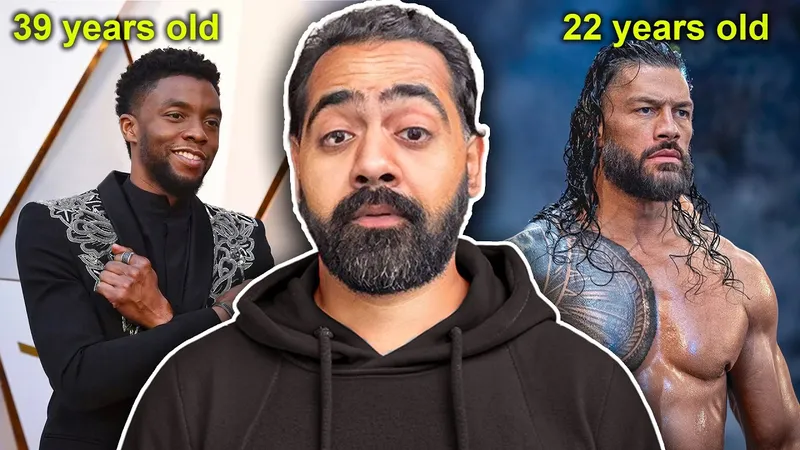
Why Cancer Is Rising in Young People
Why Cancer Is Rising in Young People
Dr. Karan Rajan examines why colorectal cancer diagnoses are rising among younger adults, contrasting that trend with falling rates in older groups. He says the video weighs possible explanations and uncertainties, then covers practical steps viewers can take to reduce their risk.
- Views
- 2M
- Likes
- 19.3K
- Comments
- 2.4K
- Early-Onset Colorectal CancerCancer risk factorsColorectal cancer prevention
Analysis
Dr. Karan Rajan examines why colorectal cancer diagnoses are rising among younger adults, contrasting that trend with falling rates in older groups. He says the video weighs possible explanations and uncertainties, then covers practical steps viewers can take to reduce their risk.
- Explainer
- Title
- Why Cancer Is Rising in Young People
“When Hollywood actor Chadwick Boseman died from colon cancer, the whole world was shocked. How could someone who from the outside seemed to be a fit and healthy young man have been suffering from this disease for years without anyone knowing? >> Things about the character are also true about Chad. He's very knowledgeable. He's an athlete, know martial artist. He's had a lot of experience playing roles that come with a lot of weight. >> is, it wasn't a one-off. More and more young people are being diagnosed with colorectal cancer, and scientists are worried. What's actually driving this increase, and what can you realistically do about it? And is anyone actually to blame? As someone who has spent their career operating on colorectal cancers and dealing with chronic gut health issue complaints, this is an important topic for me. And by the end of this video, you'll know what the latest science says, what remains uncertain, and what you should do to reduce your own risk. >> At 43, after a valiant 4-year fight, Chadwick Boseman lost his battle with colon cancer Friday. His wife and family beside him. >> It is one of the strangest medical mysteries of recent years. Cancer care is objectively better in 2026 than it's ever been. In the US alone, the 5-year survival rate for all cancers is 70% compared to just 49% in the 1970s. Now, part of this increase is due to increased screening, meaning more people get treated sooner. But we also live in a golden era for cancer treatment. Personalized cancer vaccines, antibody drug conjugates, and next-generation immunotherapy are some of the innovative treatments currently in use or development. And for older adults, the incidence and the mortality rate of colorectal cancer has fallen significantly in the last 15 years, but one group of people are bucking the trend. Why are more and more people in their 20s, 30s, and 40s, like Chadwick Boseman, getting colorectal cancer? >> [music] >> The increase in colorectal cancer for younger adults, or early-onset colorectal cancer as it's called, is undeniable. Between 2013 and 2022, the incidence of colorectal cancer for older adults fell by 2.5% per year, while it rose for adults aged 50 to 64 by 0.4%, and it rose by a bit more, 3%, for adults aged 20 to 49. And it's not just that more young people are getting colorectal cancer, it's more deadly, too. The mortality rate of colorectal cancer in adults younger than 50 has been rising every year since 2004, and while it's been decreasing in older adults since 2012, one thing we can say is that this increase is probably not due to more screening. The rise in early-onset colorectal cancer started decades ago when people in their 20s and 30s weren't routinely being screened. Nor is it simply that young people are doing something wrong today that they didn't do in the past and that's increasing their risk. As this recent paper explained, the risk of colorectal cancer has increased for each generation since 1950 for the US and 1960 for the UK, Canada, and Australia. In other words, your risk of developing colorectal cancer seems to be tied more to when you were born than what you do. And this cohort effect is so strong that someone born in the 1990s has four times the risk of someone born in the 1960s. So, to find out whatever or whoever is causing the increase in the risk today, we need to go back into the past. There are at least five suspects for us to look at, and for each one, we're going to use three tests.”
- 01Open with a human case
The case makes the subject concrete and raises the central question of how illness could remain unknown despite an outward appearance of health.
Introduces a public figure's death from cancer and asks how someone who appeared fit and young could have suffered from the disease for years without anyone knowing.
“When Hollywood actor Chadwick Boseman died from colon cancer, the whole world was shocked. How could someone who from the outside seemed to be a fit and healthy young man have been suffering from this disease for years without anyone knowing?”
- 02Add a quoted perspective
This contextual detail keeps the opening focused on the person and on the apparent mismatch between his outward image and the later revelation.
A brief quoted voice describes the person's knowledge, athletic background, and experience playing physically demanding roles.
“>> Things about the character are also true about Chad. He's very knowledgeable. He's an athlete, know martial artist. He's had a lot of experience playing roles that come with a lot of weight.”
- 03Broaden the case into the central question
This turns the personal example into the episode's broader issue and establishes both explanatory and practical questions for the coming discussion.
The speaker says the case was not isolated, claims more young people are being diagnosed, and asks what is driving the increase, what viewers can do, and whether anyone is to blame.
“>> is, it wasn't a one-off. More and more young people are being diagnosed with colorectal cancer, and scientists are worried. What's actually driving this increase, and what can you realistically do about it? And is anyone actually to blame?”
- 04Establish perspective and promise
The experience supports a relevant guide role, while the promise defines what the viewer can expect to learn without claiming certainty about what remains unresolved.
The speaker states relevant professional experience, says the topic is personally important, and promises an account of current science, uncertainty, and risk-reduction guidance.
“As someone who has spent their career operating on colorectal cancers and dealing with chronic gut health issue complaints, this is an important topic for me. And by the end of this video, you'll know what the latest science says, what remains uncertain, and what you should do to reduce your own risk.”
- 05Reinforce the case with a report
The short report returns to the opening example after the promise, keeping the human case present as the introduction moves toward the broader evidence.
A quoted report gives Boseman's age, the duration of his fight, and a brief account of his death and his family beside him.
“>> At 43, after a valiant 4-year fight, Chadwick Boseman lost his battle with colon cancer Friday. His wife and family beside him.”
- 06Set the trend against broader progress
The contrast makes the rise among younger people stand out against progress elsewhere, setting up the age-specific question that follows.
The speaker calls the subject a recent medical mystery, notes improving overall survival and treatment, and contrasts falling rates among older adults with a group bucking the trend.
“>> It is one of the strangest medical mysteries of recent years. Cancer care is objectively better in 2026 than it's ever been. In the US alone, the 5-year survival rate for all cancers is 70% compared to just 49% in the 1970s. Now, part of this increase is due to increased screening, meaning more people get treated sooner. But we also live in a golden era for cancer treatment. Personalized cancer vaccines, antibody drug conjugates, and next-generation immunotherapy are some of the innovative treatments currently in use or development. And for older adults, the incidence and the mortality rate of colorectal cancer has fallen significantly in the last 15 years, but one group of people are bucking the trend.”
- 07Ask the age-specific question
This focuses the contrast into the episode's central question about the increase among younger adults.
The speaker asks why increasing numbers of people in their 20s, 30s, and 40s are getting colorectal cancer, using Boseman as a relevant example.
“Why are more and more people in their 20s, 30s, and 40s, like Chadwick Boseman, getting colorectal cancer?”
- 08Establish the trend and qualify its causes
The figures establish the claimed scale and direction of the trend, while the qualifications narrow easy explanations without treating the cause as settled.
The speaker presents age-specific incidence and mortality trends, says the rise probably is not due to increased screening or simply to young people doing something differently today, and cites a paper describing risk increases across generations.
“>> [music] >> The increase in colorectal cancer for younger adults, or early-onset colorectal cancer as it's called, is undeniable. Between 2013 and 2022, the incidence of colorectal cancer for older adults fell by 2.5% per year, while it rose for adults aged 50 to 64 by 0.4%, and it rose by a bit more, 3%, for adults aged 20 to 49. And it's not just that more young people are getting colorectal cancer, it's more deadly, too. The mortality rate of colorectal cancer in adults younger than 50 has been rising every year since 2004, and while it's been decreasing in older adults since 2012, one thing we can say is that this increase is probably not due to more screening. The rise in early-onset colorectal cancer started decades ago when people in their 20s and 30s weren't routinely being screened. Nor is it simply that young people are doing something wrong today that they didn't do in the past and that's increasing their risk. As this recent paper explained, the risk of colorectal cancer has increased for each generation since 1950 for the US and 1960 for the UK, Canada, and Australia. In other words, your risk of developing colorectal cancer seems to be tied more to when you were born than what you do. And this cohort effect is so strong that someone born in the 1990s has four times the risk of someone born in the 1960s.”
- 09Preview a backward-looking investigation
This announces the investigation's direction and its planned structure, leaving the suspects and their evaluation for the main explanation.
The speaker says discovering what or who is causing the increased risk requires looking into the past, then previews at least five suspects and three tests for each.
“So, to find out whatever or whoever is causing the increase in the risk today, we need to go back into the past. There are at least five suspects for us to look at, and for each one, we're going to use three tests.”