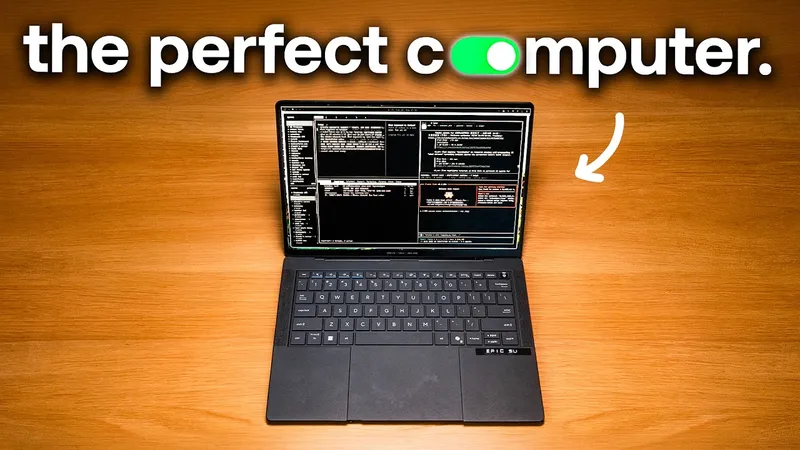
I tried using Linux to see if it's better than Mac
Reysu@reysuI tried using Linux to see if it's better than Mac
The creator introduces Linux and Omarchy, showing how the system is set up for productivity and describing features such as keyboard shortcuts, workspaces, and built-in utilities. The outline also promises a comparison with Mac, including how Linux fits into the creator’s workflow and what Mac still does better.
- Views
- 237.2K
- Likes
- 2.7K
- Comments
- 303
- Linux productivity setupOmarchy linux featuresLinux and Mac WorkflowOperating system comparison
Analysis
The creator introduces Linux and Omarchy, showing how the system is set up for productivity and describing features such as keyboard shortcuts, workspaces, and built-in utilities. The outline also promises a comparison with Mac, including how Linux fits into the creator’s workflow and what Mac still does better.
- ExplainerReview
- Title
- I tried using Linux to see if it's better than Mac
“This is the ultimate productivity operating system. I took a laptop and I completely transformed it from something that's filled with bloat to a super fast blazing laptop with no distractions and can only be used for productivity. This is Linux. This is a specific version of Linux called Omari. I'm going to show you what it is, how I've made it into the ultimate productivity workstation, why you might try using Linux, and how I've been able to integrate it with my Mac desktop and to use this as just a Linux laptop. But first, if you're watching this video, I'm assuming that you're probably not that familiar with Linux or you're interested in trying it out. So, I'm going to explain what it is and why there's a resurgence of so many people using it right now. So, Linux is an open source operating system that you can basically install on any computer. And the reason why you might want to do something like this is because regular operating systems like Mac and Windows are operated by for-profit companies. So, not only is it their incentive to lock you in, but it's also their incentive to introduce subscriptions or to introduce you to use their apps. If you take a look at what Windows looks like today, you can really see the degradation of a for-profit operating system. I used Windows earlier this summer for about a month, and there's just so much bloatware. Like, in the operating system itself, there are ads, there's sports scores, there's a bunch of different news. It forced me to use a Hotmail account just to boot up the system. A lot of these apps, there's no way to actually remove them. On Apple, it's much better, but you can see that they still try to force you to log into your Apple ID account or it's pretty much impossible to remove certain apps that are built in on the computer, like the notes app for example. So, you just end up having different Notes apps if you don't use the default Apple Notes. But with Linux, everything is customizable. So everything that is on a computer, you can uninstall it, you can install it, you can change all the defaults, you can change the behavior of how everything works. And so anything you don't want is simply just not installed on the computer. And once you try out using Linux, you realize that a lot of computers when they start to slow down, it's not actually the computer that's slowing down. It's the operating system that's slowing down because there's so much bloat or they slow down intentionally so that you'll upgrade to the latest computer. Even old MacBooks that run on Intel chips, you can revive them by running Linux on them and they're, you know, just as fast as a new laptop today. And it basically makes your computer as buy for life as possible. Other laptops like ThinkPads that are super repairable, there's people that are still using ThinkPads made 20 years ago because they can boot Linux on them and it's still running super fast and smoothly. So yeah, that's why so many people are switching to Linux or trying out Linux because people are tired of locked ecosystems where companies are incentivized to eventually train on your data, use your data or sell you subscriptions. For example, that's one of the main reasons why I switched from notion to Obsidian a few years ago. Yeah. And this laptop itself, this was a Windows laptop that I made a review on uh like a few months ago.”
- 01Claim the transformation
This establishes the central claim and its before-and-after contrast, giving the viewer a concrete result to judge as the introduction continues.
The creator calls the system an ultimate productivity tool, then describes turning a cluttered laptop into a fast, distraction-free device intended for productivity.
“This is the ultimate productivity operating system. I took a laptop and I completely transformed it from something that's filled with bloat to a super fast blazing laptop with no distractions and can only be used for productivity.”
- 02Name the approach and preview the episode
Naming the approach anchors the initial claim. The roadmap promises an explanation and a practical account of the setup, while the Mac integration detail extends the premise beyond replacing one operating system.
The speaker identifies Linux and the specific version, then previews explaining it, building the workstation, why viewers might try it, and integrating it with a Mac desktop.
“This is Linux. This is a specific version of Linux called Omari. I'm going to show you what it is, how I've made it into the ultimate productivity workstation, why you might try using Linux, and how I've been able to integrate it with my Mac desktop and to use this as just a Linux laptop.”
- 03Identify the audience and widen the premise
This connects the episode to viewers' possible familiarity and interest, then shifts from the personal setup to a broader case for Linux. The opening's unfinished excerpt ends during the explanation of why viewers might want to install it, so the boundary cuts off before that discussion is complete.
The speaker addresses viewers who may be unfamiliar with Linux or curious about trying it, promises to explain the system and its recent resurgence, and then starts explaining what Linux is and how it differs from commercial operating systems.
“But first, if you're watching this video, I'm assuming that you're probably not that familiar with Linux or you're interested in trying it out. So, I'm going to explain what it is and why there's a resurgence of so many people using it right now. So, Linux is an open source operating system that you can basically install on any computer. And the reason why you might want to do something like this is because regular operating systems like Mac and Windows are operated by for-profit companies. So, not only is it their incentive to lock you in, but it's also their incentive to introduce subscriptions or to introduce you to use their apps. If you take a look at what Windows looks like today, you can really see the degradation of a for-profit operating system. I used Windows earlier this summer for about a month, and there's just so much bloatware. Like, in the operating system itself, there are ads, there's sports scores, there's a bunch of different news. It forced me to use a Hotmail account just to boot up the system. A lot of these apps, there's no way to actually remove them. On Apple, it's much better, but you can see that they still try to force you to log into your Apple ID account or it's pretty much impossible to remove certain apps that are built in on the computer, like the notes app for example. So, you just end up having different Notes apps if you don't use the default Apple Notes. But with Linux, everything is customizable. So everything that is on a computer, you can uninstall it, you can install it, you can change all the defaults, you can change the behavior of how everything works. And so anything you don't want is simply just not installed on the computer. And once you try out using Linux, you realize that a lot of computers when they start to slow down, it's not actually the computer that's slowing down. It's the operating system that's slowing down because there's so much bloat or they slow down intentionally so that you'll upgrade to the latest computer. Even old MacBooks that run on Intel chips, you can revive them by running Linux on them and they're, you know, just as fast as a new laptop today. And it basically makes your computer as buy for life as possible. Other laptops like ThinkPads that are super repairable, there's people that are still using ThinkPads made 20 years ago because they can boot Linux on them and it's still running super fast and smoothly. So yeah, that's why so many people are switching to Linux or trying out Linux because people are tired of locked ecosystems where companies are incentivized to eventually train on your data, use your data or sell you subscriptions. For example, that's one of the main reasons why I switched from notion to Obsidian a few years ago. Yeah. And this laptop itself, this was a Windows laptop that I made a review on uh like a few months ago.”