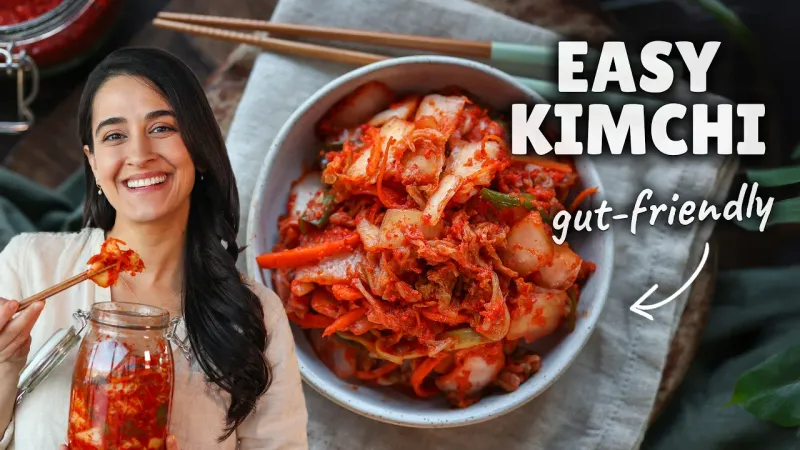
Stop buying KIMCHI, make this instead (+ save money!)
Pick Up Limes@PickUpLimesStop buying KIMCHI, make this instead (+ save money!)
The video shows how to make simple, fully vegan kimchi at home with easy-to-find ingredients, from salting napa cabbage through preparing the paste and vegetables for fermentation. The host presents homemade kimchi as a lower-cost alternative to store-bought kimchi and suggests ways to use it in meals.
- Views
- 1M
- Likes
- 29.3K
- Comments
- 670
- Vegan kimchi recipeFermenting napa cabbageBudget-Friendly Cooking
Analysis
The video shows how to make simple, fully vegan kimchi at home with easy-to-find ingredients, from salting napa cabbage through preparing the paste and vegetables for fermentation. The host presents homemade kimchi as a lower-cost alternative to store-bought kimchi and suggests ways to use it in meals.
- Tutorial

- Title
- Stop buying KIMCHI, make this instead (+ save money!)
“Kimchi is the MVP of fermented foods and Kimchi is the MVP of fermented foods and Kimchi is the MVP of fermented foods and it's a staple in Korean cuisine. I'm it's a staple in Korean cuisine. I'm it's a staple in Korean cuisine. I'm really obsessed with it and so today really obsessed with it and so today really obsessed with it and so today we're going to be making a very simple we're going to be making a very simple we're going to be making a very simple version with easy to find ingredients. version with easy to find ingredients. version with easy to find ingredients. This is store-bought kimchi and this is This is store-bought kimchi and this is This is store-bought kimchi and this is my homemade kimchi. So it's a lot more my homemade kimchi. So it's a lot more my homemade kimchi. So it's a lot more goodness for a fraction of the price. goodness for a fraction of the price. goodness for a fraction of the price. Once you have a jar of this in the Once you have a jar of this in the Once you have a jar of this in the fridge you're going to want to have it fridge you're going to want to have it fridge you're going to want to have it with everything. You can add it to fried with everything. You can add it to fried with everything. You can add it to fried rice, stir it into noodles, add it to rice, stir it into noodles, add it to rice, stir it into noodles, add it to salads, roll it in kimbap, pile it on salads, roll it in kimbap, pile it on salads, roll it in kimbap, pile it on hot dogs, tuck it into sandwiches. It's hot dogs, tuck it into sandwiches. It's hot dogs, tuck it into sandwiches. It's so versatile and because it's fermented so versatile and because it's fermented so versatile and because it's fermented it's good for your gut, too. But it's it's good for your gut, too. But it's it's good for your gut, too. But it's usually made with fish sauce, shrimp usually made with fish sauce, shrimp usually made with fish sauce, shrimp paste, or other seafood-based paste, or other seafood-based paste, or other seafood-based ingredients. So today we're going to be ingredients. So today we're going to be ingredients. So today we're going to be making a fish-free, fully vegan version making a fish-free, fully vegan version making a fish-free, fully vegan version at home with very easy to find at home with very easy to find at home with very easy to find ingredients. All right, enough talking. ingredients. All right, enough talking. ingredients. All right, enough talking. Let's dive in.”
- 01Introduce the subject and personal enthusiasm
Establishes the subject and the speaker’s enthusiasm before introducing the promised homemade version.
The speaker names kimchi, calls it the MVP of fermented foods, notes its place in Korean cuisine, and says they are obsessed with it.
“Kimchi is the MVP of fermented foods and Kimchi is the MVP of fermented foods and Kimchi is the MVP of fermented foods and it's a staple in Korean cuisine. I'm it's a staple in Korean cuisine. I'm it's a staple in Korean cuisine. I'm really obsessed with it and so today really obsessed with it and so today really obsessed with it and so today”
- 02Promise an accessible version and compare costs
Turns the topic into a practical alternative by pairing accessibility with a claimed price advantage over the purchased option.
The speaker promises a simple version with easy-to-find ingredients, compares store-bought and homemade kimchi, and claims the homemade version offers more goodness for a fraction of the price.
“we're going to be making a very simple we're going to be making a very simple we're going to be making a very simple version with easy to find ingredients. version with easy to find ingredients. version with easy to find ingredients. This is store-bought kimchi and this is This is store-bought kimchi and this is This is store-bought kimchi and this is my homemade kimchi. So it's a lot more my homemade kimchi. So it's a lot more my homemade kimchi. So it's a lot more goodness for a fraction of the price. goodness for a fraction of the price. goodness for a fraction of the price.”
- 03Preview everyday uses and state a qualification
Makes the proposed alternative feel broadly useful, then introduces the dietary limitation that motivates the specific version being promised.
The speaker says a jar in the fridge can go with everything, lists example dishes, claims fermented kimchi is good for the gut, then notes that kimchi is usually made with seafood-based ingredients.
“Once you have a jar of this in the Once you have a jar of this in the Once you have a jar of this in the fridge you're going to want to have it fridge you're going to want to have it fridge you're going to want to have it with everything. You can add it to fried with everything. You can add it to fried with everything. You can add it to fried rice, stir it into noodles, add it to rice, stir it into noodles, add it to rice, stir it into noodles, add it to salads, roll it in kimbap, pile it on salads, roll it in kimbap, pile it on salads, roll it in kimbap, pile it on hot dogs, tuck it into sandwiches. It's hot dogs, tuck it into sandwiches. It's hot dogs, tuck it into sandwiches. It's so versatile and because it's fermented so versatile and because it's fermented so versatile and because it's fermented it's good for your gut, too. But it's it's good for your gut, too. But it's it's good for your gut, too. But it's usually made with fish sauce, shrimp usually made with fish sauce, shrimp usually made with fish sauce, shrimp paste, or other seafood-based paste, or other seafood-based paste, or other seafood-based ingredients.”
- 04Promise the version and transition to preparation
Resolves the ingredient limitation with the specific recipe promise. The introduction ends at the transition; the cabbage and cutting directions begin the main procedure.
The speaker promises an at-home, fully vegan, fish-free version using easy-to-find ingredients, then announces the end of the introduction and moves into the first preparation detail.
“So today we're going to be ingredients. So today we're going to be ingredients. So today we're going to be making a fish-free, fully vegan version making a fish-free, fully vegan version making a fish-free, fully vegan version at home with very easy to find at home with very easy to find at home with very easy to find ingredients. All right, enough talking. ingredients. All right, enough talking. ingredients. All right, enough talking. Let's dive in.”