Declutter Backwards (It’s So Much Easier)
The Minimal Mom@TheMinimalMomDeclutter Backwards (It’s So Much Easier)
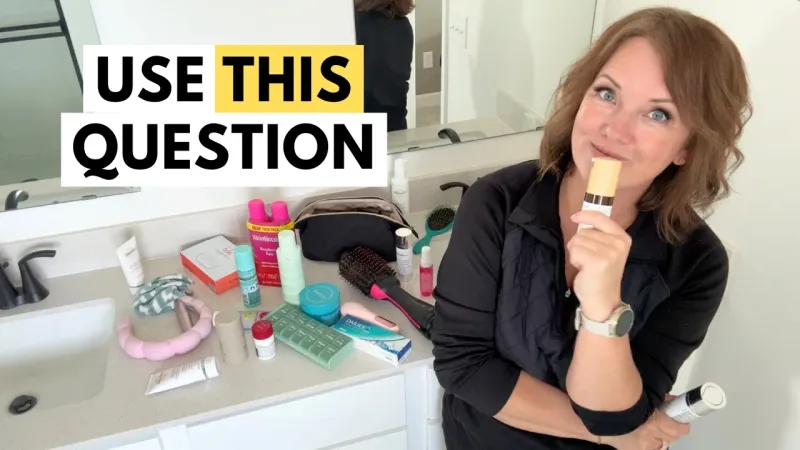
The video introduces a reverse approach to decluttering personal-care products, arguing that asking whether to keep each item makes it harder to let go because of the money spent and the product’s promises. It previews a couple of tools and a comparison between two getting-ready spaces before the decluttering work begins.
- Views
- 891.4K
- Likes
- 35.9K
- Comments
- 2.2K
- Bathroom declutteringReverse decluttering methodPersonal care productsGetting ready space
Analysis
The video introduces a reverse approach to decluttering personal-care products, arguing that asking whether to keep each item makes it harder to let go because of the money spent and the product’s promises. It previews a couple of tools and a comparison between two getting-ready spaces before the decluttering work begins.
- TutorialProblem solution

- Title
- Declutter Backwards (It’s So Much Easier)
Holding up a little bottle like this and Holding up a little bottle like this and Holding up a little bottle like this and saying, "Should I keep it?" is the worst saying, "Should I keep it?" is the worst saying, "Should I keep it?" is the worst possible question that you can ask possible question that you can ask possible question that you can ask because we have spent so much money on because we have spent so much money on because we have spent so much money on these little tiny products that make these little tiny products that make these little tiny products that make huge promises to us. And so it is not a huge promises to us. And so it is not a huge promises to us. And so it is not a simple question. It's not cut or dry. simple question. It's not cut or dry. simple question. It's not cut or dry. And all of the reasons are running And all of the reasons are running And all of the reasons are running through my head now of why I should keep through my head now of why I should keep through my head now of why I should keep it so I can justify the money that I it so I can justify the money that I it so I can justify the money that I spent on it. And so if we try to spent on it. And so if we try to spent on it. And so if we try to declutter this the normal way, holding declutter this the normal way, holding declutter this the normal way, holding up each item one at a time, it's too up each item one at a time, it's too up each item one at a time, it's too hard. We have nothing to compare it to. hard. We have nothing to compare it to. hard. We have nothing to compare it to. But if we flip the script, we do it in But if we flip the script, we do it in But if we flip the script, we do it in reverse and have a couple really reverse and have a couple really reverse and have a couple really important tools. I'm going to show you important tools. I'm going to show you important tools. I'm going to show you how you can fly through this space how you can fly through this space how you can fly through this space because let me ask you this question. because let me ask you this question. because let me ask you this question. Would you rather get ready in this space Would you rather get ready in this space Would you rather get ready in this space or this space? It makes a gigantic or this space? It makes a gigantic or this space? It makes a gigantic difference to how you start your day. difference to how you start your day. difference to how you start your day.
- 01The familiar question becomes the problem
This establishes the decision problem that the new approach is meant to address, rather than beginning with a generic decluttering instruction.
The speaker repeats the image of holding up a small product, then argues that asking whether to keep it is a poor question. The explanation connects the difficulty to money spent on products that made big promises.
Holding up a little bottle like this and Holding up a little bottle like this and Holding up a little bottle like this and saying, "Should I keep it?" is the worst saying, "Should I keep it?" is the worst saying, "Should I keep it?" is the worst possible question that you can ask possible question that you can ask possible question that you can ask because we have spent so much money on because we have spent so much money on because we have spent so much money on these little tiny products that make these little tiny products that make these little tiny products that make huge promises to us.
- 02Why the decision is hard
This adds the reasoning behind the problem: the decision is tangled up with sunk costs, not just the item's present usefulness.
The speaker says the choice is not simple or cut and dry, and describes the reasons for keeping something as running through her head, including the money already spent and the wish to justify that spending.
“And so it is not a huge promises to us. And so it is not a huge promises to us. And so it is not a simple question. It's not cut or dry. simple question. It's not cut or dry. simple question. It's not cut or dry. And all of the reasons are running And all of the reasons are running And all of the reasons are running through my head now of why I should keep through my head now of why I should keep through my head now of why I should keep it so I can justify the money that I it so I can justify the money that I it so I can justify the money that I spent on it.”
- 03Introduce the reversed approach
This is the central turn of the introduction: it presents the backwards method as an alternative to the familiar item-by-item decision and promises practical help. The excerpt stops as the speaker begins the next section, so it does not provide the full method.
The speaker says that decluttering the normal way, considering each item individually, is too hard because there is nothing to compare it to. She proposes flipping the script and promises reverse tools to make the process easier.
“And so if we try to spent on it. And so if we try to spent on it. And so if we try to declutter this the normal way, holding declutter this the normal way, holding declutter this the normal way, holding up each item one at a time, it's too up each item one at a time, it's too up each item one at a time, it's too hard. We have nothing to compare it to. hard. We have nothing to compare it to. hard. We have nothing to compare it to. But if we flip the script, we do it in But if we flip the script, we do it in But if we flip the script, we do it in reverse and have a couple really reverse and have a couple really reverse and have a couple really important tools. I'm going to show you important tools. I'm going to show you important tools. I'm going to show you how you can fly through this space how you can fly through this space how you can fly through this space because let me ask you this question. because let me ask you this question. because let me ask you this question.”
- 04Pose the comparison question
The concrete comparison makes the promised question specific and gives the choice a consequence in everyday routine. This is the end of the introduction; the following promise to list tools and instruction to head to the space begin the practical section.
The speaker asks whether the viewer would rather get ready in one space or another, then says the choice makes a gigantic difference to how the day starts.
“Would you rather get ready in this space Would you rather get ready in this space Would you rather get ready in this space or this space? It makes a gigantic or this space? It makes a gigantic or this space? It makes a gigantic difference to how you start your day. difference to how you start your day. difference to how you start your day.”