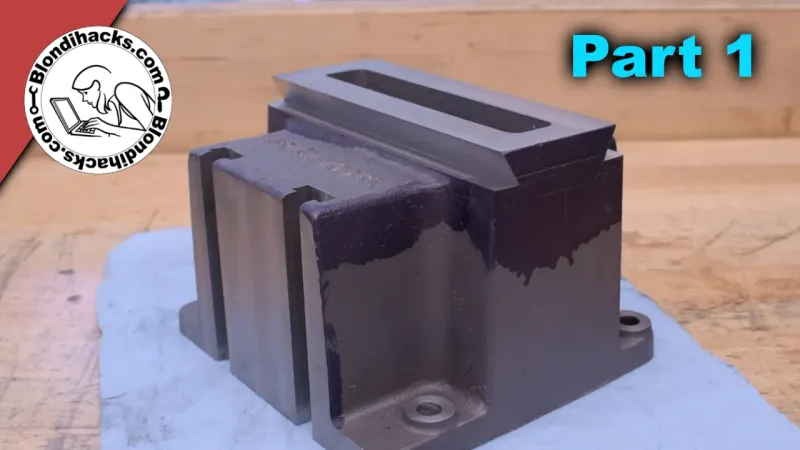
Let's build a shaper - Part 1
Blondihacks@BlondihacksLet's build a shaper - Part 1
Quinn starts a side project building a hand shaper from the Strong Arm casting kit by Martin Model. The opening explains how the machine is operated by hand and briefly places hand-powered machine tools in their historical context.
- Views
- 263.2K
- Likes
- 8.3K
- Comments
- 176
- Hand shaper buildCasting kit projectManual machine tools
Analysis
Quinn starts a side project building a hand shaper from the Strong Arm casting kit by Martin Model. The opening explains how the machine is operated by hand and briefly places hand-powered machine tools in their historical context.
- DemonstrationExplainer
- Title
- Let's build a shaper - Part 1
“Hello internet. My name is Quinn and Hello internet. My name is Quinn and Hello internet. My name is Quinn and this is Blendax. I'm going to start a this is Blendax. I'm going to start a this is Blendax. I'm going to start a new side project today to mix it up a new side project today to mix it up a new side project today to mix it up a bit with the locomotive build. And it's bit with the locomotive build. And it's bit with the locomotive build. And it's been a while since I've done a tool been a while since I've done a tool been a while since I've done a tool build or a casting kit. And I am going build or a casting kit. And I am going build or a casting kit. And I am going to do both. We are going to start to do both. We are going to start to do both. We are going to start building a shaper. Well, this is awkward. We're going to build a shaper. We're going to build a shaper. We're going to build a shaper. This is the Strong Arm casting kit for This is the Strong Arm casting kit for This is the Strong Arm casting kit for building a hand shaper from a company building a hand shaper from a company building a hand shaper from a company called Martin Model. What is a hand called Martin Model. What is a hand called Martin Model. What is a hand shaper, you might be asking? Well, it's shaper, you might be asking? Well, it's shaper, you might be asking? Well, it's just like my Atlas that you've seen. just like my Atlas that you've seen. just like my Atlas that you've seen. It's a shaper except that it is operated It's a shaper except that it is operated It's a shaper except that it is operated entirely by hand. No electric motor. If entirely by hand. No electric motor. If entirely by hand. No electric motor. If a manual machine tool sounds strange, a manual machine tool sounds strange, a manual machine tool sounds strange, they were in fact the norm in the early they were in fact the norm in the early they were in fact the norm in the early days of machining. Credle lathes were days of machining. Credle lathes were days of machining. Credle lathes were the first lathes. They were operated by the first lathes. They were operated by the first lathes. They were operated by a big foot pedal that sat under the a big foot pedal that sat under the a big foot pedal that sat under the machine and treddle lathes were popular machine and treddle lathes were popular machine and treddle lathes were popular with hobbyists well into the early part with hobbyists well into the early part with hobbyists well into the early part of the 20th century because electric of the 20th century because electric of the 20th century because electric motors were prohibitively expensive for motors were prohibitively expensive for motors were prohibitively expensive for much of that time. So hand shapers are much of that time. So hand shapers are much of that time. So hand shapers are similar. You operate the ram of the similar. You operate the ram of the similar. You operate the ram of the shaper with a big lever to give you shaper with a big lever to give you shaper with a big lever to give you mechanical advantage and the rest of the mechanical advantage and the rest of the mechanical advantage and the rest of the mechanism is all operated off of that mechanism is all operated off of that mechanism is all operated off of that swinging motion that you're doing with swinging motion that you're doing with swinging motion that you're doing with that lever.”
- 01Greeting and project premise
Establish who is speaking and set up the new project as a departure from the ongoing work.
The speaker greets the audience, identifies themself, and introduces a side project connected to an existing project.
“Hello internet. My name is Quinn and Hello internet. My name is Quinn and Hello internet. My name is Quinn and this is Blendax. I'm going to start a this is Blendax. I'm going to start a this is Blendax. I'm going to start a new side project today to mix it up a new side project today to mix it up a new side project today to mix it up a bit with the locomotive build. And it's bit with the locomotive build. And it's bit with the locomotive build. And it's”
- 02Build plan and materials
Make the project concrete by naming its scope and starting materials, while establishing that this is the beginning of a build.
The speaker notes the time since a related build, says they plan to do two approaches, and announces building a shaper with a casting kit.
“been a while since I've done a tool been a while since I've done a tool been a while since I've done a tool build or a casting kit. And I am going build or a casting kit. And I am going build or a casting kit. And I am going to do both. We are going to start to do both. We are going to start to do both. We are going to start building a shaper. Well, this is awkward. We're going to build a shaper. We're going to build a shaper. We're going to build a shaper. This is the Strong Arm casting kit for This is the Strong Arm casting kit for This is the Strong Arm casting kit for building a hand shaper from a company building a hand shaper from a company building a hand shaper from a company called Martin Model.”
- 03Question and explanation
Give viewers a foundation for understanding the project and its distinguishing feature before the build continues. The supplied excerpt cuts off mid-explanation, so this is not necessarily the end of the full introduction.
The speaker poses the audience’s likely question, compares the unfamiliar tool with a known machine, explains its manual operation, and gives historical context about early machine tools. The excerpt ends during the historical explanation.
“What is a hand called Martin Model. What is a hand called Martin Model. What is a hand shaper, you might be asking? Well, it's shaper, you might be asking? Well, it's shaper, you might be asking? Well, it's just like my Atlas that you've seen. just like my Atlas that you've seen. just like my Atlas that you've seen. It's a shaper except that it is operated It's a shaper except that it is operated It's a shaper except that it is operated entirely by hand. No electric motor. If entirely by hand. No electric motor. If entirely by hand. No electric motor. If a manual machine tool sounds strange, a manual machine tool sounds strange, a manual machine tool sounds strange, they were in fact the norm in the early they were in fact the norm in the early they were in fact the norm in the early days of machining. Credle lathes were days of machining. Credle lathes were days of machining. Credle lathes were the first lathes. They were operated by the first lathes. They were operated by the first lathes. They were operated by a big foot pedal that sat under the a big foot pedal that sat under the a big foot pedal that sat under the machine and treddle lathes were popular machine and treddle lathes were popular machine and treddle lathes were popular with hobbyists well into the early part with hobbyists well into the early part with hobbyists well into the early part of the 20th century because electric of the 20th century because electric of the 20th century because electric motors were prohibitively expensive for motors were prohibitively expensive for motors were prohibitively expensive for much of that time. So hand shapers are much of that time. So hand shapers are much of that time. So hand shapers are similar. You operate the ram of the similar. You operate the ram of the similar. You operate the ram of the shaper with a big lever to give you shaper with a big lever to give you shaper with a big lever to give you mechanical advantage and the rest of the mechanical advantage and the rest of the mechanical advantage and the rest of the mechanism is all operated off of that mechanism is all operated off of that mechanism is all operated off of that swinging motion that you're doing with swinging motion that you're doing with swinging motion that you're doing with that lever.”