FREE Water was ILLEGAL…He Changed That…
Andrew MillisonFREE Water was ILLEGAL…He Changed That…
Andrew Millison visits Brad Lancaster in Tucson’s Dunbar Springs neighborhood to explore how residents have redirected rainwater into gardens and transformed streets into a native food oasis. Lancaster describes the evolving system, including rainwater tanks, goats, chickens, and heat- and drought-adapted plants.
- Views
- 4.3M
- Likes
- 104.9K
- Comments
- 5.3K
- Urban rainwater harvestingTucson neighborhood greeningNative food systems
Analysis
Andrew Millison visits Brad Lancaster in Tucson’s Dunbar Springs neighborhood to explore how residents have redirected rainwater into gardens and transformed streets into a native food oasis. Lancaster describes the evolving system, including rainwater tanks, goats, chickens, and heat- and drought-adapted plants.
- DocumentaryInterview
- Title
- FREE Water was ILLEGAL…He Changed That…
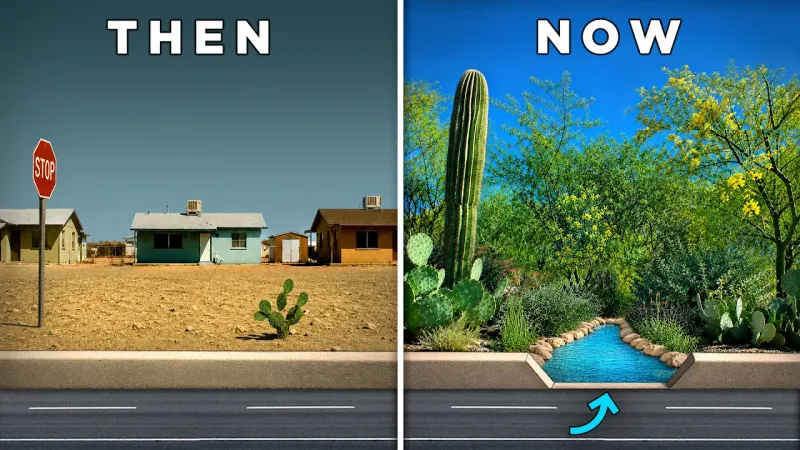
“This Arizona neighborhood was a This Arizona neighborhood was a This Arizona neighborhood was a sun-baked urban desert, but 30 years sun-baked urban desert, but 30 years sun-baked urban desert, but 30 years later, it's been completely later, it's been completely later, it's been completely transformed into an abundant native food transformed into an abundant native food transformed into an abundant native food oasis. oasis. oasis. And they started it all by breaking the And they started it all by breaking the And they started it all by breaking the law. law. law. Because before the work, Because before the work, Because before the work, the streets were designed to wash all the streets were designed to wash all the streets were designed to wash all the precious rainwater down the the precious rainwater down the the precious rainwater down the drain, leaving the ground too dry for drain, leaving the ground too dry for drain, leaving the ground too dry for trees and plants to grow. But one trees and plants to grow. But one trees and plants to grow. But one community went rogue, literally cutting community went rogue, literally cutting community went rogue, literally cutting holes into the city curbs because they holes into the city curbs because they holes into the city curbs because they knew where the water needed to go. knew where the water needed to go. knew where the water needed to go. And we're about to meet the water And we're about to meet the water And we're about to meet the water harvesting legend that cracked harvesting legend that cracked harvesting legend that cracked the code for turning depleted the code for turning depleted the code for turning depleted neighborhoods into thriving ecosystems. neighborhoods into thriving ecosystems. neighborhoods into thriving ecosystems. [music] >> Brad. >> Brad. >> Brad. >> Hey Andrew, man. >> Hey Andrew, man. >> Hey Andrew, man. >> How you doing? >> How you doing? >> How you doing? >> Great, man. >> Great, man. >> Great, man. >> [music] >> [music] >> [music] >> This is my original permaculture teacher >> This is my original permaculture teacher >> This is my original permaculture teacher from 30 years ago. I can't believe from 30 years ago. I can't believe from 30 years ago. I can't believe how awesome this place looks. how awesome this place looks. how awesome this place looks. It's so different. It's so different. It's so different. >> Well, we keep evolving, man. That's the >> Well, we keep evolving, man. That's the >> Well, we keep evolving, man. That's the whole aim. So, we've actually whole aim. So, we've actually whole aim. So, we've actually got the rainwater tanks now passively got the rainwater tanks now passively got the rainwater tanks now passively shading and cooling the garden. shading and cooling the garden. shading and cooling the garden. We've now got goats, We've now got goats, We've now got goats, along with the chickens, along with the chickens, along with the chickens, and we're really diversifying the food and we're really diversifying the food and we're really diversifying the food systems. So, we're bringing in native systems. So, we're bringing in native systems. So, we're bringing in native food plants that are way more adapted to food plants that are way more adapted to food plants that are way more adapted to our extreme heat, the drought. our extreme heat, the drought. our extreme heat, the drought. So, the system's becoming much more So, the system's becoming much more So, the system's becoming much more resilient.”
- 01The transformation
The dramatic before-and-after establishes the episode’s central transformation, while the lawbreaking detail creates a reason to learn what the community did and why.
Presents a place’s former condition, the changed result, and the surprising claim that the change began with breaking the law.
“This Arizona neighborhood was a This Arizona neighborhood was a This Arizona neighborhood was a sun-baked urban desert, but 30 years sun-baked urban desert, but 30 years sun-baked urban desert, but 30 years later, it's been completely later, it's been completely later, it's been completely transformed into an abundant native food transformed into an abundant native food transformed into an abundant native food oasis. oasis. oasis. And they started it all by breaking the And they started it all by breaking the And they started it all by breaking the law. law. law.”
- 02The problem and intervention
Connects the rule-breaking claim to a concrete problem and intervention, making the transformation’s cause more understandable and raising the question of how the approach worked.
Explains how the existing design wasted rainwater, then contrasts that with a community redirecting water through curb cuts.
“Because before the work, Because before the work, Because before the work, the streets were designed to wash all the streets were designed to wash all the streets were designed to wash all the precious rainwater down the the precious rainwater down the the precious rainwater down the drain, leaving the ground too dry for drain, leaving the ground too dry for drain, leaving the ground too dry for trees and plants to grow. But one trees and plants to grow. But one trees and plants to grow. But one community went rogue, literally cutting community went rogue, literally cutting community went rogue, literally cutting holes into the city curbs because they holes into the city curbs because they holes into the city curbs because they knew where the water needed to go. knew where the water needed to go. knew where the water needed to go.”
- 03The guide and evolving system
The teased introduction and teacher identification connect the unusual intervention to an experienced guide. The teacher’s concise description offers initial evidence of what has changed; the excerpt ends before the sustained explanation, so the system’s full development remains unresolved.
Teases a water-harvesting expert, introduces the speaker’s former teacher, and includes the teacher’s brief account of the system’s current components and resilience.
“And we're about to meet the water And we're about to meet the water And we're about to meet the water harvesting legend that cracked harvesting legend that cracked harvesting legend that cracked the code for turning depleted the code for turning depleted the code for turning depleted neighborhoods into thriving ecosystems. neighborhoods into thriving ecosystems. neighborhoods into thriving ecosystems. [music] >> Brad. >> Brad. >> Brad. >> Hey Andrew, man. >> Hey Andrew, man. >> Hey Andrew, man. >> How you doing? >> How you doing? >> How you doing? >> Great, man. >> Great, man. >> Great, man. >> [music] >> [music] >> [music] >> This is my original permaculture teacher >> This is my original permaculture teacher >> This is my original permaculture teacher from 30 years ago. I can't believe from 30 years ago. I can't believe from 30 years ago. I can't believe how awesome this place looks. how awesome this place looks. how awesome this place looks. It's so different. It's so different. It's so different. >> Well, we keep evolving, man. That's the >> Well, we keep evolving, man. That's the >> Well, we keep evolving, man. That's the whole aim. So, we've actually whole aim. So, we've actually whole aim. So, we've actually got the rainwater tanks now passively got the rainwater tanks now passively got the rainwater tanks now passively shading and cooling the garden. shading and cooling the garden. shading and cooling the garden. We've now got goats, We've now got goats, We've now got goats, along with the chickens, along with the chickens, along with the chickens, and we're really diversifying the food and we're really diversifying the food and we're really diversifying the food systems. So, we're bringing in native systems. So, we're bringing in native systems. So, we're bringing in native food plants that are way more adapted to food plants that are way more adapted to food plants that are way more adapted to our extreme heat, the drought. our extreme heat, the drought. our extreme heat, the drought. So, the system's becoming much more So, the system's becoming much more So, the system's becoming much more resilient.”