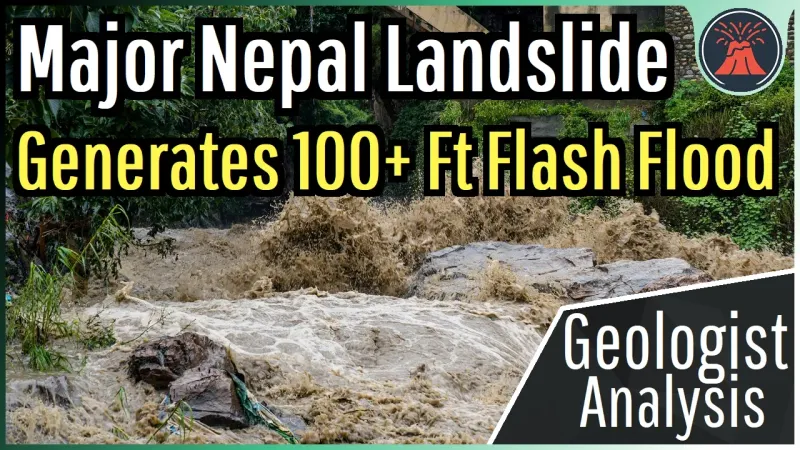
Absolute Devastation in Nepal; Major Landslide Triggers Deadly Flash Flood
GeologyHub@GeologyHubAbsolute Devastation in Nepal; Major Landslide Triggers Deadly Flash Flood
A geologist analyzes a reported landslide in the Nepal-China region that became a destructive flash flood, explaining how a debris avalanche can gather water and sediment as it travels. The opening also discusses seismic waves, glacier retreat and how warming may contribute to instability in rugged, glaciated terrain.
- Views
- 327.4K
- Likes
- 4.2K
- Comments
- 721
- Nepal landslideFlash flood disasterDebris avalancheGlacial retreat
Analysis
A geologist analyzes a reported landslide in the Nepal-China region that became a destructive flash flood, explaining how a debris avalanche can gather water and sediment as it travels. The opening also discusses seismic waves, glacier retreat and how warming may contribute to instability in rugged, glaciated terrain.
- ExplainerCommentary

- Title
- Absolute Devastation in Nepal; Major Landslide Triggers Deadly Flash Flood
“An absolute catastrophe has struck a part of Asia, as a wall of water seemingly more than 100 feet or 30.5 meters high swept away high rises, bridges, and smaller buildings. There are likely hundreds of fatalities if not more, with the wall of water moving so quickly that it essentially acted somewhat like solid rock when impacting structures, being unsurvivable in my opinion if you got caught in it. What I just described did not occur via a tsunami near a coastline, but rather high in the mountains at 5,900 feet or 1,800 meters altitude. Before I continue, I want to note that I will not be showing any footage of the disaster actually happening, as not only is it not safe for work, but it’s not safe for life. It’s deeply traumatizing footage and I seriously recommend not looking it up as it's emotionally and psychologically scarring. In other words, absolute horror, where so many innocent people absolutely had no chance of escaping the torrential wave of water, much like due to Colombia’s Amero Tragedy from Nevado del Ruiz's 1985 eruption. I estimate that the wall of water in question impacted at speeds of at least 100 miles per hour or 161 kilometers per hour. In this case, no volcano was involved since Nepal doesn’t have any, and while the event was initially being described by some as a mudslide, this is inaccurate. Instead, it was a flash flood. This was caused by a debris avalanche, which is essentially an unusually fast moving landslide that contains a mixture of some form of rock and water which in this case was mainly snow and ice that ends up having a very long runout distance, which contained so much material that as it picked up all of the water in the areas it flowed into over many kilometers it transitioned into a sediment and boulder filled flash flood. ”
- 01Severe event and consequences
This puts the event and its human cost at the center immediately. The claimed scale and consequences establish why the account matters, while the qualified fatality estimate preserves the speaker’s uncertainty.
The speaker opens with a catastrophe, describes a towering wall of water sweeping away structures, and estimates that hundreds may have died. The account emphasizes the water’s speed and force and says being caught in it would, in the speaker’s opinion, have been unsurvivable.
“An absolute catastrophe has struck a part of Asia, as a wall of water seemingly more than 100 feet or 30.5 meters high swept away high rises, bridges, and smaller buildings. There are likely hundreds of fatalities if not more, with the wall of water moving so quickly that it essentially acted somewhat like solid rock when impacting structures, being unsurvivable in my opinion if you got caught in it.”
- 02Mountain setting and caution
The unexpected mountain setting complicates the initial image of a tsunami and helps distinguish this event. The explicit caution prepares viewers for discussion without footage and advises against seeking potentially distressing material.
The speaker says the described event was not a coastal tsunami but occurred high in the mountains. They then caution that they will not show footage of the disaster happening and recommend not looking it up, describing it as traumatizing and psychologically scarring.
“What I just described did not occur via a tsunami near a coastline, but rather high in the mountains at 5,900 feet or 1,800 meters altitude. Before I continue, I want to note that I will not be showing any footage of the disaster actually happening, as not only is it not safe for work, but it’s not safe for life. It’s deeply traumatizing footage and I seriously recommend not looking it up as it's emotionally and psychologically scarring.”
- 03Historical comparison and force estimate
The historical comparison and claimed speed extend the account’s sense of severity. The speaker’s explicit estimate signals that this figure is an assessment rather than a verified measurement.
The speaker calls the event a horror in which many people had little chance to escape, compares it to Colombia’s 1985 Amero Tragedy, and estimates the water’s impact speed at at least 100 miles per hour.
“In other words, absolute horror, where so many innocent people absolutely had no chance of escaping the torrential wave of water, much like due to Colombia’s Amero Tragedy from Nevado del Ruiz's 1985 eruption. I estimate that the wall of water in question impacted at speeds of at least 100 miles per hour or 161 kilometers per hour.”
- 04Correcting the event’s description
This supplies the opening’s main explanatory correction: the event’s cause and classification are more specific than the initial labels. The distinction clarifies the account and develops the promised landslide-to-flood explanation.
The speaker says no volcano was involved, rejects the “mudslide” description, and identifies the event as a flash flood caused by a debris avalanche. They explain that the avalanche contained rock, water, snow, and ice, and describe how it picked up water and became a sediment- and boulder-filled flood.
“In this case, no volcano was involved since Nepal doesn’t have any, and while the event was initially being described by some as a mudslide, this is inaccurate. Instead, it was a flash flood. This was caused by a debris avalanche, which is essentially an unusually fast moving landslide that contains a mixture of some form of rock and water which in this case was mainly snow and ice that ends up having a very long runout distance, which contained so much material that as it picked up all of the water in the areas it flowed into over many kilometers it transitioned into a sediment and boulder filled flash flood. ”